THE MAKING OF
BMX simulaton
THE DARLING BROTHERS WERE ARGUABLY RIDING THEIR LUCK WHEN THEY SOUGHT TO REPLICATE THE THRILL OF BMX RACING ON HOME COMPUTERS BUT IT BECAME A HUGE HIT AND HERALDED THE START OF CODEMASTERS’ LONG AND SUCCESSFUL JOURNEY
Words by David Crookes
DEVELOPER HIGHLIGHTS
CHILLER SYSTEM: C64, VARIOUS YEAR: 1985
MICRO MACHINES SYSTEM: NES, VARIOUS YEAR: 1991
COLIN MCRAE RALLY (PICTURED)
SYSTEM: PS1, PC, GBC YEAR: 1998
Having banged out budget games for Mastertronic for a few years, Richard and David Darling pulled on the brakes. They took a few months out and looked to ride on their development success by creating the publisher Codemasters in 1986. They also quickly figured that the best way to get things moving again would be to journey back to their first successful game.
In 1984, the brothers had developed BMX Racers on the Commodore 64 – a game that was, in many respects, the starting point for endless runners. It had players cycling through a series of short, top-down courses avoiding obstacles until they eventually crashed but, while simple, it bunny-hopped on the huge craze for BMX bikes and quickly became Mastertronic’s biggest-selling original game. “BMX was really popular – all the kids had BMX bikes, they’d go to the BMX parks and they’d race and do jumps and tricks,” says David, part-explaining why the game sold 345,423 copies. “We were quite interested in BMX generally and we knew the theme worked from being at Mastertronic. In fact, we’d learned from our time at Mastertronic that games based on real-world themes tended to perform best so when we started Codemasters we wanted to make these kinds of games.”
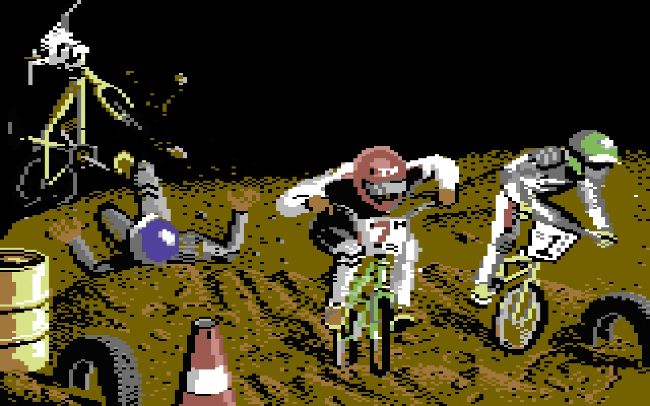
Rather than simply replicate BMX Racers, the Darlings looked to go further. “We wanted to develop more of an overhead racing game – more of a simulation and something more realistic,” he says. While, in truth, that was always going to be difficult on an 8-bit machine, the brothers nevertheless popped themselves back into the saddle, with Richard designing and coding what would become BMX Simulator.
Earmarked to form part of a catalogue of 12 games, the aim of the game was to get Codemasters off to a good start and, with the benefit of hindsight, it became a hugely important release for the pair. “BMX Simulator was the company’s first game and there was a lot riding on it – probably about $1.2 billion,” David laughs, nodding to the sum involved in the recent takeover of Codemasters by EA. “At the time, though, we were just trying to make the best games we could and we weren’t really looking too far into the future.”