STUDIO PROFILE TWILIGHT
Twilight was formed when a group of programmers and graphic artists split from Harrogatebased developer and publisher Enigma Variations. They went on to produce games for many UK publishers and affect a change in British Law thanks to a chicken
WORDS BY RICHARD HEWISON
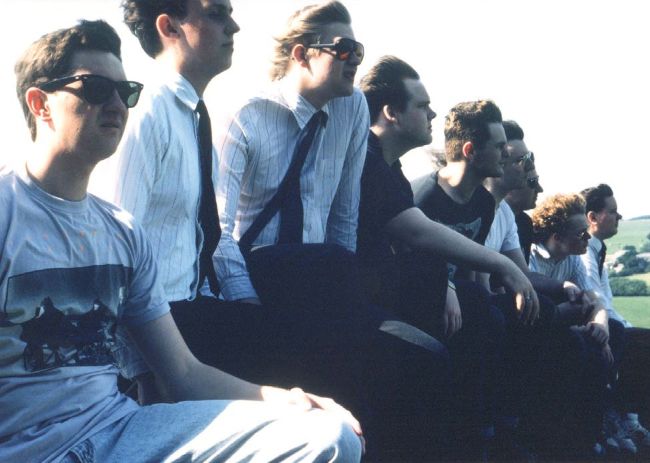
» The Twilight team in a typical early Nineties-style group photoshoot, windswept and contemplating games.
“
Enigma
Variations was only ever going to be producing endless budget licensed games written to a very tight schedule, with no apparent aspirations beyond that,” says programmer Andy Swann.
Although that situation would change at Enigma shortly after they left, the core group of developers working there were feeling more disgruntled as the months went by. The general unhappy situation came to a head in early 1990, and Andy Swann, Jason McGann, Peter Tattersall, and Stuart Cook left and formed a new development team, reuniting with former Enigma programmer Mark Mason. “It was a time when employment was fairly easy, but I had moved to England from Aberdeen and it was still a big risk,” says Stuart, also a programmer. “We used our industry contacts when thankfully there was
a lot of work going around and not too many ready-made development teams about.”
Twilight was officially born on 1 May 1990, and Andy recalls how they came up with the name for their new company. “We sat about trying to think of something. There was a lull in the conversation and Pete started humming the Twilight Zone theme tune!” With the name agreed, Peter created the first logo, inspired by the art of Roger Dean. “It was barely legible, but Pete liked it because he could pack it into not many pixels on the Commodore 64,” says Andy.
The group avowed to do more than quickly churned-out budget-price licensed titles, by firstly writing even more quickly produced budget-price licensed titles. “They at least allowed us to get some money in the bank, then we planned to do arcade conversions and design our own games,” explains Andy. The team began operating from a rented midterrace house in Mayfield Grove, Harrogate where most of them were already living. “It was filthy, and we ended up with the whole downstairs floor becoming our development area,” says Andy. Twilight’s first batch of games included Delta Charge for Thalamus, which was a belated conversion of Stavros Fasoulas’ classic Commodore 64 shooter Delta, published three years earlier. “Pete loved Delta on the Commodore, so we made a tech demo,” recalls Andy. “I wrote Delta in two weeks, Andy coded the starfield, Pete did the graphics and he then managed to sell it to Thalamus,” adds Jason. “He called them from a phone booth in Harrogate town centre while I passed him coins!” Twilight’s version featured 20 stages and was a technically very slick monochrome sideways-scrolling affair. There was little new to see after the first half-dozen stages or so, but it was still a very competent debut title.