ULTIMATE GUIDE
DEAD OR ALIVE 2
AFTER DEAD OR ALIVE GRABBED THE WORLD’S ATTENTION BY COMBINING BOUNCY BOOBS WITH BRUTAL BEAT DOWNS, TECMO HAD LOFTY AMBITIONS FOR THE SEQUEL. WE LOOK BACK AT HOW TEAM NINJA HARNESSED NEW TECHNOLOGY TO CREATE AN UNFORGETTABLE FIGHTER
WORD BY NICK THORPE
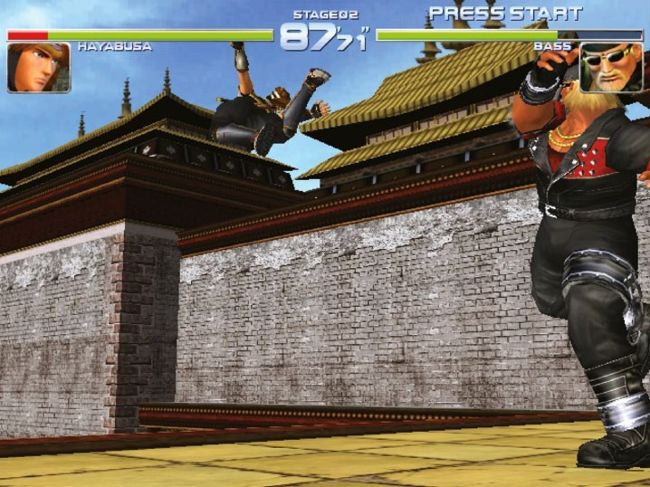
» [Arcade] Bass has flung Hayabusa off a ledge, but the fight will continue down below.
Let’s not mess around with cheap puns – yes, this is that fighting game with the jiggle physics. We don’t profess to have psychic powers at Retro Gamer, but we’d confidently wager that’s the first thing most of you associate with the Dead Or Alive series as a whole. That’s by Tecmo’s own design of course, but over the years that marketing ploy has given naysayers an easy excuse to write the entire series off as nothing but cheap titillation, and it deserves better than that. The truth is that Dead Or Alive 2 is not only a phenomenal sequel, but actually one of the premier fighting games of its era.
It’s worth remembering why Tecmo took that route, though. The original Dead Or Alive was released in 1996, a time when the company was in dire straits, and relied on its female fighters to differentiate itself from other 3D fighters in arcades. That approach found success and while the game didn’t quite match up to Sega and Namco’s efforts in the genre, it was a strong start, which was only bolstered by excellent conversions to the Saturn and PlayStation, plus an updated arcade version called Dead Or Alive++ that further refined the gameplay. The sequel entered production in September 1998 with a team of 40 developers, according to a preview in issue 71 of Edge.
Dead Or Alive 2 signalled Tecmo’s ambitions to challenge for the fighting game crown when it was revealed at the Tokyo Game Show in March 1999. It was graphically exceptional, and incorporated both the realistic fighting environments of Virtua Fighter 3 and the tag team action of X-Men Vs Street Fighter. Speaking to Edge, the game’s director and producer Tomonobu Itagaki stated his belief that fighting games would “become simpler and more powerful” and contrasted Virtua Fighter 3’s defensive nature with the “offence, offence, offence” approach of Dead Or Alive 2.
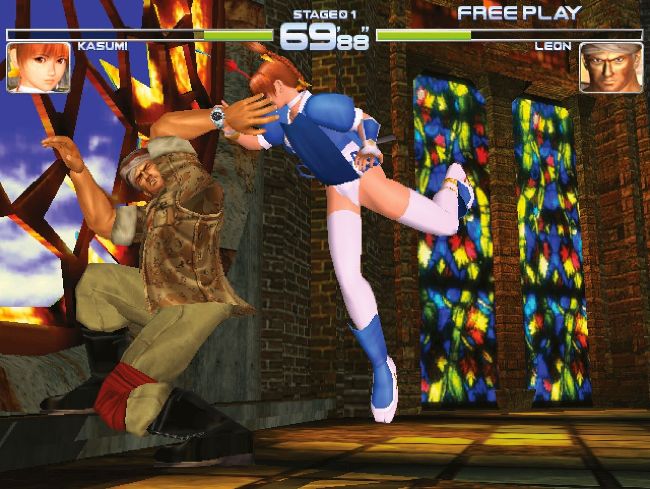
» [Arcade] This level of graphical detail was astonishing in 1999 – just look at the pain on Leon’s face.
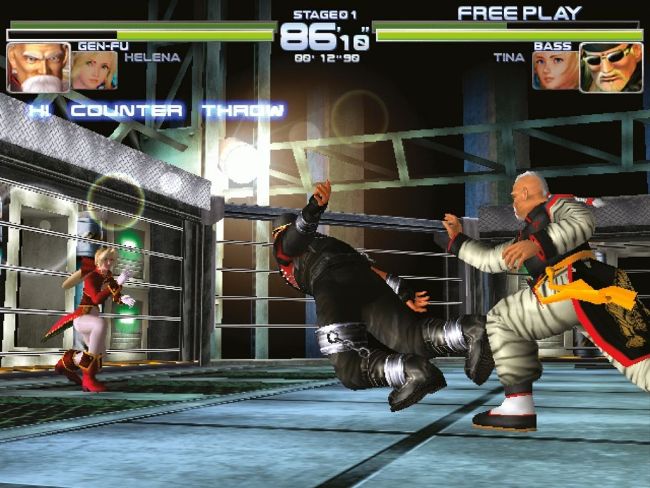
» [Arcade] Tag matches are a good opportunity for some dirty double team attacks, as Helena and Gen-Fu show.
COMING TO LIFE
TECMO WAS STILL WORKING THINGS OUT WHEN DEAD OR ALIVE 2WAS FIRST UNVEILED, AND THESE PROTOTYPE IMAGES SHOW JUST HOW MUCH WORK WENT INTO TUNING THE GAME’S IMPRESSIVE FIGHTING ENVIRONMENTS
THE SPIRAL
■ This area looks very different, with a flat floor, no electrified barriers to be seen and glass mounted to the support pillars. Looking at Tina’s victory pose, there’s also a staircase that’s visible in the background, which didn’t make the cut.
THE DEMON CHURCH
■ The tower in this stage originally had a more complex layout, with a gap bet ween floor areas, suppor t pillars and modern-looking concrete parts. These were all cut in favour of a simple octagonal layout in the final game.
THE AERIAL GARDENS
■ Originally, this stage had far more water covering the ground, being mostly flooded as compared to the shallow rivers of the finished game. Also, take a look at the staircase in the background that ex tends into the water – that’s gone too.
DEATH VALLEY
■ Early footage shows Ayane and Hayabusa taking on Bass and Tina exclusively on the upper plat form of the Death Valley stage. However, the final arcade game places two-on-two matches exclusively in a single-level Danger Zone stage.