INTERVIEW
A class act
As she returns to the big screen, Dame Penelope Wilton discusses being a grandma, why retirement’s not on the cards, and if Downton will be back
by KATHRYN KNIGHT
The measured and composed actor Penelope Wilton is, on the whole, not a woman given to pronouncements on a grand scale. There is one subject, however, on which she is vehement. 'I would hate to retire,' she declares. 'There'd be no point. I mean, what on earth would I do? So I'll carry on for as long as I can.'
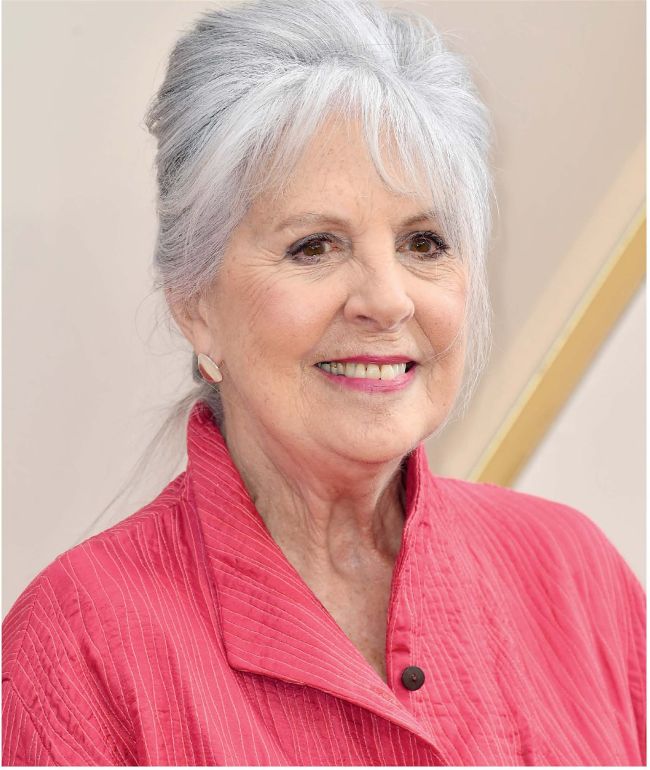
Now 76, and doyenne of a stage and screen career of more than half a century, we must certainly hope Penelope is as good as her word as she is a stalwart of some of our most dearly loved comedies and dramas. From Eighties sitcom Ever Decreasing Circles to Downton Abbey, her presence on a cast list is a hallmark of quality. And that's certainly the case with The Unlikely Pilgrimage of Harold Fry, her latest screen outing, starring alongside Jim Broadbent.
'As you get older there are fewer parts in the theatre for women so I'm lucky to have done some wonderful things in film and TV'
And in more recent times
Based on Rachel Joyce's novel, it follows the decision of the titular hero, played by Broadbent, to walk more than 250 miles to visit the bedside of a dying former colleague, driven by the belief that in doing so he can save her life. Penelope plays his bewildered, tricky wife Maureen, and the film traces their relationship as Harold gains the strength to face the unspoken grief that has driven them apart. 'It is a beautiful story,' says Penelope. 'As you see in the film, the revelation of the great sadness in their lives comes through very slowly, and you realise what has driven this man to do the walk. It's wonderful storytelling.' Joyce's book sold more than five million copies worldwide and Penelope devoured it after being offered the role of Maureen. For all the sorrow at its heart, it proves to be an uplifting story of forgiveness and redemption. 'I think that's what ultimately drew people to it,' she says. 'It's about people finding a way out of a terrible sorrow, and the kindness of strangers.'