A perfect Zen
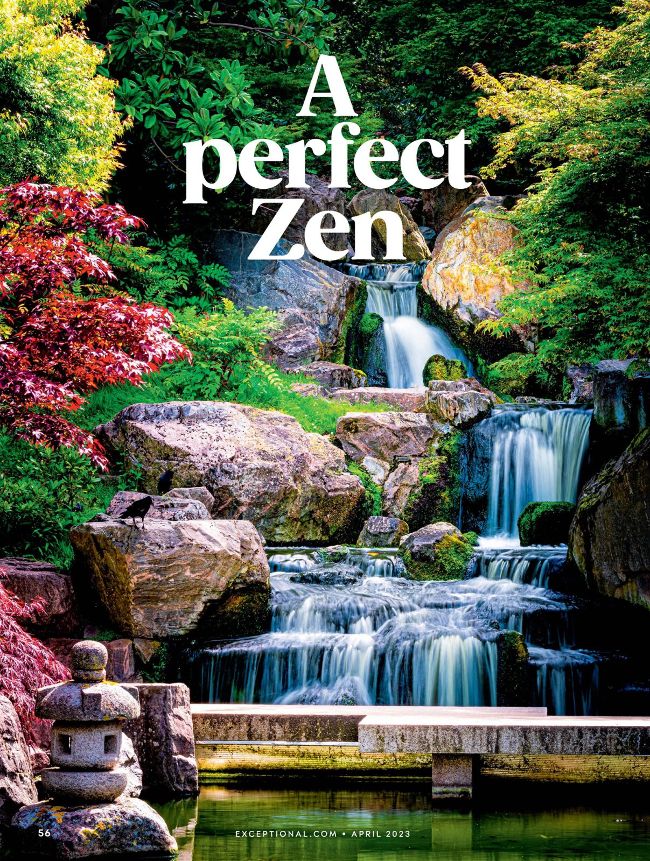
Elegant and serene, Japaneseinspired gardens evoke natural wonders in a beautifully restrained way, making them ideal for small urban plots
by BEN DARK
Above:a meditation garden with a modern Japanese moon gate, stone sculpture, pool and acers
In my city street there's an almost perfect front garden. It's a simple rectangle in front of a terraced house, with a mulch of tumbled slate and three granite rocks. The only plant is a Japanese maple - an Acer palmatum var. dissectum from the Dissectum Atropurpureum Group - with an elegant dome and filigree leaves. As far as I am aware, this is the only Japanese-style garden between us and the botanic gardens. I wonder why? In our crowded and confusing towns we should be surrounded by such thoughtful compositions. When done well, nothing makes an urban space as calming or evocative of distant nature.
The traditional Japanese garden is a landscape in miniature; the mountains, rivers and forests of the archipelago on which the art developed but abstracted until only the essence remains. A stone on its end may represent a mountain, a dome of clipped azalea an island, and a pool of moss the rich floor of a temperate woodland. This tradition of exquisite refinement can best be seen in the famous dry gardens of Zen Buddhist temples with their symbolic boulders and watery ripples of raked gravel.