WINDRUSH
After the Windrush
The docking of the Empire Windrush in June 1948 marked the start of a wave of Caribbean immigration that transformed post-war Britain. Seventy-five years on, we find out what life was like for new arrivals in the ‘motherland’
by DAVID MATTHEWS
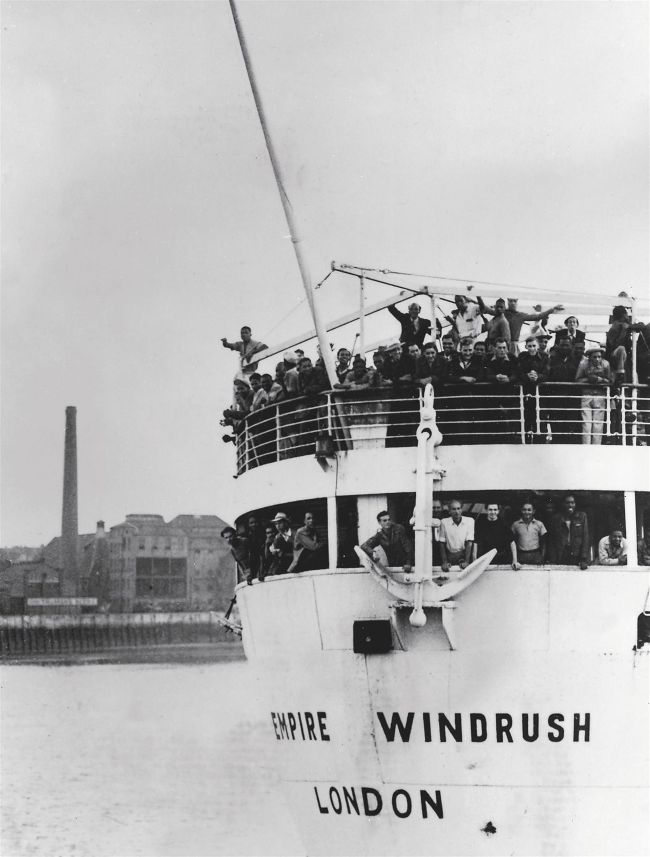
A new life
Empire Windrush arrives at Tilbury Docks from Jamaica on 22 June 1948.
When I started out as a journalist on the Londonbased Caribbean Times in the 1990s, the term ‘Windrush generation’ was rarely, if ever, mentioned. Back then, the paper’s ‘West Indian’ expat readership – including my parents, who had come to England in 1962 from British Guiana – didn’t see their identity bound up in the Empire Windrush. The iconic ship, which arrived at Tilbury Docks, Essex, on 22 June 1948, brought hundreds of migrant workers from the Caribbean at the dawn of arguably the greatest, and most influential, wave of ‘popular immigration’ of modern times.
The wave was at first a trickle, with annual figures in the low hundreds, but increased steadily after the US introduced immigration restrictions in 1952. It’s estimated nearly half a million people arrived in the years up to 1971, when the UK’s Immigration Act was passed. Some see the Windrush as a symbol of eager grafters from ‘the colonies’ dutifully coming to Blighty to rebuild the ‘motherland’ after the ravages of the Second World War. Others see it as the beginning of the end of the empire, and the Britain of old giving way to a multicultural project that continues to this day.
Historians point out that the previous year both the SS Ormonde and the Almanzora had also arrived from the Caribbean with migrant workers, but as Pathé and the Fleet Street ratpack weren’t on hand to capture those moments they’ve become something of a footnote. And, of course, people of African and Caribbean descent have been coming and going from these shores for centuries. My grandparents and great grandparents were sailing to England and other parts of the Commonwealth in the early 20th century, and at least one grand-uncle, Percy Sievewright Stoby, fought in the First World War.