ASWAD
REBEL SOULS
Championed by Bob Marley and lauded by early punk audiences, ASWAD were UK roots reggae pioneers, battling prejudice to share their message of antiracism, Rastafarianism and community. Here, band members past and present chart their rise from the Jamaican music scene in west London to the brink of stardom, via cameos from Peter Tosh, Burning Spear and Eddie And The Hot Rods. “We weren’t out to make pop records,” co-founder Brinsley Forde tells Peter Watts. “We wanted to fight for what we believed was right.”
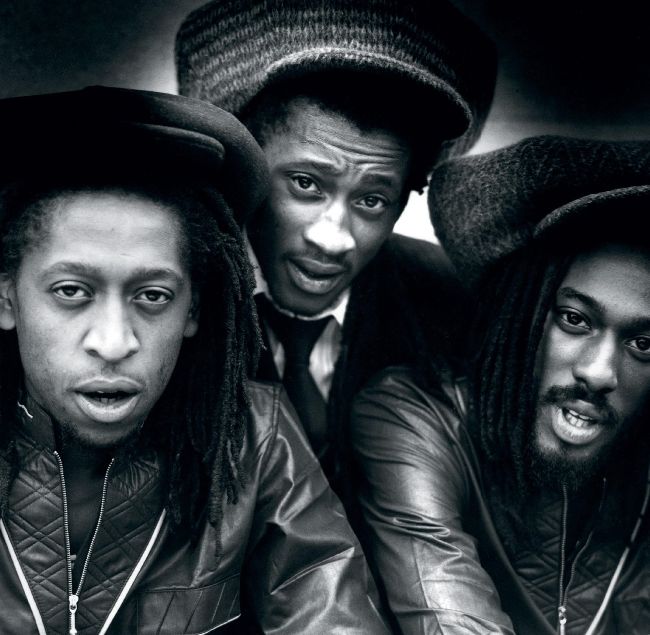
Aswad in 1980: (l–r) Tony “Gad” Robinson, Brinsley “Chaka B” Forde and Angus “Drummie Zeb” Gaye
Photo by KERSTIN RODGERS
NOVEMBER 28, 1976. The crowd outside Croydon Greyhound is getting rowdy. Inside the venue, listening to the noise, Aswad are growing increasingly nervous. One of the UK’s first all-black British-born groups, Aswad are on only the second date of a rock-reggae double bill with Eddie And The Hot Rods and, as the south London punks clamour to be let in, they have no idea of what’s in store for them.As Aswad begin their soundcheck, the audience burst through the main door and run towards the stage. Aswad’s founder, guitarist Brinsley Forde, had seen nothing like it. “They had chains and leather, safety pins and spiky hair, and they were banging on the stage,” he says. “They were making so much noise. We thought they’d never listen to our music. But when we started to play it was wicked. They loved us.”
Aswad were pioneers, battling prejudice to bring a message of anti-racism, Rastafarianism and reggae to a British audience. Formed in 1975 in Neasden, they played roots reggae and dub, combined with a crisper, commercial sensibility absorbed from the music they grew up with – The Beatles, the Stones, Marvin Gaye and Stevie Wonder. Consequently, Aswad often shared bills with rock bands, finding connectivity and a shared agenda despite their musical differences.
“We were all walking on the same street,” says Tony “Gad” Robinson, Aswad’s bassist since 1978. “We did a lot of shows with rock bands and always felt we were singing about the same things as Bob Dylan, U2 and The Police. We had experienced racism but when people talk about political music, we didn’t see it like that – it was life. We wrote about our struggles and our beliefs.”
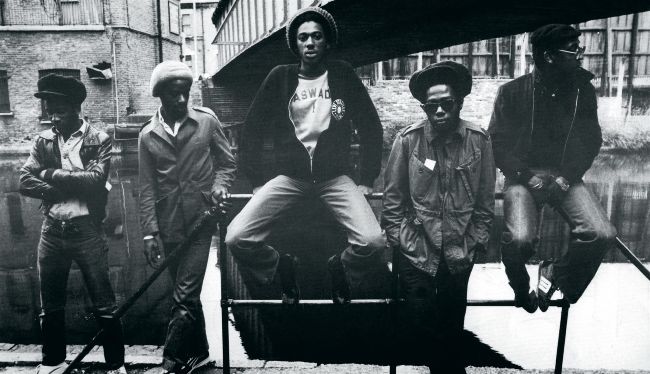
“We weren’t out to make pop records”: the original Aswad lineup, 1975
ECHOES/REDFERNS; SYDNEY O’MEARA/EVENING STANDARD/HULTON ARCHIVE/GETTY IMAGES
Such conviction earned Aswad a loyal following among the growing number of reggae fans who had been switched on through Bob Marley’s breakthrough, Catch A Fire. Aswad further won the approval of the hardcore faithful by backing Burning Spear when he toured England in 1977. They played with other legendary Jamaicans – Marley, Peter Tosh and Bunny Wailer among them – writing songs like “It’s Not Our Wish” and “Chasing For The Breeze” about life for the young in London or challenging white supremacy on “Natural Progression”.
“They were prominent in articulating the worldview of a generation through songs like ‘Back To Africa’ and ‘Concrete Slaveship’,” says writer and musician Vivien Goldman, who co-wrote her 1981 single “Launderette” with Aswad’s George Oban. “They were the forerunners in expressing the views of a new type of person, trying to make sense of things that had happened to them in a very hostile environment. They were the voice of the community.”