A SPACE ODYSSEY
Each of these SUVs can carry seven occupants, but which does it better? We embark on a space mission in a Nissan X-Trail and a Peugeot 5008
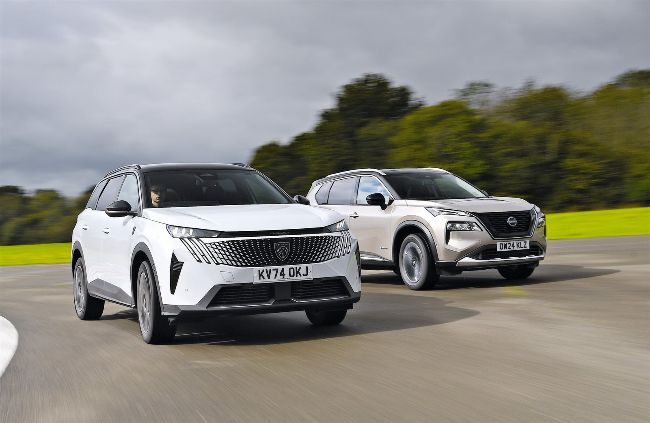
Photography: John Bradshaw
Given how crucial interior space is to the usability of seven-seaters, you probably won’t be surprised to learn that the new, third-generation Peugeot 5008 is larger all round than its predecessor. Although that outgoing model had a practical interior with flexible seating, space could have been better in the third row, and that’s just one of the areas of weakness that this latest version promises to address.
Joining the electric e-5008 that was launched earlier this year, the new petrol 5008 incorporates mild hybrid electrical assistance to improve performance and fuel economy. But unlike in most other mild hybrids, that electric power can propel the car along for very short stints at crawling speeds.
Is the new 5008 the ‘hybrid’ seven-seater to go for, though? After all, the Nissan X-Trail comes with a range of hybridised engines too. Yes, we know the X-Trail is available in mild hybrid guise, but as well as testing these SUVs’ capabilities as seven-seaters, we wanted to explore the differences between a mild hybrid and the unusual e-Power hybrid system the X-Trail offers. In this version, its petrol engine acts as a generator to provide electricity for two electric motors and a battery; unlike the 5008’s, it never drives the wheels directly.
NISSAN X-TRAIL
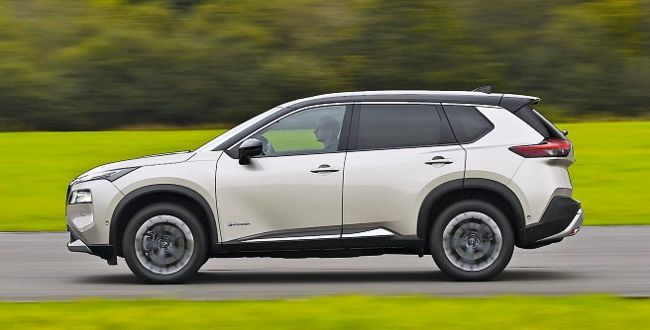
With relatively soft suspension, the X-Trail has a comfortable ride, although it tends to sway around more than the 5008 along uneven roads and leans over more in corners. In four-wheel-drive e-Power guise, it’s a fair bit swifter than its rival, and it’s as smooth to drive as a fully electric car
As before, seven seats are standard in the 5008, whereas you have to pay £1000 extra to get the third row in the X-Trail (as fitted to our test car). The latter comes in high-spec Tekna trim, while the 5008 is a range-topping GT.