Star interview: Anne O’Brien
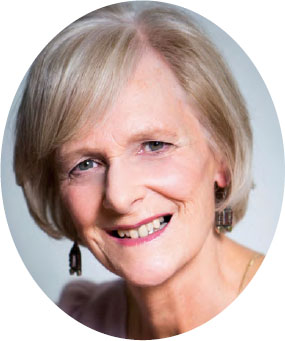
Getting the facts right is essential but it’s really all about the characters, the new queen of historical fiction tells Tina Jackson
When we think of princesses, the most enduring image of all is the medieval beauty in flowing robes, living in a castle. But who were these women, and what were their lives actually like?
Historical fiction author Anne O’Brien has grippingly recreated the stories behind the names of 14th and 15th-century queens, noblewomen and courtesans. Her work will appeal greatly to readers of Philippa Gregory, with whom she has been favourably compared, but where Philippa Gregory’s territory is largely the late Plantagenets and the Tudors, Anne’s is the full-blown mediaeval period of the 14th and early 15th centuries, with heroines including Katherine Swynford, Elizabeth of Lancaster, Katherine de Valois and in her latest novel, The Queen’s Choice, Joanna of Navarre, the second wife of Henry lV, who was accused, after his death, of witchcraft.
‘We know what the kings were doing, but there were these women at home – sister, wives and daughters – and their lives make an imprint on what’s happening,’ says Anne. ‘We get the impression that they’re ceremonial, or sitting embroidering or praying – and I couldn’t believe that these women didn’t have something to say about it. They’re lucky if they get two paragraphs in a history book. I didn’t believe that they were ignorant, or uneducated, and I thought I’d like to write about them, and their history.’
Anne is a former teacher of history – ‘the era I taught most was the Stuarts’ – and published her first novel in 2005. ‘I stopped teaching, and started writing just to see if I could,’ she says. ‘It was not a long-standing ambition. I’d pottered around with short stories and entered a few library competitions but I really didn’t have the ambition. But I had some time, and so I wrote a standard Regency romance, and I was fortunate to be published. So I wrote a number of romances – Civil War, Restoration – and the romance took precedence over the history. But I realised I wanted to write more about history – the romance is only there in my medieval books if it happens, and the woman in her historical situation takes precedence.’