POETRY WORKSHOP
FILLING THE GAP
Alison Chisholm explores how the felling of an iconic tree inspired a poem
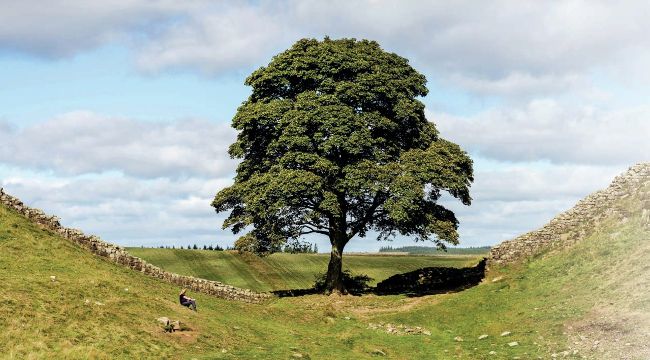
Picture credit: Andrew Masters on Unsplash
Aside from its intrinsic power, beauty and strength, poetry fulfils a number of different functions. One is to create a lasting record. This may be a tribute to a person, an account of a historical event, the description of a landscape … anything that will be of interest to the readers of poetry today and far into the future.
When Olive Riley of Preston, Lancashire saw a television report about a tree that had been savagely felled, she knew she had to respond to the news by writing a poem. This was not just any tree. It was a well-known, ancient and iconic sycamore tree, a landmark on Hadrian’s wall for generations, which had even appeared in a film, as a hideout for Robin Hood.
This chronicling of events was a natural reaction for Olive, having been steeped in poetry all her life. She describes how her mother used to recite it to her when she was a young child, and how her love of poetry developed when an enthusiastic English teacher furthered her knowledge of it. Teenage visits to Stratford to see Shakespeare’s plays nurtured her interest and enjoyment of the genre. So recording the tree’s demise in the form of a poem was an automatic reaction.