PAINT A VOLGA PICTURE
After almost a half-century of the toughest work, the Lada Niva finally has its retirement planned. Felix Page eulogises a hero of the Soviet Union
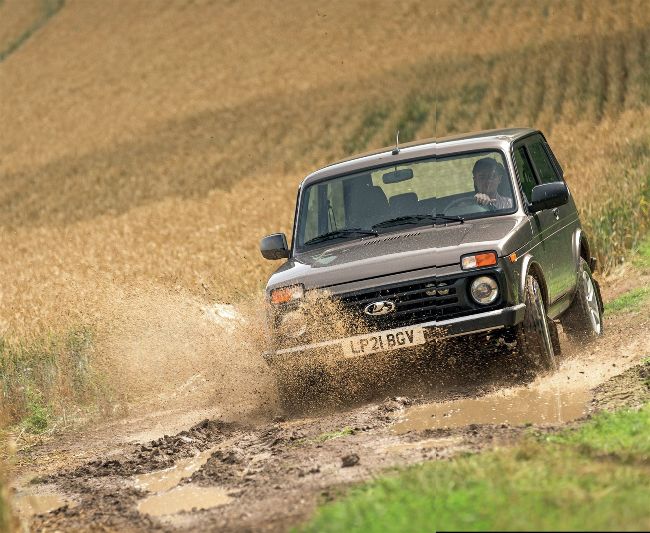
PHOTOGRAPHY LUC LACEY
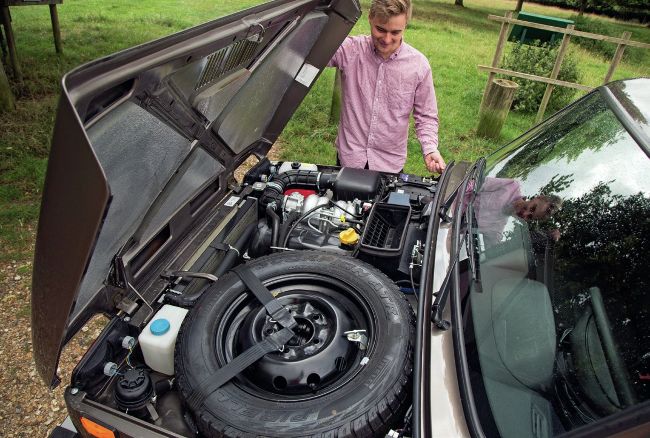
“How do they get 82bhp from only 1.7 litres?”
The boldly styled 4x4 concept that Lada displayed last year hinted at the future of its long-running flagship. The basic silhouette is retained, but X-shaped motifs characterise Lada’s new-age design, while flared arches and body creases line up the Mk2 more obviously against its modern rivals. Underpinnings shared with the Renault Captur pave the way for a hybrid option, and it’s due a touchscreen.
This isn’t a review, which is handy, because it means I can get one slightly awkward truth out of the way straight off the bat: the Lada Niva is not – objectively and with full view of today’s automotive market – an easy car to recommend to anyone.
That might not surprise you, given it has been on sale mostly unaltered since 1977 and its positioning as a no-frills workhorse means it has never, nor will ever be, the recipient of the efficiency-enhancing and refinement-boosting upgrades that we’ve long taken for granted on new cars across the board. It trades instead mostly (and to great effect) on its affordability, durability and unstoppability.
But time marches on, and now, almost half a century since the final Niva prototype was deemed ready for production, a date has been set for the end of production. Which is why we find ourselves here, penning the latest in a series of heartfelt automotive eulogies, instalments in which most recently bade farewell to such segment-shakers as the BMW i8, McLaren 570S and Toyota GT86. That’s odd company for this no-nonsense, agricultural 4x4 (which, let’s remember, hasn’t been sold officially in the UK since 1996) to keep. But in terms of its potential endurance in collective memory, the Niva arguably stands head and shoulders above those more covetable contemporaries.