Quickest ways to build
Want to make sure your home reaches completion as soon as possible? Rebecca Foster explores some of the structural systems that offer the best speed advantages on site
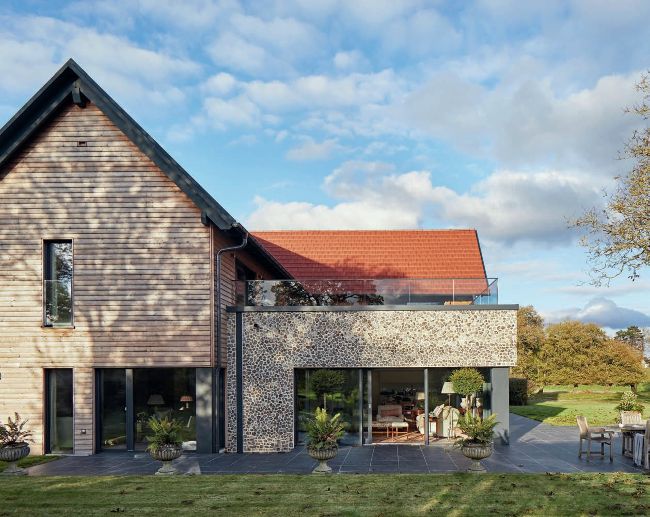
Nestled in a scenic rural location, this closed-panel timber frame home was designed and constructed by Baufritz
One of the biggest decisions on any project is your choice of structural system. Whether your final selection comes down to cost advantages or superior thermal performance, the method you settle on will have implications at every level of the scheme, both during the build and once the house is complete. If your top priority is to breeze through the construction phase so you can enjoy your new abode as soon as possible, there are various factors to consider.
To make things clear, this guide explains why some structural systems score high when it comes to speed.
Timber frame
This off-site construction system involves a high degree of prefabrication, which contributes to its speedy assembly once the building components are delivered to site. A panellised timber frame structure falls into one of two camps: closed- or open-panel. The energy-efficient shell is formed from structural studs sandwiched in wood-based sheathing, usually made of oriented strandboard (OSB).
The walling elements are manufactured off site, based on a set of plans from your designer.
Unlike a conventional build, a lot of the construction takes place in your supplier’s factory. That means that once the panels arrive, the house shell can be erected and made watertight swiftly, sometimes in as little as a week or two. Another advantage is that unlike traditional brick and block, timber frame is not classed as a ‘wet’ method of construction, which means that work continues no matter what the British weather decides to throw at your project. Opting for a closed-panel arrangement will save time on site, too, as the insulation, services and even windows can be pre-fitted in the factory.