Building materials: Sustainability & maintenance
For a building material to be truly green, it needs to offer more than simply being lowcarbon to produce. Nigel Griffiths looks at why longevity is a big part of the equation
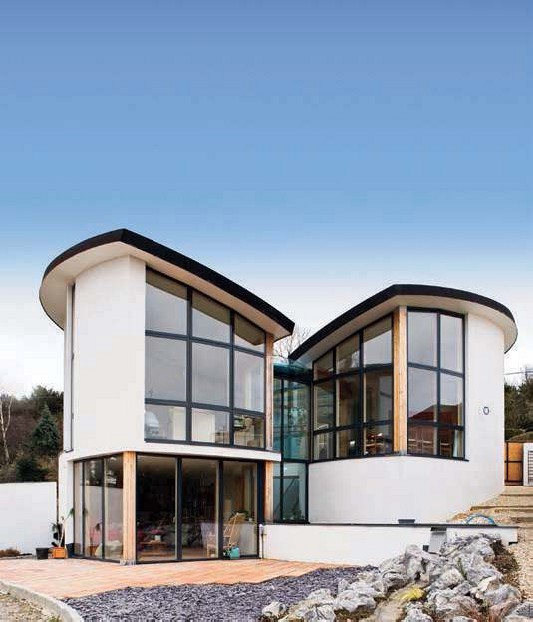
Build It reader Pamela Crawford’s modern home features a raft of natural and ecofriendly materials, including hemcrete walls finished with a Baumit base coat and decorative sponged lime render from Limetec, which provides a flexible, breathable finish (
www.limetec.co.uk)
ANTHONY HARRISON
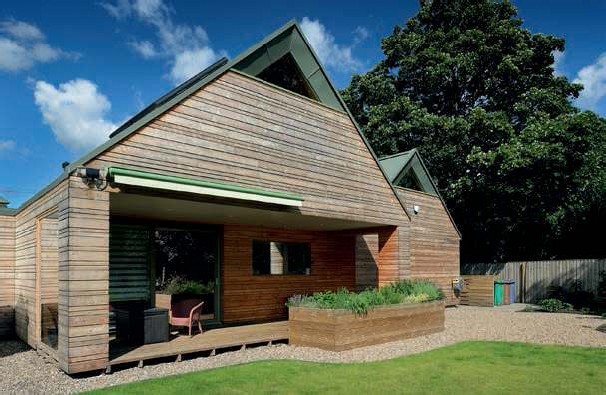
Scotlarch is a natural, durable and characterful timber cladding that can be left untreated to silver to a pleasing grey hue – making it an excellent no-maintenance option. It is available from Russwood (
www.russwood.co.uk)
When you’re evaluating and deciding between different construction products, the whole life cycle (including manufacture, maintenance and disposal) should be a critical piece of the sustainability puzzle. So, if eco credentials are a top priority for your project, then the solutions you specify need to be durable and relatively low-maintenance if they’re to make a real contribution to achieving your goals.
The word ‘relatively’ is important, as we of course accept that some materials need periodic maintenance or even replacement. For example, painted timber window frames will need refinishing every few years in order to keep the timber protected, dry and free from rot – but they’re still a great option in terms of life-cycle sustainability.
One thing to bear in mind is that, when a material is described as ‘low maintenance’, it often turns out this means ‘impossible to maintain at all’. If you can’t repair an item, then it has to be replaced at some point – so the cost and environmental impact of doing this must be taken into account, and it may be much higher than you originally envisaged. PVCu windows are a good example: most builders don’t have the necessary tools or skills to repair PVCu, so when one component in a window breaks, it’s common to have to replace the entire frame and casement. Here’s a quick guide to some of the materials that, used well, make an attractive choice for whole-life sustainability.