Ectoparasite Education
by the School of Veterinary Medicine at the University of California, Davis
Finding creepy crawlies such as lice, mites or fleas on your chickens can quickly turn a chicken hug into your worst nightmare. These ectoparasites can feed on the blood of their host (for example, your chicken), but other ectoparasites can also feed on feathers, skin and even scales.
Moreover, severe infestations can lead to poor health and welfare. Therefore, even though they are small and may not seem to bother your chickens at the moment, it’s important to regularly check and control for ectoparasites before they get out of hand. In this column, we’ll provide information on how to get rid of some of the most common ectoparasites of backyard chickens and, more importantly, how to prevent them from invading your coop in the first place.
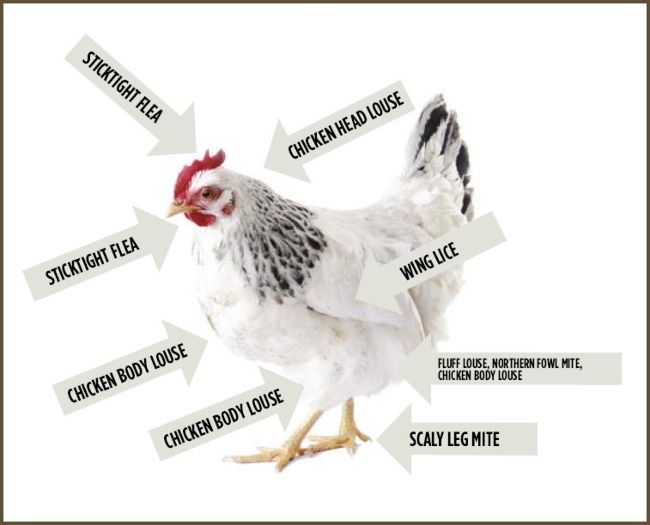
On-host ectoparasites can be difficult to notice, and some can be found on specific regions of the body such as the head, wing, body or tail exclusively.
Hosting Duties
Your goal is use the best tools and strategies against your specific ectoparasite to ensure your time and efforts don’t go to waste. In order to do this, figure out what ectoparasite you’re dealing with and learn more about them. For example, learning about their hiding spots and their favorite feeding locations can help you create an elimination plan that is more effective.
While there are many great books, articles and websites available to help you identify ectoparasites, identifying ectoparasites can be tricky. Luckily, there are extension professionals with a focus on veterinary entomology available to help you across the United States and Canada. To see if there is one in your region, check out the Veterinary Entomology website, a pest management and education resource for animal owners and producers, extension agents, veterinarians, wildlife professionals and the public: www.veterinaryentomology.org. Once you have identified the culprit, you can begin to answer important questions including the following.