Feed for Less
You pay for those daily gifts your laying hens provide, but they don’t have to break the bank.
ARTICLE & PHOTOS by Candi Johns
Masarik/shutterstock
It’s a bad day when you realize that the “free” eggs from your backyard flock are costing you. Deciding how to feed our chickens is one of the first things we do when we bring our flock home. Naturally? Organically? Avoid GMOs? No matter what your feeding preference is, I suspect you would like to know how to feed them for less.
The great news is that there are several approaches to feeding chickens on a shoestring, and most of them, quite frankly, are perfectly natural. The cost of chicken feed keeps increasing, and as a community, chicken lovers everywhere are challenged with feeding our flocks a nutritious diet while not breaking the bank.
We can all agree that keeping chickens is about much more than complimentary, fresh omelets. Most of us who are adventurous enough to devote part of our landscape and lives to these feathered friends do it for the lifestyle as much as the eggs. We enjoy self-sufficiency. We love that our eggs are of superior quality. We beam at our bright-orange yolks. And let’s face it: A yard or homestead dotted with a flock of hens pecking around is simply a lovely place to live.
If you love the flock but not the feed bill, here are seven tips to help feed chickens for less. Not only will these tips allow you to feed your gaggle on a budget, but they can also improve the overall poultry diet, resulting in healthier chickens and healthier eggs.
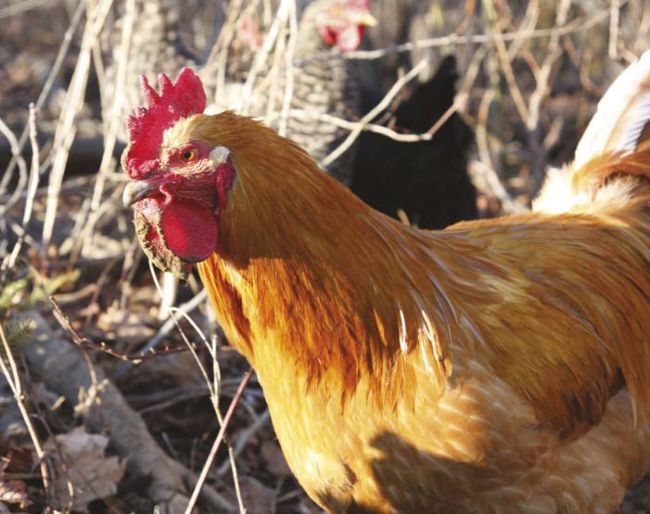
it’s estimated that as much as 28% of our garbage consists of food scraps and yard waste. Start a compost pile near your flock to put that waste to work.
Free-Range
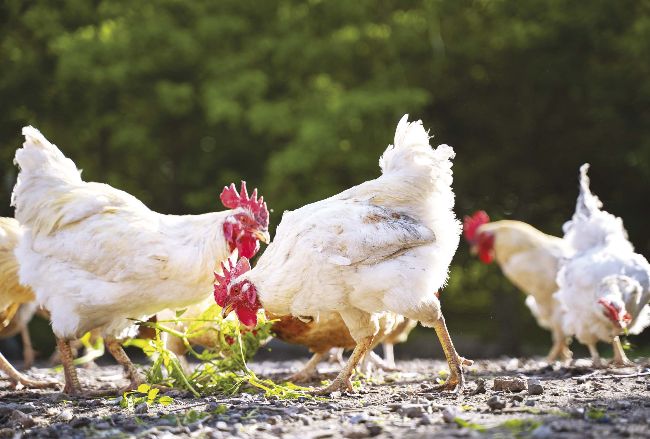
Free-ranging your chickens fulltime or part-time is a fantastic way to feed the flock for nearly free. Chickens are omnivores, which means they eat plants and meat. Chickens not only eat better if given access to the outdoors, they will thrive. Scratching and pecking are the chicken’s favorite pastimes. Give them space, and they’ll feed themselves. Plus, they’ll eat a healthier diet.
Letting chickens graze about the yard or homestead will also help control bug populations on the property. Chickens eat a wide variety of insects including many nuisance bugs such as ticks, mosquitoes, Japanese beetles, grasshoppers and flies. Setting the flock free to forage can help reduce the number of insects present in the backyard oasis, as well as on the other livestock and even in the garden.