SOMEWHERE OVER THERainbow
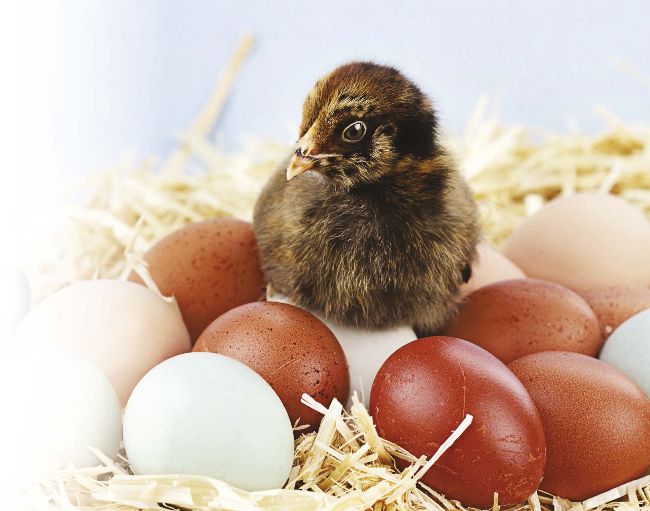
Turn your basic browns and common whites into a rainbow basket with blue-, green- and chocolate-colored eggs!
by Shelly Wutke
For new farmers, chickens are the ultimate gateway animal. Once you’ve added one or two chickens to your hobby farm, you suddenly realize an entire world has opened up to you. Will you keep it easy, choosing one or two breeds that lay eggs perfect for breakfast? Or, like countless others before you, will you head down the rabbit hole in search of eggs that make up the perfect rainbow dozen?
To obtain the elusive rainbow dozen, you need to build your flock with select chicken breeds that can produce eggs prettier than anything you’ve seen at Easter. Plucked from the nesting boxes and lined up in an egg carton, these eggs are all about aesthetic, made up with shades of blues, greens, light browns, chocolate browns, shades of white and, if you’re lucky, pink, too.
If you sell your eggs for profit, you’ll find a dozen rainbow eggs will fly off the shelves of your farm stand. Even if you don’t sell your eggs, there’s nothing like heading out to the coop with your egg bucket and discovering the amazing shades of the day.
STEPHANIE FREY/SHUTTERSTOCK
Color Science
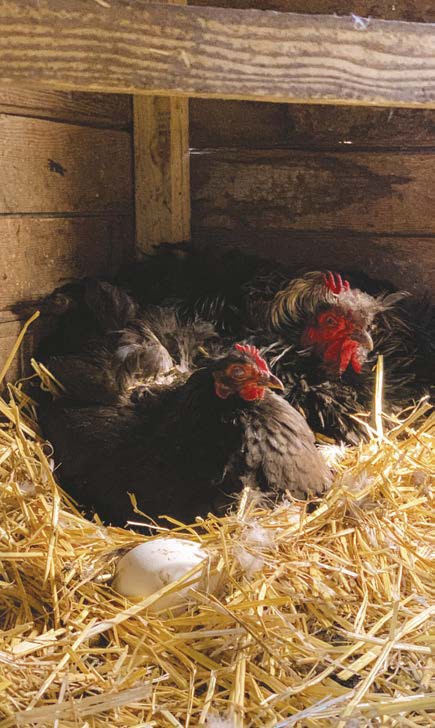
White eggs are common, but different breeds can lay other colors.
shelly Wutke
If you’ve seen a bright blue or deep chocolatecolored egg, you might be surprised to know that egg actually started out white. From start to finish, it takes around 26 hours for an egg to travel through the chicken’s oviduct. Twenty of those hours are spent completing the eggshell.
Some birds, such as the Ameraucana, have the pigment oocyanin deposited on the egg as it travels through the oviduct. “This pigment permeates the eggshell resulting in the interior and exterior of the egg being the same blue color,” according to Michigan State University Extension. “Chickens that lay brown-tinted eggs deposit the pigment protoporphyrin on the eggs late in the process of forming the shell. The pigment therefore does not penetrate the interior of the egg, but tints only the surface of the egg, which is why brown eggs are white on the interior. In the case of an Olive Egger, a brown pigment overlays a blue eggshell resulting in a green egg. The darker the brown pigment, the more olive color of the resulting egg.”