LATE 1980S
HER SENSUAL WORLD
THE HALF-DECADE THAT GAVE US KATE BUSH’S FIFTH AND SIXTH ALBUMS WOULD DISPLAY A TRULY FULLY-FORMED ARTIST WITH A FAR LIGHTER YET MORE COMPLEX TOUCH: IT WOULD BEGIN WITH A WHOPPING GREAT HIT AND CULMINATE WITH UNEQUIVOCAL STATESIDE APPROVAL. THIS, HOWEVER, WAS AN INTENSE BLIZZARD OF WORK THAT WAS PERHAPS PREPARING US FOR A LONG, LONG RETREAT…
MARK BEAUMONT
I’ve c hanged my face, I’ve changed my name, but no-one wants you when you lose.” The rest was pandemonium. 28 June 1987, and as he murmured the last words of the first verse of Don’t Give Up, Peter Gabriel paused on the Earls Court’s stage and turned to face a set of steps at the back, where a spotlight lit up his surprise guest singer. Bushmania ensued. Like The Beatles at Shea Stadium, you couldn’t hear Kate Bush sing thechorus beneath the roar of the crowd, and with good reason. Those of us lucky enough to be present were – fully versed in Bush’s legend. We knew this was her first non-charity gig appearance for eight years, and might easily have suspected it would be her last for another 15. The scent of history filled the rafters.
KATE BUSH HAD RETURNED FROM THE WILDERNESS A WOMAN IN FULL CONTROL OF HER ART – HER VOICE GROWN RICHER, HER AESTHETIC MORE ASSURED AND FINALLY REAPING THERESPECT AND SUCCESS HER TALENT DESERVED
There was an added frisson of rarity to it, too; in 1987 Kate Bush was back from a brink and driving the cultural conversation once more. Her underrated ‘uncommercial experiment’ with 1982’s The Dreaming had made her seem a spent force during her three-year absence, but the gated motorik beats and cyborg hums of Running Up That Hill had marked an instant rebirth, a return to the forefront of left-field art-pop after a walkabout in its Afro-noir fringes. It was a career trajectory that mirrored Gabriel’s: shifting from early works steeped in very British whimsy to a period of experiments with the darker edges of world music, before finally incorporating both, with an added dash of bohemian pop, into a mature mainstream third phase. And there was Bush’s fresh allure. She was no longer the pre-Raphaelite teenage prancer of Wuthering Heights, the classical wisp prone to bouts of doe-eyed, chintzy silliness. She had returned from the wilderness a woman in full control of her art – her voice grown richer, her new Gatsby-era aesthetic more assured – and finally reaping the full respect and success her talent deserved. The Hounds Of Love album was a surprise cultural whirlwind, particularly considering that half of it was a folk rock song cycle about being stranded at
A new dawn: few would have predicted that Bush would bounce back with an album that combined startling originality with chart-busting potential
© Guido Harari
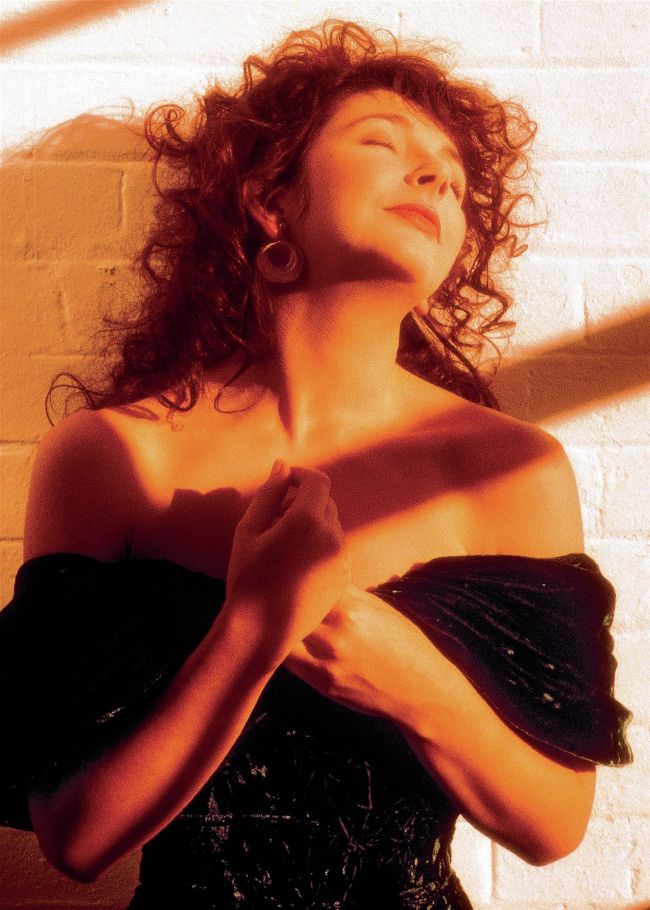
© Guido Harari
© Guido Harari
© Getty sea – considered to this day her greatest achievement, it topped a million sales and posited Bush among the top tier of British music legends. So when Kate walked onto the Earl’s Court stage and sighed, “don’t give up, we’re proud of who you are” in June 1987, the crowd didn’t drown out a lost pop treasure, they drowned out a reclusive phenomenon. We were twenty thousand hounds of love, howling at a once-in-a-lifetime sighting of our errant mistress. As for Kate, she must’ve felt her deal with God had finally paid off.