technique top-up.
PASTA
...but not as you know it
Chefs around the world have been ripping up the rulebook when it comes to cooking pasta, creating great new textures and flavours. We’ve tested three game-changing techniques and perfected the recipes to go with them – we think you’re going to love them
WORDS, RECIPES AND FOOD STYLING EMILY GUSSIN
PHOTOGRAPHS INDIA WHILEY-MORTON
TECHNIQUE 1: Lessen the water, up the starch
Pasta is made from flour, so when you boil it, some of the starch from the pasta escapes into the water. Recipes ask you to add a splash or two of the cooking water to the sauce when adding the cooked pasta to it because the starchy liquid acts as an emulsifier, binding the sauce to the pasta.
You can take this approach to the extreme. Reducing the amount of water you use to boil your pasta increases the ratio of starch in that water, and the starchier the water, the easier the emulsification.
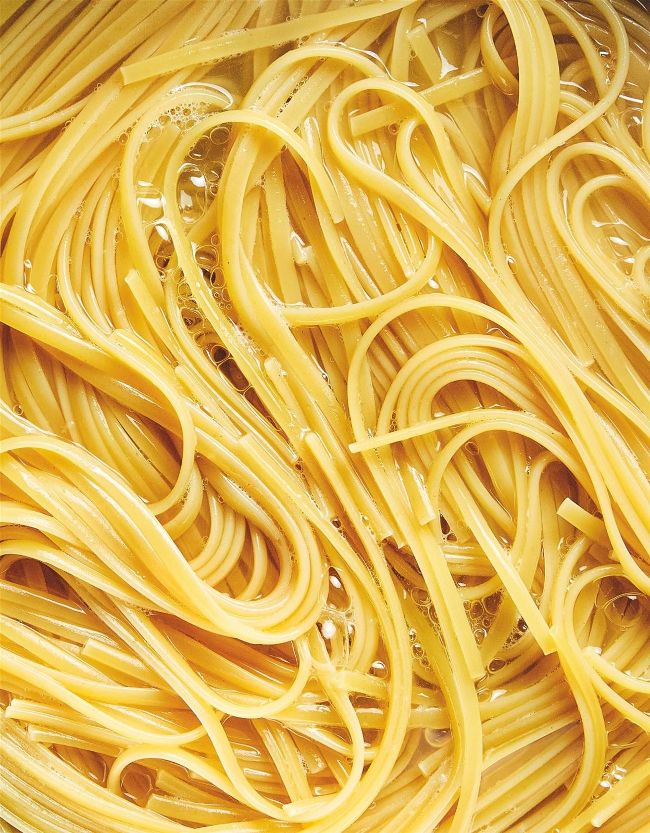
When you’re making a sauce with ingredients that have a high fat content, such as the egg yolk, cheese and rendered guanciale fat in a carbonara, the more starch you have in the water, the easier it will be for the water and fat molecules to bind and create a silky smooth sauce. With our guanciale, artichoke and pecorino linguine recipe overleaf, the pasta is only just covered with water, then all of it goes into the luxurious sauce.
TECHNIQUE 2: Toast it first
Dried pasta can be toasted before cooking to draw out its nutty taste. Just a few minutes in a pan deepens the flavour, but to take it to the next level you want to roast the pasta in the oven until it turns a deep golden and starts to blister. You then boil it as normal. This is a simple way to boost your dishes, especially if you’re already turning the oven on to make the sauce. Try it in our smoky tomato pasta recipe overleaf, or with any roasted vegetable pasta sauce.