THE MAKING OF...
BALDUR’S GATE 3
Larian fought with cinematics, embassies and the expectations of BioWare fans to make the RPG of the decade
BY JEREMY PEEL
Format PC, PS5, Xbox Series Developer/publisher Larian Studios Origin Belgium, Canada, Ireland, Malaysia, UK, Spain Release 2023
Divinity: Original Sin II nearly killed Baldur’s Gate 3 in its infancy. Yes, Larian’s breakthrough 2017 RPG proved the developer had the chops to take on a legendary series, and provided the foundations for an astonishingly open-ended Dungeons & Dragons adventure. Yet it almost robbed the studio of its opportunity to ascend to the mainstream.
By August of that year, company founder Swen Vincke had already landed a deal with Wizards Of The Coast to make Baldur’s Gate 3, but when the time came to provide the publisher with a design document, his team had nothing left in the tank. Deep into the final phase of Divinity: Original Sin 2’s development, all of their creative energies had been spent. Nonetheless, they knew they had to pull something out of the Bag Of Holding. “We need to write something, guys,” Vincke said at the time. “Or we’re going to lose this deal.”
Vincke and a small party of colleagues locked themselves in a hotel meeting room over a weekend and hammered out a design doc. “It was really bad,” he says. “But we didn’t have the brainpower to deal with it, because we were trying to do D:OS2. Wizards then sent it back with the corporate equivalent of, ‘This is really shit’. And we said, ‘We know, but we’re releasing a game – don’t ask us to make this now. Give us an extension’. Luckily they understood, and so we got another chance.”
Why was Larian pushing so hard to secure a venerable, ancient videogame licence for itself? “It’s one of those IPs that you know a lot of people will want to work on,” Vincke says. “So it would be great for attracting other people to the studio.” The CEO had watched his company grow internationally during the making of Divinity: Original Sin 2, and decided he would need an outside property in order to maintain that momentum. “I felt like there was a glass ceiling that we wouldn’t be able to break through unless we had triple-A production values, budget, marketing, all the triple-A things,” he says. In his mind, there were only three big RPG properties that could help Larian go forward as it needed to. “It would have been Ultima, it would have been Fallout, it would have been Baldur’s Gate,” he says. “There was not a lot to choose from.”
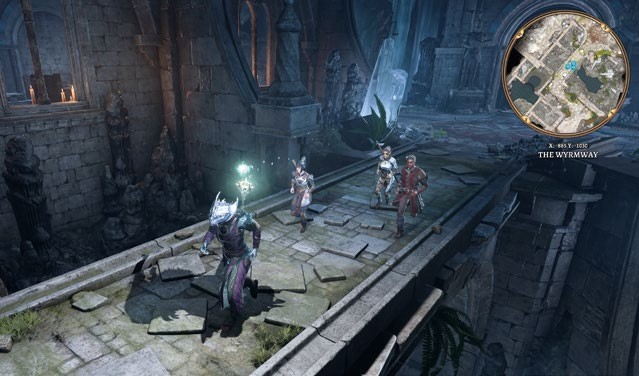
When it came to staging the game’s cinematic scenes, Larian sought advice from DragonAge: Inquisition’s Mike Laidlaw
WIZARDS OF THE COAST TOLD LARIAN: “YOU ARE THE DUNGEON MASTERS HERE – IT’S YOUR STORY”
Beneath all this strategy, however, was a personal connection. Larian’s first project, a cancelled RPG named The Lady, The Mage And The Knight, was developed during the same period that BioWare worked on Baldur’s Gate in the late ’90s. “We knew about them,” Vincke says, “and were watching what they were doing.” A fan had even attempted to put the two studios in touch – before Larian’s then-publisher halted it, frightened about losing important trade secrets to a competitor. “I should have been talking to these guys, but then the relationship had soured because of this intervention,” Vincke remembers. “That was a real pity.” He subsequently played and adored both of BioWare’s Baldur’s Gate games: “The one thing they didn’t have, that was very important for me, was the dynamic environment where you could interact with the world.”