LADY DYNAMITE
From 1970s pioneer to modern-day icon, the trailblazing PAM GRIER has always done things her way...
In this no-holds-barred interview, she tells Empire how she beat men at their own game — and transformed cinema
WORDS CHRISTINA NEWL
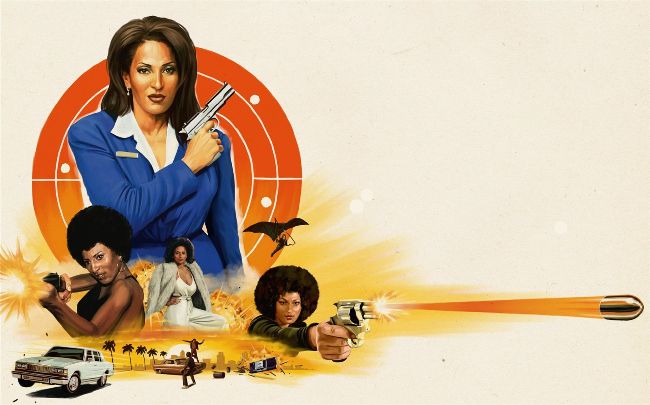
ILLUSTRATION THE RED DRESS
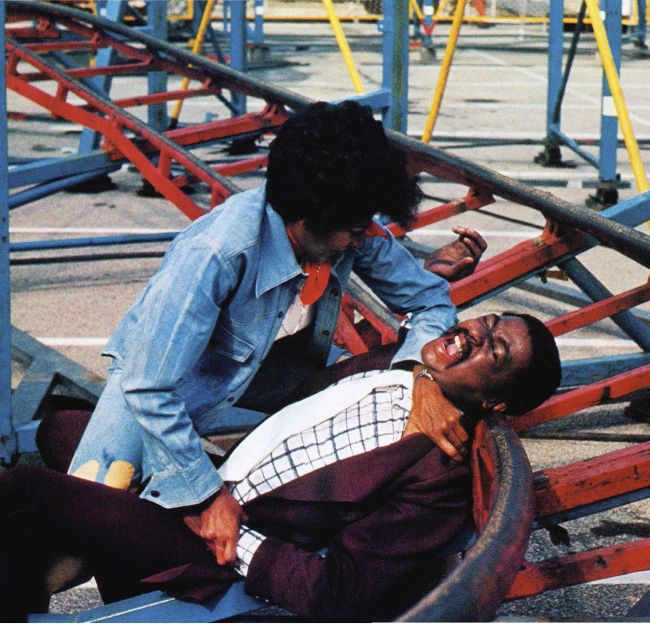
Pam Grier, making a name for herself in 1974’s Foxy Brown;
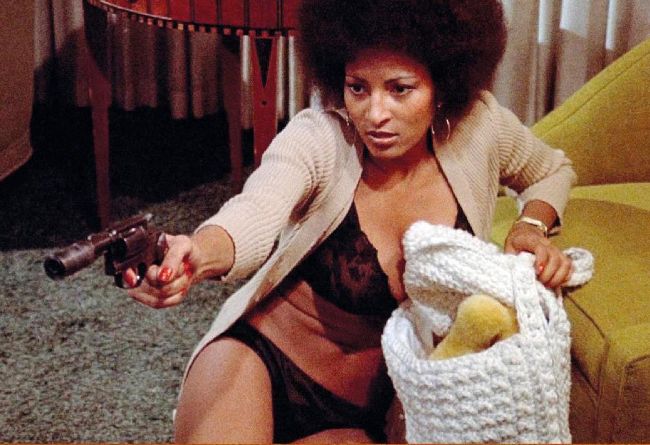
In charge in Sheba, Baby (1975);
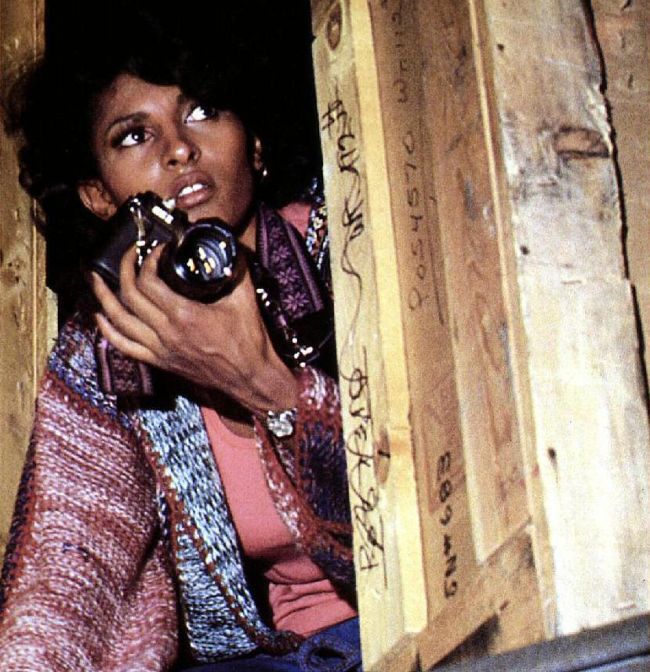
Black Mama White Mama (1973);
AMERICAN CINEMA OF the 1970s is unthinkable without Pam Grier: she of the fearsome stance and long, supple limbs, toting a sawn-off shotgun and a come-hither-if-you-dare look. And talking to her today, it’s a joy to discover that that attitude hasn’t diminished one jot. “I was frustrated with society’s entitlement to women’s bodies whenever they wanted, and with patriarchal society and how imbalanced it was,” she says stridently of her pioneering screen career.
It’s not an overstatement to say that Grier reinvented what it meant to be a woman on screen. She towered over her male co-stars, at least figuratively; in her female revenge classics of the blaxploitation genre, Coffy and Foxy Brown foremost among them, she became one of the only women of the 1970s to be able to carry a film on the strength of her name alone.
Talking to Empire on the phone from her ranch in Colorado, it seems the old tagline — ‘‘Wham! Bam! Here comes Pam!” (originally deployed on the poster for 1975’s Friday Foster) — is still apt. At 73 years old, interviewing her still seems like being in a Pam-Grier-shaped whirlwind: she is warm and loquacious, shooting straight from the hip on the environment, feminism, toxic personalities in Hollywood, and her own past and present in the film industry.
“When I first worked on a film set, there was one scene where the actor raised his voice to me… and equally I raised my voice to his level. The director said, ‘No. Women don’t scream and shout and throw things at men,’” Grier says. “I said, ‘Oh, really? If it’s my culture, I’m gonna scream at him and throw a skillet at his ass.’”
Grier was a new kind of sex symbol — the kind that would just as soon shoot you as make love to you. She turned Hollywood on its head when, in 1975’s Sheba, Baby, her PI squinted — as hard as Clint Eastwood — and asked her foe: “Have I bruised your masculinity?” In an era of tumult and racial strife, Grier came to embody the changing political consciousness of Black women in America. “[It] gave more bite to a redundant genre,” she says. “Producers and directors were responding to the fact that it wasn’t just Bond girls anymore, but women being in a place of, ‘You don’t scare me. Let’s fight fire with fire, if that’s what I have to do to survive.’”