BRIDGESTONE BATTLAX T31
We sent Boothy over to Morocco to see if Bridgestone’s new sports touring tyre can roll with his punches…
WORDS BOOTHY IMAGES BRIDGESTONE
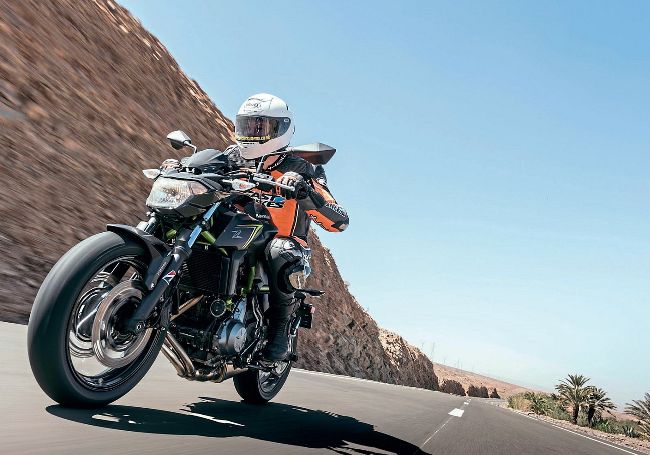
Orange and green should never be seen.
Who says that when your saddlebags are stacked to the brim with pants, socks and johnnies, and you’re on an umpteenhundred mile expedition to a land far, far away you have to ride as slow as Pretty Boy? Not us. And not Bridgestone either. They have just launched their new Battlax Sport Touring T31 tyre so we flew over to Morocco to see exactly what they had to offer.
The T31 (T for touring) replaces the T30evo and, according to the bods at Bridgestone, gives the rider more feel and more grip without affecting wear rate. I know what you’re thinking and you’re right – that’s a pretty standard claim for a manufacturer launching a new tyre. Specifically, though, Bridgestone reckon they’ve worked hard to improve wet grip, particularly in low temperatures, with a tread pattern that disperses water more efficiently by increasing the ‘sea:land’ ratio on the shoulder of the tyre.
(Un)fortunately, during the launch event in Morocco the conditions were neither wet nor cold so I’m far from qualified to tell you how they’d cope the through a British winter but if Bridgestone are to be believed, the T31s have a 3% higher coefficient of friction on a wet surface compared their predecessors. Great if you live in Scotland. We weren’t in Scotland though, we were in Morocco, and Bridgestone had lined up a bunch of bikes so we could get to grips with the new T31s (if you’ll pardon the pun). And it was a varied bunch: nakeds, sports tourers and some big adventure bikes, most likely in an attempt to showcase the fact that Bridgestone offer a full line-up of sizes to cater for everything from your CB500 to your 1200GS. My first weapon was to be a Kawasaki Z650, not the fastest thing on the planet but a great bike to test the tyres’ sporty flickability. The Z650 was fitted with the standard, rather than GT spec tyres, which is a reinforced version of the same tyre designed to cope with bigger, heavier models such as big touring or adventure bikes.