(PUTTING YOU) IN THE FRAME…
It’s the foundation of your bike’s entire chassis. But unlike suspension, wheels and brakes, its vital work usually goes unnoticed. Here’s what goes into one.
WORDS: ALAN DOWDS IMAGES: FB ARCHIVE
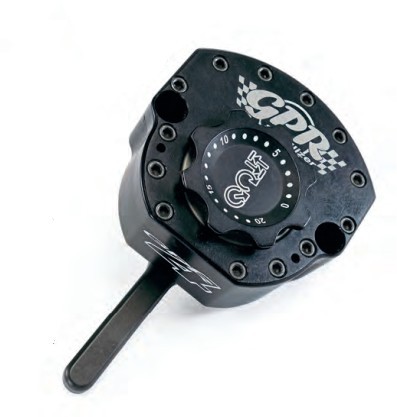
A steering damper is one way to mask a frame’s inadequacies.
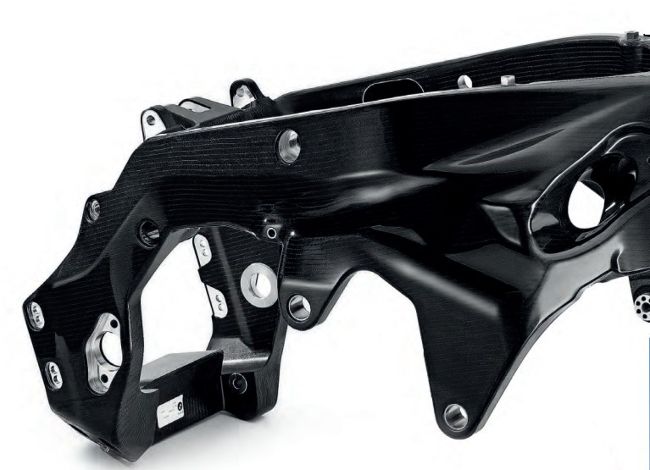
It’s a bit of an unsung hero in the chassis stakes, the modern motorbike frame. Like the techs behind the scenes in a MotoGP team, or the backroom designers at a big bike firm, it just gets on with its job, while the flashier members of the team get all the plaudits. So when a new superbike comes out – like last year’s GSX-R1000R, say, we all get het up about the gas forks, the Brembo brakes and the multi-adjustable rear shock. Even the swingarm design is far saucier than a frame, for some reason. Maybe it’s because it’s often hidden under plastic bodywork. Or maybe it’s because they’ve done such a good job for so long that we now largely take them for granted. Up until the 1970s, though, most bike frames were an afterthought at best. They were, literally, just metal brackets to hold the engine and suspension components together, with a rough stab at stability and stiffness. Most bikes made about 20bhp, and even with that asthmatic power output, they handled like clown cars which had dangerously failed an MOT test. Wobbles, weaves, tankslappers, they did them all if you dared go at any sort of speed, plus they weighed a ton, being made from low-grade pig iron. If you were lucky.
Like everything else in bikes, the Japanese took it and sorted it right out – eventually.
Even the likes of Kawasaki and Suzuki could make minging frames at first though – Kawasaki’s KH two-stroke triple range and Suzuki’s GT strokers struggled even in a straight line. Back then, a steering damper wasn’t there to stop tankslappers from hard acceleration – they were there just to try and make the thing steer in a straight line. It took until the mid-1980s before they had the job jobbed, with bikes like the GPz and GSX ranges – decent, stiff, steel tube cradle layouts which held the then-standard inline-four motors nicely, and did a good, steady job of handling the 100-odd bhp maximum output, and the increasing grip available from tubeless then radial tyres.
What really changed the game though was the use of aluminium. But to understand why aluminium improved matters, we need to have a look at what a frame has to do, and how we can make it better.
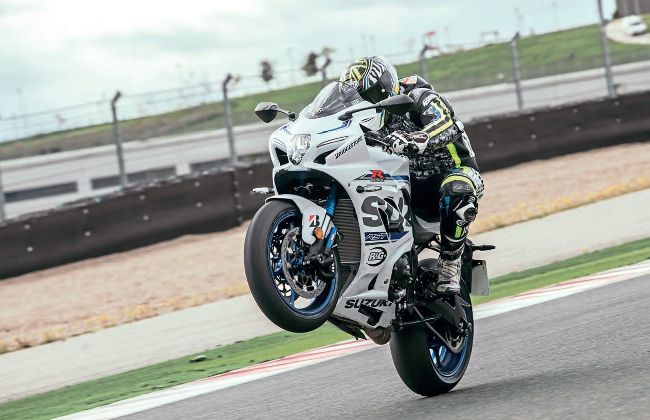
Under all those fancy fairings and glitzy features is a frame… working its arse off.
At its most basic level, a frame needs to hold the front and back wheels in line, it needs to be fairly light, and shouldn’t be distorted by the forces generated by the engine, brakes or rider. Obviously, we have suspension and steering setups too, and the frame needs to accommodate those, and let them do their work, again, without flexing or bending. The problem with those early steel tube frames (borrowed initially from bicycle technology) was that they weren’t rigid enough to stay in shape as power levels increased. Greater speeds and acceleration distorted the frame, so wheels began to move out of line, steering geometry changed, and the bike lost stability and grip.