GB
  
You are currently viewing the United Kingdom version of the site.
Would you like to switch to your local site?
13 MIN READ TIME

MURDERS IN SPACE

CSI: ISS

When it eventually happens, a murder

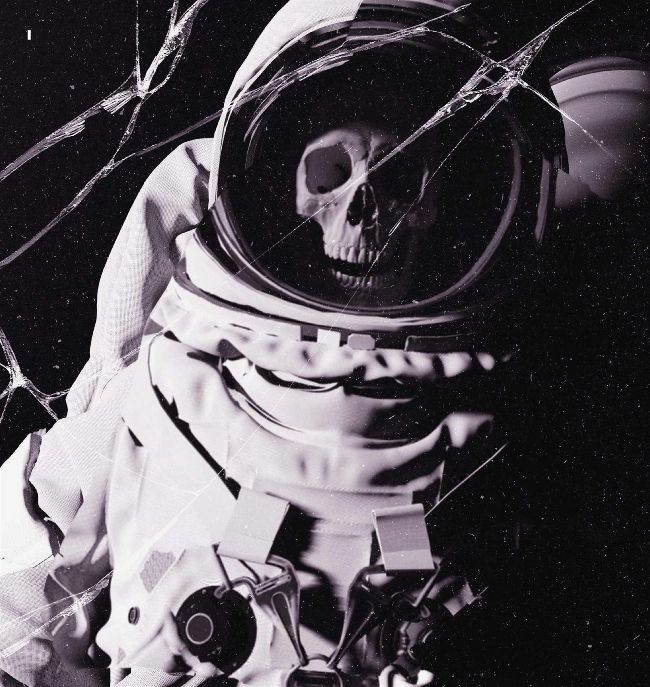
in space will be unlike any that has occurred on Earth. So how do you investigate an astronaut’s killing when your crime scene lacks gravity?

GETTY IMAGES

A confined space, a limited number of suspects, a lack of contact with the outside world. These are the makings of a juicy murder mystery. They’re also eerily similar to conditions aboard the International Space Station (ISS), where astronauts – highly trained personnel selected for their resourcefulness, endurance and almost impossibly cool composure – spend months on end trapped together.

Though we like to think of Earth’s best and brightest scientists as incorruptible, who hasn’t considered murdering a co-worker from time to time? And extended stays in high-stress environments are enough to make anyone snap. As cosmonaut Valery Ryumin chillingly wrote in his personal diary during a stint in space in 1980: “All the necessary conditions to perpetrate a murder are met by locking two men in a cabin of 5 x 6m [18 x 20ft] for two months.”

In the worst-case scenario where something gruesome does happen in space, we’ll want to know who did it. But we’re starting off with a disadvantage: the forensic methods we’ve developed on Earth won’t necessarily cut it in the face of low-gravity, off-planet environments.

With civilian space travel on the horizon, some experts are calling for investment in the emerging field of astroforensics – and the first research in this area has already landed.

So, awkwardly pull on a trench coat over your spacesuit and perch a fedora on your helmet, because it’s time to go crime-solving… in space.

HOUSTON, WE HAVE A HOMICIDE

One thing investigators are sure to notice missing in their first extraterrestrial case? Gravity.

“Gravity is all pervasive around us – it’s the number-one environmental variable that we’re always dealing with,” says Zack Kowalske, a forensic detective in the Crime Scene Investigations (CSI) Unit at Roswell Police Department in Georgia, in the US. His PhD research, on how environmental factors influence forensic bloodstain analysis, led him to a rather unusual question: how would blood spatter patterns change in low or zero gravity?

“EXPERTS ARE CALLING FOR INVESTMENT IN THE EMERGING FIELD OF ASTROFORENSICS”

Bloodstain pattern analysis is a crucial forensic tool that uses fluid dynamics, physics and mathematics to calculate the trajectory of blood droplets to understand how they hit a surface. On Earth, gravity influences that pattern. In space, however…

Unlock this article and much more with
You can enjoy:
Enjoy this edition in full
Instant access to 600+ titles
Thousands of back issues
No contract or commitment
Try for 99p
SUBSCRIBE NOW
30 day trial, then just £9.99 / month. Cancel anytime. New subscribers only.


Learn more
Pocketmags Plus
Pocketmags Plus

This article is from...


View Issues
BBC Science Focus Magazine
May 2025
VIEW IN STORE

Other Articles in this Issue


Editorial
FROM THE EDITOR
COVER: SCOTT BALMER THIS PAGE: GETTY IMAGES X2,
REGULARS
Caught in the act
WEST BENGAL, INDIA
The Cosmic Tornado
What you see here is a Herbig-Haro (HH)
Quantum butterfly
NEW JERSEY, USA
FEEDBACK
LETTERS MAY BE EDITED FOR PUBLICATION
DON’T JUST READ THIS MAGAZINE… LISTEN TO IT TOO
Discover the podcast from the team behind BBC Science Focus, available on Spotify, Apple Podcasts, Google Podcasts and Amazon Music
Using a smartphone may reduce your dementia risk
HEALTH AND TECH
7,000-year-old mummy DNA reveals a ‘ghost’ branch of humanity
ARCHAEOLOGY
Fossils reveal a whole new type of life
BIOLOGY
‘Hot’ Schrödinger’s cat makes quantum technologies possible
90 years on from the famous thought experiment’s conception, researchers have broken a crucial barrier in quantum physics
New method could finally destroy ‘forever chemicals’
HEALTH
The worst coffee types for your cholesterol levels
HEALTH
Strange microscopic lightning kickstarted life on Earth
Tiny zaps of electricity may have provided the energy to form life
Study makes ‘baby amnesia’ even more mysterious
NEUROSCIENCE
NASA astronauts return to Earth after surprise space stay
SPACE
Happiness is… well, nobody’s really sure
COMMENT
Dark energy could be getting weaker
COMMENT
The ‘dark oxygen’ debate isn’t helping anyone
COMMENT
REALITY CHECK
THE SCIENCE BEHIND THE HEADLINES
Crash protection, with added convenience
PREPARE YOURSELF FOR TOMORROW
5 of the Best Air Filters
Take a breath with devices that scrub pollen, pollution and other unwanted particles from your home
EDITOR’S PICKS…
This month’s smartest tech
Are fungi conscious?
New research on fungi suggests they could be demonstrating some form of intelligence, but not all experts are convinced
WILL SUSPENDED ANIMATION EVER EXIST?
YOUR QUESTIONS ANSWERED
DOES THE DEEP SEA HAVE SEASONS?
Below the top few hundred metres, the deep
CAN SEAGULLS REALLY GET DRUNK ON FLYING ANTS?
Seagulls feasting on swarms of flying ants have
THE FRILLED SHARK
NATURE’S WEIRDEST CREATURES
HOW HAS LIVING WITH A NARCISSIST AFFECTED ME?
Are you an empathic people-pleaser who prefers to
WHY DOES MARS HAVE SUCH A WEIRD SHAPE?
Mars may look like a sphere, but it’s
IS ARTIFICIAL INTELLIGENCE GIVING US FALSE MEMORIES?
You may have seen videos circulating online of
WHEN: LATE MAY/EARLY JUNE
HOW TO SEE AN OVERSIZED MOON
CAN TUMOURS GROW THEIR OWN ORGANS?
Though the idea might make you squirm, some
CAN YOU AVOID GETTING ‘OZEMPIC FACE’?
Although they were originally developed to treat diabetes,
HAVE WE EVER INTERCEPTED ANYTHING FROM ALIENS?
In 2019, a radio telescope in Australia detected
WHAT WOULD A FUSION ENERGY DISASTER LOOK LIKE?
QUESTION OF THE MONTH
CROSSWORD
PENCILS AT THE READY!
NEXT ISSUE
KEEP FIDO FEELING YOUNG
SWEAT AND BEERS
The latest in exercise science suggests that maybe you can run off a hangover
FEATURES
HOW TO BREAK THE YO-YO DIET CYCLE
Research suggests your fat cells have a memory, hence any weight you lose always seems to find its way back to your body. So why is it so hard to make your fat cells forget?
WRONG THING, WRONG PLACE, WRONG TIME
Some of the first images captured by the James Webb Space Telescope included a group of unidentifiable objects in deep space. The objects were so unusual, they threatened to break our understanding of the cosmos. Now, astronomers think they might be getting to grips with what the objects could be
YOU ARE FEELING VERY… HEALTHY
Forget the swinging pocket watches, scientists are now praising hypnotherapy as a powerful tool to fight mental and physical pain. Count back from five and we’ll begin…
Chat
X
Pocketmags Support