REALITY CHECK
THE SCIENCE BEHIND THE HEADLINES
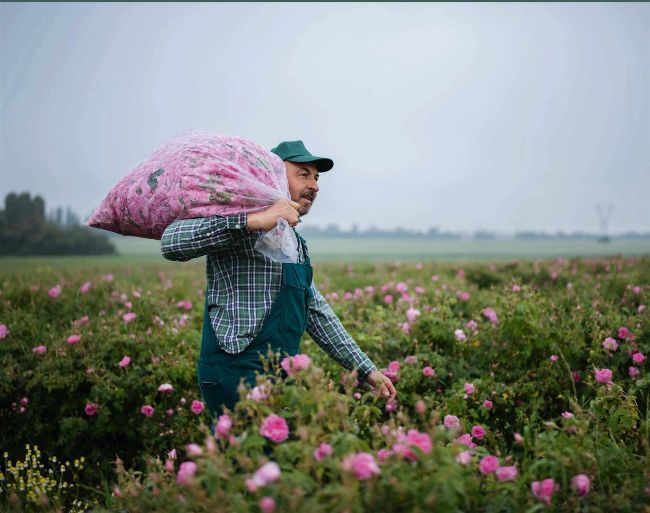
Farming for natural cosmetic ingredients, such as Damask roses used to make rose water, can require a lot of land, water and chemicals to grow on a commercial scale
REVIEW
Here’s what cosmetic ingredients you should really be using if you want to protect the planet
Consumers are right to be sensitive about what they put on their skin, but an emphasis on using ‘natural’ ingredients could be misleading
The beauty industry is no stranger to trends. From pro-ageing campaigns to use-at-home LED masks, consumers have seen it all. But one trend that has taken a particularly firm grip over the past decade is the idea of ‘natural’, or ‘organic’, beauty. On the surface, it sounds great. Botanical ingredients, minimal processing and fewer synthetic pesticides. What’s not to love? Well, quite a lot as it turns out.
When we think about doing right by the planet, choosing to use a ‘natural’ beauty product might feel like a good idea. But as the beauty industry faces scrutiny for its environmental toll, it’s time to look beyond the greenwashing and ask whether relying on naturally grown resources for a billion-dollar industry is truly sustainable.
GROWING MARKETS
The current global natural and organic beauty industry is experiencing healthy growth driven by increasing consumer demand and is predicted to earn a total revenue of approximately £11.3bn ($14.9bn) in 2025. In the UK alone, the natural cosmetics sector is planned to reach roughly £210m ($278m) in 2025, with an annual growth rate of approximately 2.74 per cent for the next five years.
“More products, means more ingredients being harvested”
From minimal ingredient serums to zero-waste shampoo bars, the variety and volume of products on offer has never been greater. This booming market is exciting, but it’s also creating challenges. More products means more ingredients being harvested, mined or synthesised, as well as more packaging and emissions being produced at every step along the supply chain.
It’s a complex puzzle and it’s easy for well-intentioned consumers to get caught up in labels like ‘natural’ or ‘organic’ without understanding what those terms really mean.
There’s a perception that if something is ‘natural’, it must be good for the environment. But harvesting natural ingredients, whether it’s argan oil from Morocco, or aloe vera from Mexico, comes at a cost. Crops require massive amounts of land, water and energy to grow.
Many of these resource-heavy crops are vulnerable to climate change and many are unfortunately subject to unethical labour practices. We like to think of organic farming as a more sustainable method of agriculture, but it can have unintended negative consequences. For example, many organically farmed ingredients can produce lower crop yields while also using more land. This can contribute to deforestation, as farmers seek more land to maximise the number of slower-growing crops they can produce.