HE ALTH
The speed limit of human thought is ridiculously low
WORDS SKYLER WARE
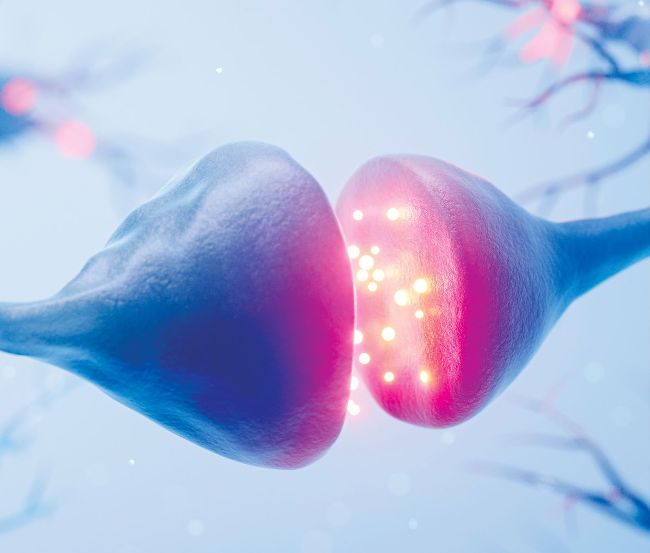
Human brains take in sensory data at over a billion bits per second
How fast do humans think? It’s slower than you might expect. The peripheral nervous system, the network of nerves that delivers information between the brain and the body, takes in environmental information at over a billion bits per second, a speed comparable to a lightning-fast internet connection. But people think and process that information at just ten bits per second. This vast gulf hints at major unexplored questions in neuroscience and human cognition. “That number is ridiculously small compared with any information rate we encounter in daily life,” wrote the researchers. “For example, we get anxious when the speed of the home WiFi network drops below 100 megabits per second because that might compromise our enjoyment of Netflix shows. Meanwhile, even if we stay awake during the show, our brain will never extract more than ten bits per second of that giant bitstream.” Jieyu Zheng and Markus Meister of the California Institute of Technology determined this speed limit by calculating the number of bits required to perform a task, such as solving a Rubik’s Cube or memorising the order of a deck of cards, and dividing it by the time it took to perform each task. For record-holding memory experts who can finish those tasks in seconds, the rate at which they processed information was roughly ten bits per second.