AMD ZEN 3 UNWRAPPED
The upcoming Ryzen 5000 CPUs significantly improve on an already successful 7nm design
2020 certainly has been an intriguing year. Whether that’s the global climate, the COVID pandemic, or computing , as ever nothing stays the same. The only thing that’s seemingly permanent is impermanence. There’s nowhere else that this premise can be better observed than in the realm of processing power. From the advent of Nvidia’s RTX 3000 series, to AMD’s RDNA 2 graphics cards launching, this year has seen some revolutionary leaps in performance.
But that’s not what we’re talking about here today. It’s all about the processors, and namely AMD’s latest Zen 3 or 5000 series chips. Take a moment just think back 10 years—how far we’ve come in this last decade has been remarkable. The potency of the humble desktop has increased exponentially. Moore’s law may be coming to an end as far as transistor density and performance is concerned, but as always, thanks to human ingenuity, we’re seeing more brilliant minds pivot
themselves, to push processors further and harder than ever before. Long gone are the days of 10 percent performance increases year on year, that’s for sure.
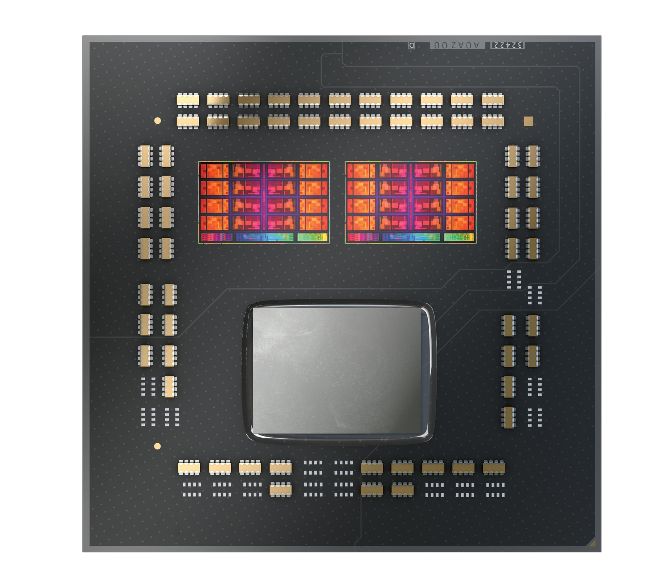
Since the launch of its first Zen architecture back in 2017, AMD has shown time and time again, with each generational advancement of its processors, that it’s got more than enough clout to take on Intel on the grand stage of CPU dominance. And with this latest 3rd-generation architecture, it’s aiming its sights squarely on Intel’s IPC crown. Are we about to see a revolution in the way modern-day computational processing progress is led? How exactly has AMD managed to sneak in and steal the crown from the giant that is Intel? And is AMD’s 7nm Zen 3 architecture that radically different to its previous iteration? What makes it all tick? Well if you’re interested in that, dear reader, it’s time to turn the page and find out what the future holds for all of us. –JARROD WALTON
Architectural Advantages
AMD’s CPU team is firing on all cylinders, making Intel’s 14nm designs like Comet Lake look increasingly outdated. AMD’s Ryzen 9 3950X was already making short work of Intel CPUs in just about every discipline—except gaming. Zen 3, also called Vermeer, aims to take on Intel in its last refuge, and the architectural changes required to do so aren’t even that significant. Like Zen 2, Zen 3 uses TSMC’s 7nm N7 process for the CPU chiplets, and 12nm FinFET for the IO chiplet. However, a few smart adjustments are set to make a big difference.
Putting things into perspective, Intel now has SuperFin, the marketing name for its third generation 10nm lithography that’s already used in the new Tiger Lake CPUs. But Tiger Lake is mobileonly and currently tops out at four-core/eight-thread designs, and it will be a while before up to eight-core/16-thread chips launch. Intel also has Rocket Lake coming in Q1 of 2021, which will still use 14nm lithography, but with a new architecture—the first truly new desktop architecture from Intel in over five years!