Duolingo vs. Babbel
Learning whole new languages online has never been easier
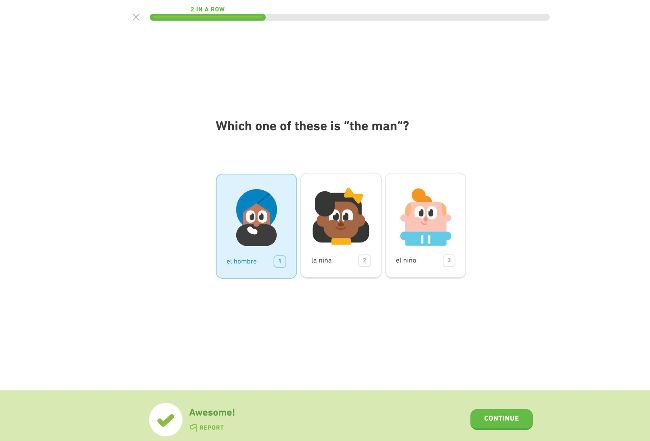
Cartoon-style graphics lend Duolingo a learn-whilehaving-fun air.
© DUOLINGO
LEARNING A NEW language as an adult can be a tricky proposition, especially if you live in a monoglot culture and don’t get the chance to practice.
Apps and services that promote language-learning can come in handy here, offering daily lessons to learn new vocabulary and reinforce old lessons, so that when you do get the chance to use your new language skills, they’re on the tip of your tongue.
Prominent among these services are Duolingo and Babbel. They’re both popular ways of learning another language, but each takes a rather different approach.
The first major difference is in pricing: Duolingo is free. Or at least a version of it is. The free software gets you full access to its lessons—and that’s it. If you want to remove ads, get offline access, make unlimited mistakes, and actually track your progress, you need to sign up for a Plus account. This costs $7 a month, and there’s a two-week free trial to see whether it’s right for you.