CLOCK WORKS
Want to be a competitive overclocker? Here’s how to get started, by Scharon Harding
Scharon Harding
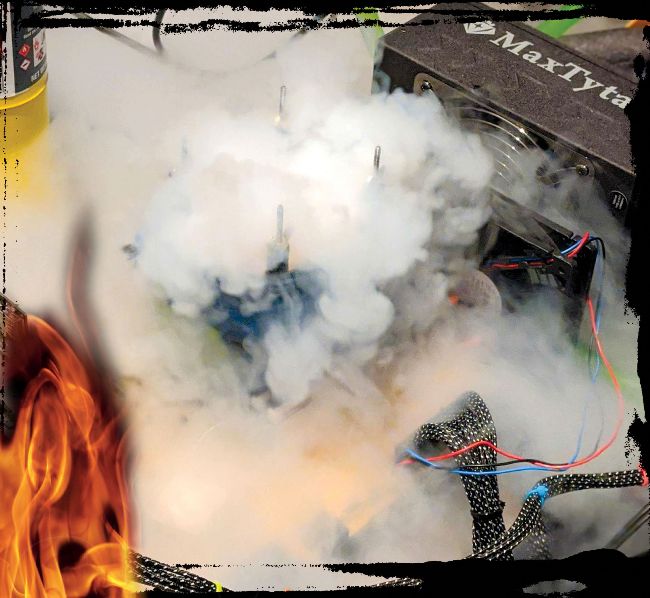
LN2 does look seriously cool in action. (Pun intended.)
OVERCLOCKING boosts your performance, but what about your street cred? You can boast about your achievements to friends, but when you’re ready to show the world your skills, there’s competitive overclocking. Competitors enjoy a vast community online and at events worldwide. There are also prizes for winning competitions and breaking records. Competitive overclockers’ ultimate destination is HWBot, which hosts global overclocking competitions and maintains a database of world records. Place near the top of one of its ranking boards, and you’ve made it.
Sound exciting? For those new to overclocking or interested in competing, we’re here to help. Here are successful professional overclockers’ best tips for getting started.
Start with CPUs or RAM, not graphics cards. Premium graphics cards are usually more expensive than CPUs or RAM kits, so you’ll be more upset if you kill one by pushing it too hard. CPUs and RAM are also easier to overclock.
CPUs are the most popular starting point. Like other components, they also have built-in safety features, like thermal throttling, to help avoid damage from excessive voltage or inadequate cooling. In addition, keeping your CPU’s heat at bay is easier than cooling “most reference GPUs” according to Albrecht Mesotten, who’s been competing since 2009. “It’s also much easier to test stability for a CPU than for a GPU," he added.
You don’t need the most expensive components. When you check out the top scores on HWBot, you’ll see premium,
expensive components listed. This makes the idea of buying your way to the top enticing, but overclockers we spoke to said you don’t need the priciest components-you can still gain points and move up the rankings with older parts. And competitive overclocking is about more than pushing GHz, so getting the most expensive components and binning them to find the highest possible clock speeds doesn’t guarantee you victory.
Mesotten points to the different requirements needed for the benchmarks, such as operating systems, even outdated platforms like Windows XP. One of the trickiest parts is that you need a multitude of operating systems available for your setup to get the best performance. If you spend a lot, you’ll be that much more in the hole if a product gets damaged.
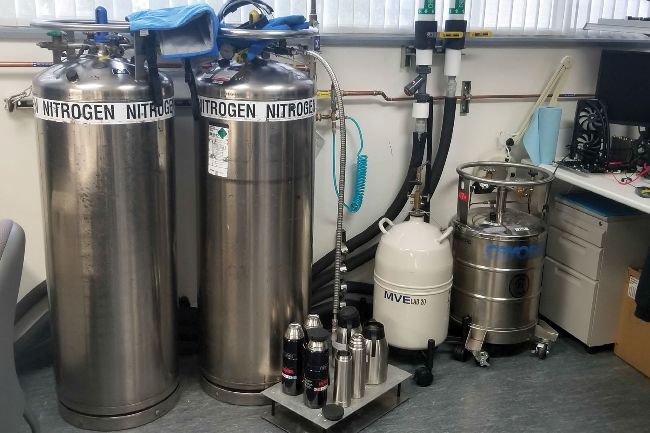
This is what sub-zero overclocking demands at the professional level.
BEYOND AIR COOLING
If you’re air cooling your CPU, you’ll probably hit a maximum of 4.8-5.2GHz on Intel’s 7th generation and later K-series processors, depending on your luck with the silicon lottery-variances in silicon that result in different performance among processors with the same model number. AMD’s 2nd-generation Ryzen processors will reach 3.8-4.2GHz with a beefy air cooler. If you want to go higher, you need to upgrade your cooling, a milestone for serious overclockers. To be highly competitive, you’ll want to get into liquid nitrogen (aka LN2).