HOW TO BUILD A DEPOT… WITH A DIFFERENCE
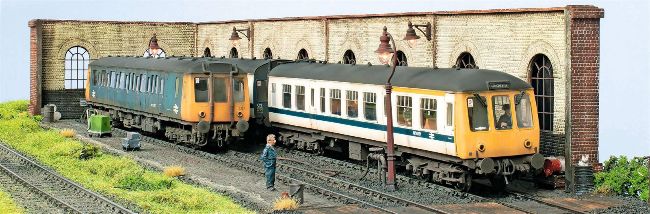
RAIL PHOTOPRINTS
Unlike many railway enthusiasts of my (and earlier) generations, I don’t have any memories of ‘bunking’ into locomotive sheds as a youth.
There were no such facilities near my home for a start, with most of the steam-era depots having been swept away before I was born.
What I do remember, though, is a range of stabling points for diesel traction. Consisting of little more than a handful of sidings, the odd hose pipe, oil drum and maybe a shabby Portacabin acting as mess hut, they weren’t exactly filled with the romance of the likes of Edge Hill or Old Oak Common.
However, the presence of favourite locomotive classes – Classes 20/25/31/37/40/56 – made them a magnet for our Saturday morning excursions, especially to Arpley Junction in Warrington. If Mum was with us, we’d have to make do with trying to ‘cop’ the numbers through the steel fence. If it was just Dad, he’d sneak us across the industrial wasteland so that we could walk among the sleeping giants. Until we were shouted at by BR staff, that is! Not the most responsible bit of parenting, I suppose, but it was exciting, nonetheless.
Unsurprisingly, that era of lax security at railway depots is long gone and trespassing is a much more serious issue these days – and an activity that we would certainly not condone.
HIDDEN FROM VIEW
As mentioned on this month’s Welcome page, I’ve added some sort of engine shed scene to many of my layouts over the years, as well as creating a few ‘micros’ centred around a steam or diesel depot. For those of us who struggle to find room for a layout, a depot scene is perfect. No need to worry about run-round loops or carriage lengths, as light engine movements are simple, while still offering some operational interest.