A CURSE AGAINST ELEGIES
MANIC STREET PREACHERS have survived tragic loss, cultural upheaval and relentless self-scrutiny to arrive at a fifteenth album that acknowledges their precarious place in the world. Other rock bands wouldn’t be as exacting, but they are not other rock bands. “We’ve never, ever allowed ourselves to be deluded,” they tell DORIAN LYNSKEY.
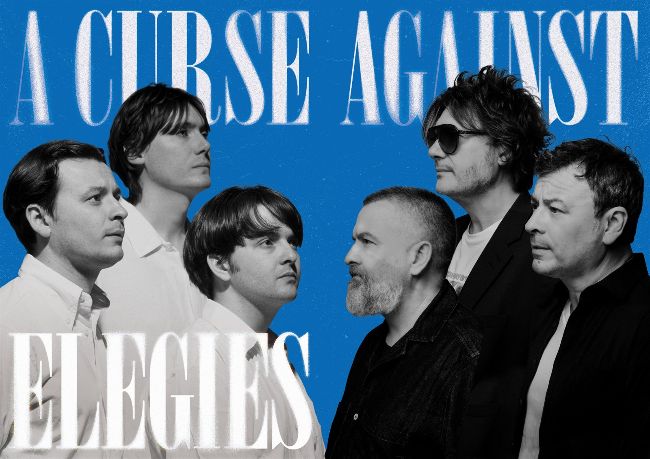
Face the music: (above) Manic Street Preachers in 2024 (from left) Sean Moore, Nicky Wire, James Dean Bradfield, and (opposite) in 1996.
Alex Lake, Camera Press/Steve Double
EVERY MANIC STREET PREACHERS ALBUM comes with a tone-setting quotation. On their latest, Critical Thinking, the American poet Anne Sexton does the honours: “I am a collection of dismantled almosts.” Many artists fret about their mortality and waning power but perhaps nobody else would advertise their concerns so loudly. “I know our time has come and gone,” James Dean Bradfield declares on the perversely exhilarating first single Decline And Fall. “But at least we blazed a trail and shone.”
Then again, the group were dwelling on defeat even at their commercial high noon. Their 1998 album This Is My Truth Tell Me Yours greeted its five million listeners with The Everlasting: “In the beginning/ When we were winning/When our smiles were genuine.” The Manic Street Preachers suffer from a kind of musical hypochondria, forever expecting an end that never arrives.
“There is a truth serum in the band that has served us very well,” says Nicky Wire, the band’s bassist, lyricist, sometime singer, self-appointed curator and pitiless auto-critic. “We’ve never, ever allowed ourselves to be deluded. Failure is ingrained in the band as much as success. The biggest piss-take we have is we get in the studio and James will shout out, ‘Sounding better than ever!’ Because we know we’re not really. It’s a lie.” He smiles sadly. “The reality is managed decline.”
That’s one way of looking at it. Another angle is that this is a story of extraordinary resilience and consistency. If not for the disappearance of guitarist and lyricist Richey Edwards in 1995 (he was officially pronounced dead in 2008) and the death of manager Philip Hall in 1993, little would have changed in terms of personnel. Wire, Bradfield and drummer Sean Moore (Bradfield’s cousin) are still managed by Hall’s brother Martin. They have been working with producer Dave Eringa in some capacity for 34 years and remain signed to Columbia after 33. They’ve never split up, or even gone on hiatus. Bradfield starts thinking about the next album as soon as he’s finished mastering the last. He compares it to constantly running for re-election.
“Probably we are a bit underappreciated because we never stopped,” says Wire. “It’s the curse of being overly productive. This is our fifteenth studio album plus solo albums, greatest hits, reissues. There’s an album every two years basically. And the first four came in four years, with a manager dying and Richey disappearing. It’s like some ’60s band, isn’t it?”
Their music, at least, is always changing: heroic arena rock, bruising post-punk, acoustic soul-searching, bittersweet MOR. Each album reacts against its predecessor. Wire maintains that Bradfield’s musical dexterity is “criminally underrated”. The bassist writes improbable combinations of lancing autobiography, contrarian social commentary, art appreciation and history, then Bradfield and Moore give them melodic wings. “You’ve got to listen to what the words are telling you,” says Bradfield. “It’s OK to feel intimidated by a lyric.”