THE JAZZ SINGER
As JONI MITCHELL preps for her landmark June 10 show, MOJO explores another key watershed: Court And Spark. Crazy chords, unreliable beaus, jazz cats and a drunk Lennon litter the path to her second great masterpiece, an intimate self-portrait and dissection of the LA scene’s Gatsby-ish bacchanal. “It’s an almost perfect record,” learns TOM DOYLE.
Portrait by CHARLES BUSH.
PLUS: Joni Live! Her on-stage highlights.
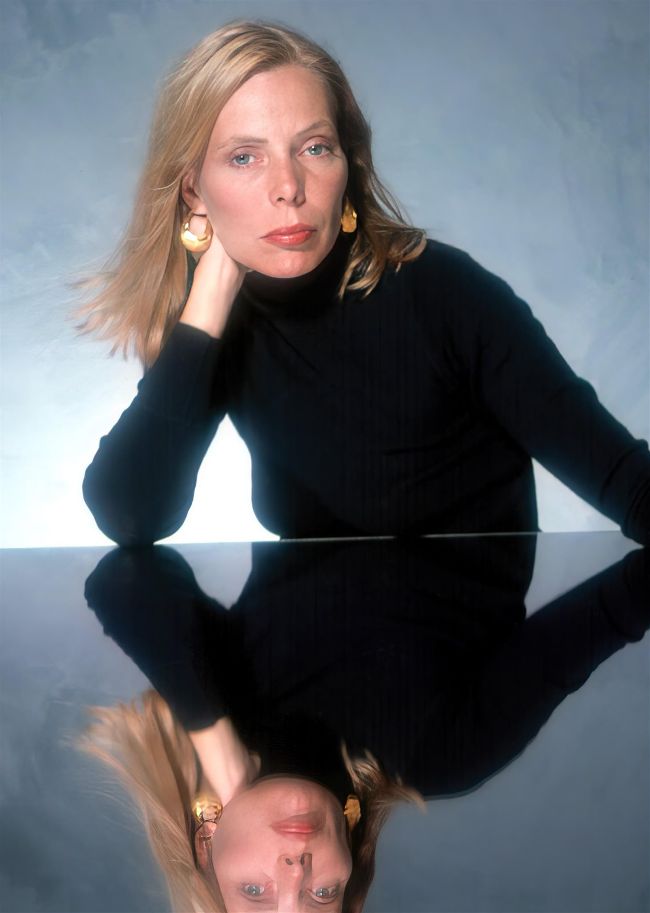
So much spark: Joni Mitchell in 1974.
EverettCollection Inc/Alamy Stock Photo
SITUATED JUST SOUTH OF THE CORNER of Sunset Boulevard and North La Brea Avenue in Hollywood, the A&M recording studio lot was one of the most happening spots in Los Angeles in 1973. Formerly the site of Charlie Chaplin’s film studio (where he’d encountered The Kid in 1921 and eaten his boot in The Gold Rush in 1925), it had been bought by A&M Records’ Herb Alpert and Jerry Moss in ’66 and quickly become one of the premier recording facilities in southern California.
“You would see ever ybody walking around the lot,” remembers Cheech Marin, one half of stoner comedy duo Cheech & Chong, who recorded a series of albums at A&M and who would appear in a cameo skit on Joni Mitchell’s pivotal sixth album, Court And Spark. “It was Leon Russell and The Carpenters and Joe Cocker and Joni Mitchell. We showed up and ever ybody would go, ‘Who are these two guys recording outside in the courtyard?’”
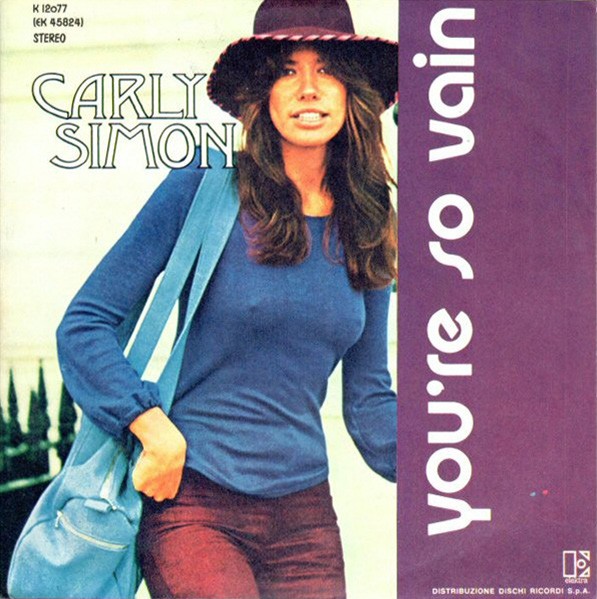
LA in ’73 was fast changing. Many of the Laurel Canyon hippy musicians were now rich, and mellowing marijuana had been replaced by ego-boosting hits of cocaine, which was de rigueur in both the recording studios and record company boardrooms. The previous November, Carly Simon’s cr yptic Number 1 song You’re So Vain had been marketed via promo mirrors handed out to radio DJs, both to reflect the song’s title and provide a handy surface for chopping out a line.
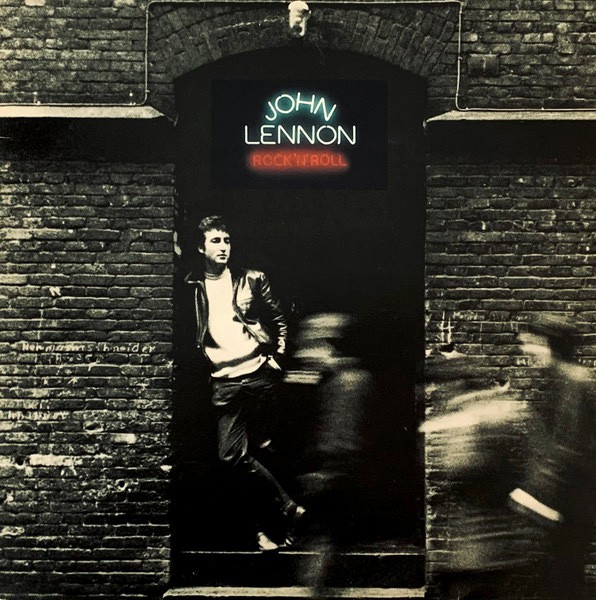
As night fell over Hollywood and the bars closed at midnight, sometimes the party moved on to A&M, where the notoriously riotous sessions for John Lennon’s Rock’n’Roll album were taking place, overseen by a gun-packing, amyl nitrate-sniffing Phil Spector. More than once, Joni Mitchell dropped by: one time with her new buddy Jack Nicholson, another time with Warren Beatty. Lennon’s girlfriend at the time, May Pang, later recalled the ex-Beatle had bitched behind Mitchell’s back that the hip actors were “Joni’s trophies”.
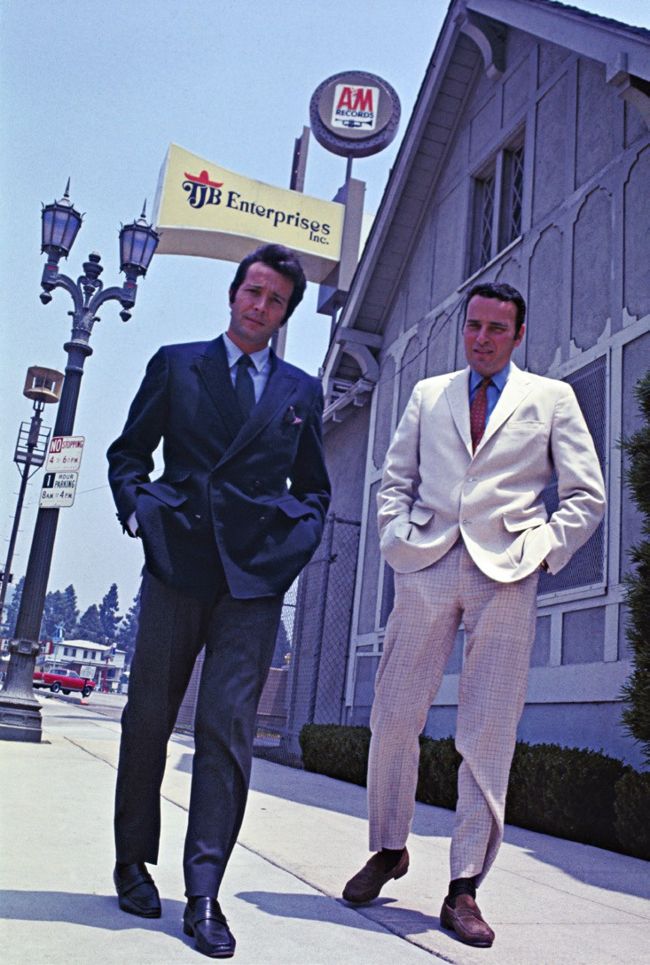
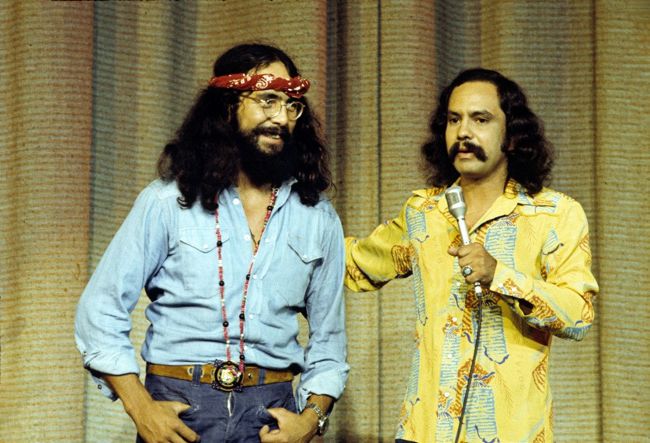
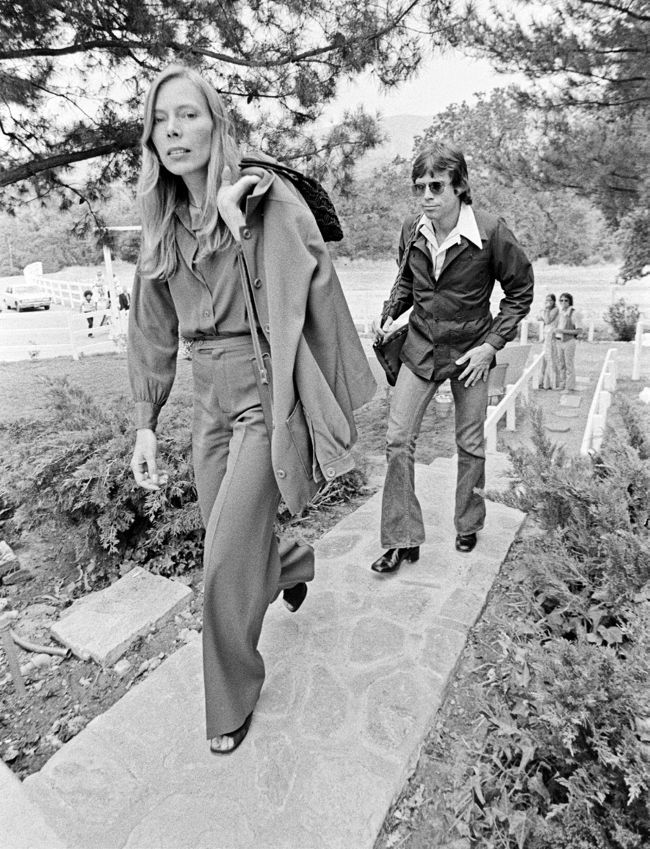
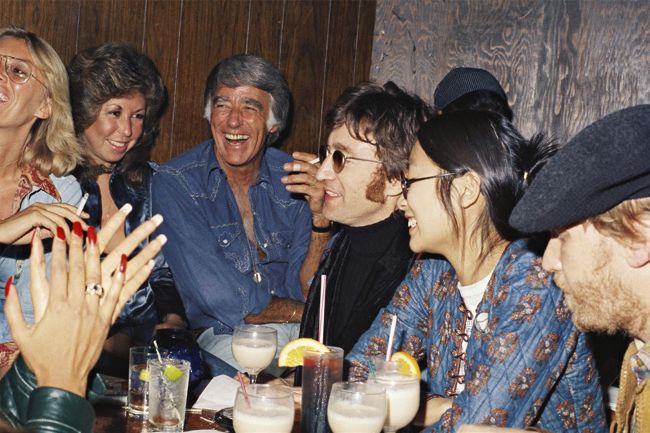
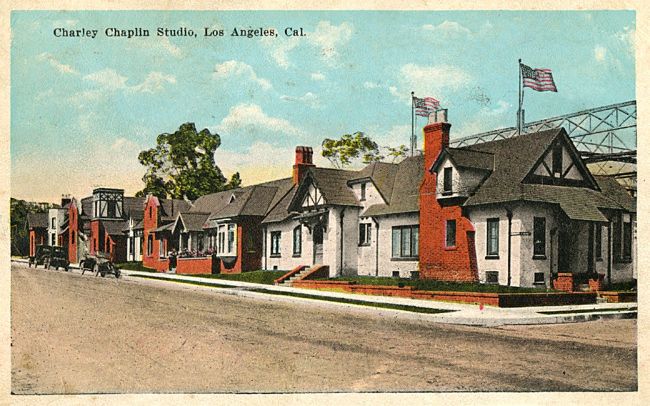
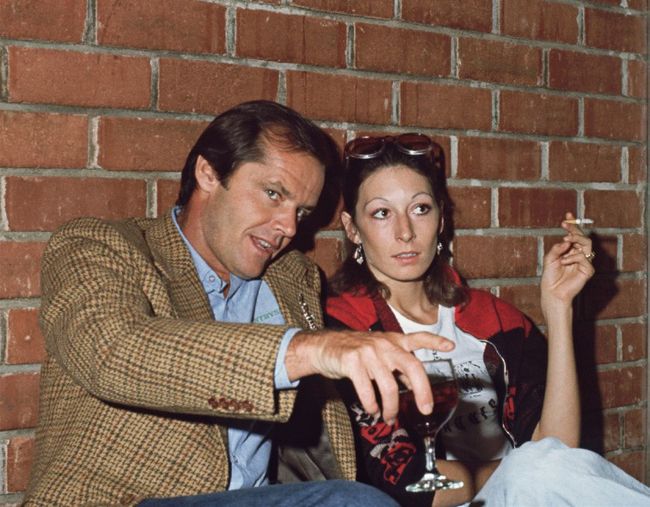
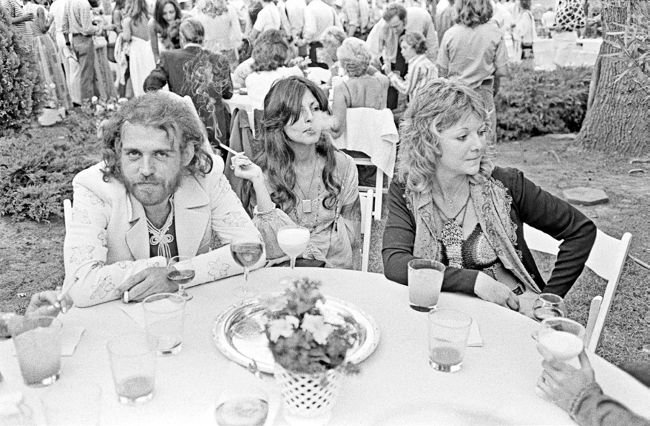
People and their parties: Joni Mitchell and John Guerin at the wedding of Jimmy Webb and Patsy Sullivan, July 13, 1974; Joe Cocker (left) at the Webb-Sullivan nuptials; Jack Nicholson and Anjelica Huston; Charlie Chaplin Studios, Hollywood, later the site of A&M Studios; A&M’s Joe Moss and Herb Alpert, 1966; Cheech & Chong, Mitchell collaborators, in 1973; John Lennon with (right) May Pang and Harry Nilsson enjoying a quiet drink at the Troubadour, West Hollywood, March 12, 1974.
Getty (6), Alamy
In the studio next door, Mitchell was finessing the altogether more focused Court And Spark. Bored and drunk, Lennon gatecrashed proceedings to offer Joni some unsolicited advice.
“I played him something,” she later recalled. “[He said] ‘Oh, it’s all a product of overeducation. You want a hit, don’t you? Put some fiddles on it!’”
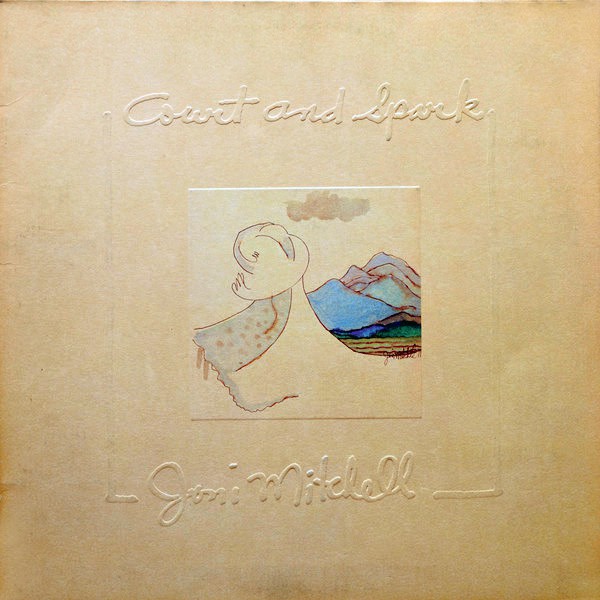
The irony being that at a time when Lennon was regressing to rock’n’roll first principles, Mitchell was undertaking a daring progressive leap; Court And Spark would be the album to transform her from confessional folk singer into the queen of LA jazz rock. In many ways, it would be just as starkly emotional as her previous landmark, 1971’s Blue, but with its raw sentiments soothed by its rhythmically-driven songs and glossy production. Here, as she vividly described in its eerie piano ballad title track, she was exploring “the city of the fallen angels”: songs about deranged parties, failed therapy sessions and lovelorn Bel Air sadness.
Like Lennon, however, not ever yone was buying into Mitchell’s new direction. “Joni reached a point where, to my mind, she was writing about rich people,” Randy Newman later carped to MOJO writer Barney Hoskyns. “And I lost interest.”
“I can only say that you write about that which you have access to,” Mitchell responded in her defence. “So, if you go from the hippy thing to more of a Gatsby community, so what? Life is short and you have an opportunity to explore as much of it as fame and fortune will allow.”
In truth, Mitchell had always been ambivalent about success. Court And Spark would only ser ve to make her even more famous. With its release, on Januar y 14, 1974, it was to become her biggest album: hitting Number 2, going double platinum and marking the beginning of a whole new phase in her astonishing musical development.
AFTER THE COMMERCIAL TRIUMPHS OF Blue and its 1970 predecessor, Ladies Of The Canyon, Joni Mitchell was left feeling exposed and vulnerable. Later, she’d lament that “they were putting me on a pedestal, and I was wobbling.” She had determined to become a hermit.
Aged 29, she dropped out of the Californian music scene and disappeared into the Canadian wilderness of British Columbia, moving into what she described as “a little stone house like a monaster y where I could just go away and hide.” There was no electricity, only hardwood
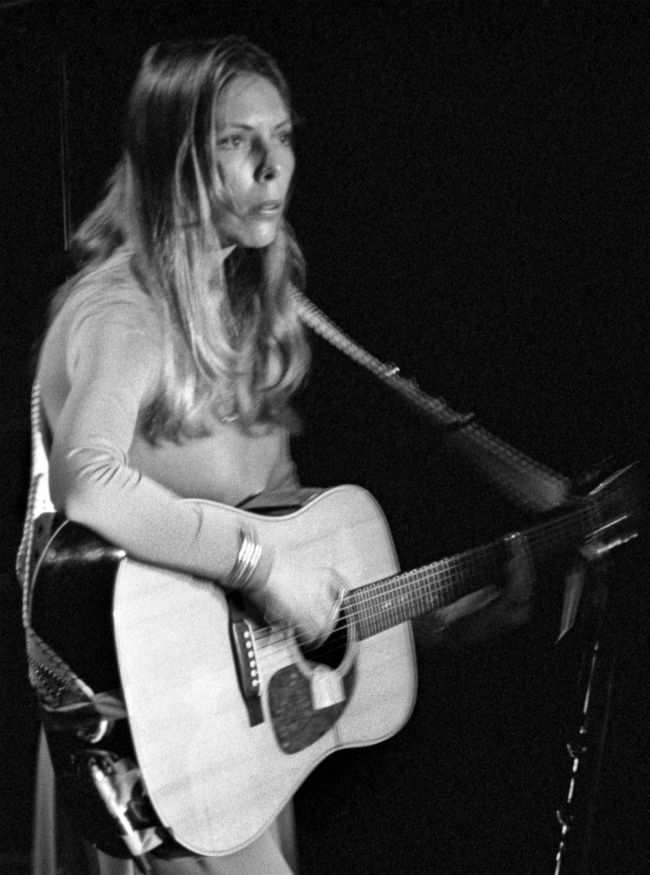
Seeing miles of aisles: Mitchell on-stage at Cameron Indoor Stadium, Duke University, Durham, North Carolina, March 23, 1974; (right) Joni takes the wheel, 1974.
Henry Diltz, Getty benches to sit on, not even any mirrors. Tired of public life and dedicated to this ascetic existence, she painted and wrote songs for what was to be her fifth album, For The Roses.
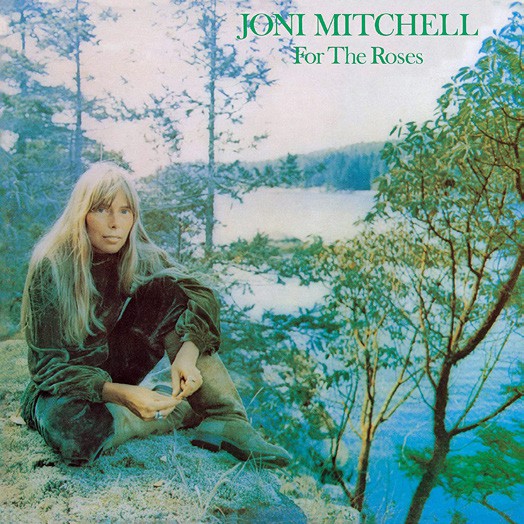
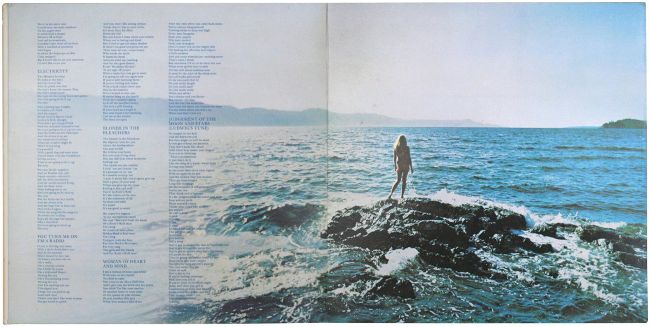
In Canada, she pondered her fame, and what she might do if she returned to face it, in characteristically poetic terms; not least in the title track of For The Roses, which viewed the moon as an empty spotlight and imagined the sound of the wind to be distant applause. By contrast, her newfound sense of freedom was vividly expressed by a Joel Bernstein photograph in the album’s artwork: the singer shot from behind, naked on the shore.