QR codes
FIVE THINGS YOU NEVER KNEW ABOUT QR CODES
There’s more to these little mosaics than meets the eye; Darien Graham-Smith discovers it’s hip to be square
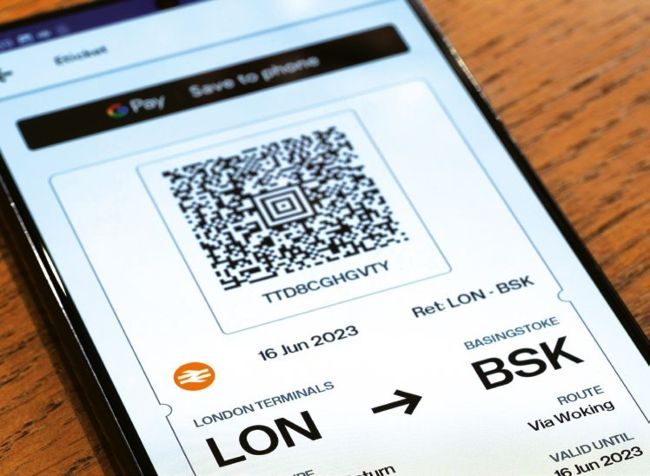
LEFT
Custom codes are used for travel tickets
1 QR codes can encode all types of data
You’re already familiar with QR codes as a quick and easy way to access a web link. All right, it can be fiddly to dig your phone out of your pocket, bring up the camera and point it at the code. Or, if you’re the one generating the code, it’s a little bit of a pain that you have to use a tool to create the image and embed it into your document, poster or wherever. Hopefully, though, we can all agree that using QR codes is a much better way to share addresses then expecting people to type in URLs manually. QR codes aren’t just for web addresses, however. You might also have come across them in the context of Wi-Fi connections. Some routers have stickers on the back that contain the SSID and passphrase, so you just point your phone and scan the code to get online – or you can generate your own code for a particular network and share it with others, so they can connect without having to tap in “x]2bg\I37H7” by hand.
You might wonder what else a QR code can store – and the short answer is absolutely anything. The QR format is a general-purpose encoding system that merely represents a string of digits, alphanumeric characters or binary data. In the example cases above, it’s the scanning device that recognises the data type and handles it accordingly. Other established data types include “vCards” that contain a person’s name and contact details, GPS co-ordinates and calendar events – but you can store literally anything you like in a QR code.
The only limit in fact is the size of the code – or to be precise the number of “modules” (squares) it contains, since the code itself can be printed at any size. The standard allows for grid sizes between 21 x 21 and 177 x 177 modules, with the biggest codes capable of representing just over 7,000 numeric characters, 4,296 alphanumeric characters or 2,953 bytes of raw binary data. It’s this versatility and available density of information that makes QR codes so useful, allowing them to hold any type of data from event and transport tickets to personal ID and payment tokens.