Leisure batteries
CARAVAN GENIUS
The leisure battery is a caravanner’s best friend, and of course, you should choose your friends wisely and treat them well. Our guide gives you all you need to know

1 The leisure battery becomes especially important if you like to camp off-grid
BATTERY TECHNOLOGY is about to take off. As the Government bans petrol and diesel cars, so the humble lead-acid battery will inevitably be usurped by far smarter chemical compositions, which are going to ‘trickle down’ from high-end electric cars to the outdoor leisure market.
The caravan leisure battery, it has to be said, has served us extremely well: cheap, compact, reliable and long-lasting, it has illuminated our lighting and powered our (12V) TVs for many years. It’s a little bundle of highly corrosive joy!
Of course, leisure batteries are different to car batteries, as they don’t have to deliver that powerful ‘mule kick’ to turn a starter motor; instead they flow smooth, consistent power over a long period, and can be steadily recharged using a solar panel or smart charger, or by a few miles hooked up to the back of your tow car.
In this guide, we’re looking at leisure battery choice and maintenance, to help you get the best ‘bang for your buck’.
JOHN SOOTHERAN is Practical Caravan’s Consulting Editor and an experienced caravanner
What batteries do
Put simply, the leisure battery in your caravan stores 12V DC electricity, which can be used to power all sorts of devices, fittings and appliances.
Once charged up, it can provide electric current for many hours, depending on the ‘draw’ of those devices.
In addition, leisure batteries can also store electricity that is created by solar panels, and they have a third benefit, in that they smooth out the surges and spikes resulting from an inconsistent power flow – thereby protecting delicate electronics.
A typical leisure battery contains flat lead plates that are immersed in an acid electrolyte in one of a number of forms. The acid and lead react together to create the electric charge.
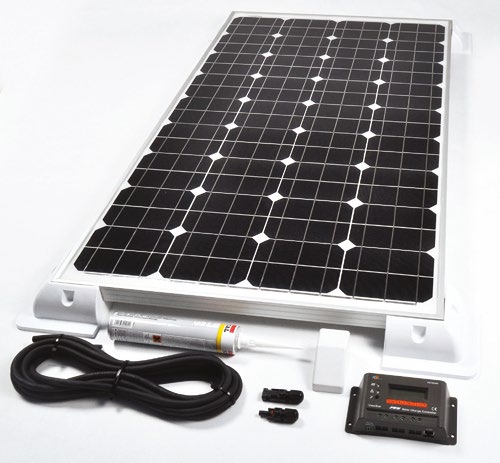
2 Leisure batteries can store the electric charge created by your solar panel
Choosing a battery
The first step is to decide which battery is appropriate for your needs. For example, if you use a motor mover or auto-leveller, you’ll need a 100Ah+ battery.
Leisure battery power ratings are measured in ampere-hours (Ah). This means, for example, that a 100Ah battery will deliver 1A for 100 hours, or 5A for 20 hours – or at least, they will do so in theory!