“We just wanted to be different."
Billed as the band that could change the face of 70s rock, Faust found their audience not in the popular music halls their record label had hoped but among fans with more experimental tastes. The krautrock pioneers’ early years have now been captured in an eight-disc box set that charts their revolutionary sound and includes their lost album, Punkt. Prog finds out more about those seminal years.
Words: Rob Hughes
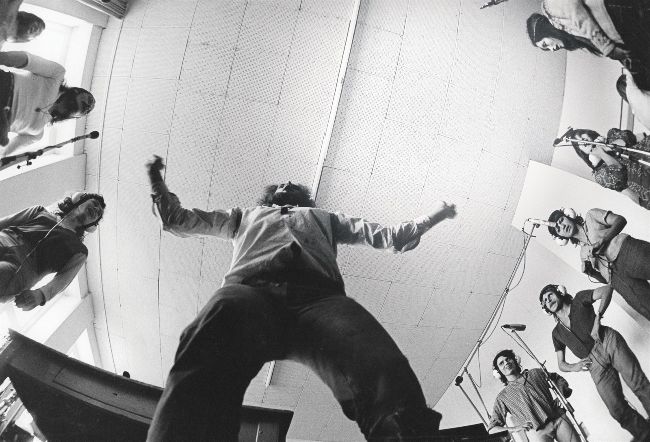
Studio daze: Faust in 1971 in Wümme.
The night of November 23, 1971 was supposed to be a celebration. Hamburg’s Musikhalle, a prestigious venue that had once hosted the likes of Stravinsky, Prokofiev and Maria Callas, was now the setting for a showcase gig from Polydor’s brightest new hopes. The German label were touting Faust as the band that “could change the face of rock music for the next decade.” What could possibly go wrong?
Everything, as it turned out. Faust’s ambitious plans for a quadrophonic surround sound experience were scuppered by bad luck and faulty technology. “The audience arrived and nothing was working,” recalls singer and bassist Jean-Hervé Péron. “I remember us sitting on stage, trying to play music. Then Rudolf Sosna [guitar/keyboards] started to harangue the audience and get them all worked up. Eventually, the kids came onto the stage and started playing our instruments.”
Band members scurried here and there. Four big colour TVs – broadcasting news bulletins and a German zoology show – did at least give people something to watch on stage. In frustration, drummer Werner ‘Zappi’ Diermaier brought a giant tower of empty cans crashing to the floor. At one point, the crowd was told to leave and come back later.
“Many people didn’t know if it was a happening, a performance or kind of hoax,” says percussionist Arnulf Meifert. “Actually, it was a parody of a usual rock concert.”