Redeeming a renegade
Despite his reputation as a scourge of organised religion, Spinoza’s writing took God very seriously. We should pay attention, says Alex Dean
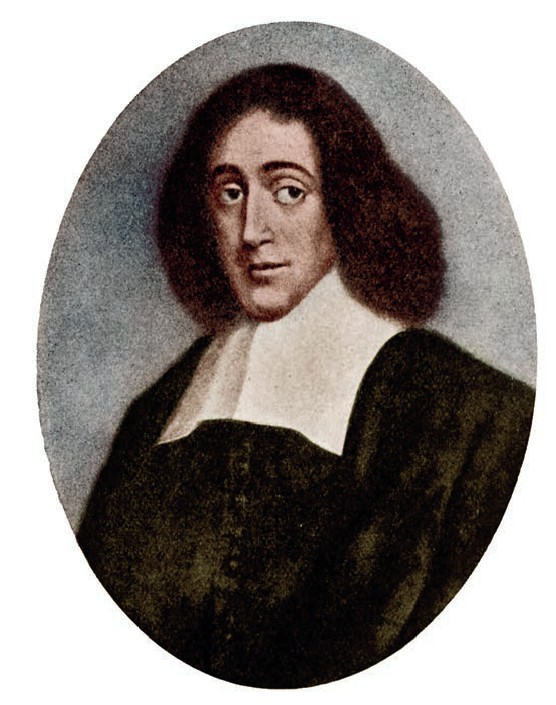
God’s saviour, or chief critic? Baruch Spinoza
© LEBRECHT MUSIC & ARTS/ALAMY STOCK PHOTO
Spinoza’s Religion: A New Reading of the Ethics
by Clare Carlisle (Princeton, £26.95)
What do we think we know about Baruch Spinoza? We know he was one of the greatest philosophers of the Enlightenment: the Dutch thinker was a champion of free intellectual inquiry who broke new ground in metaphysics, epistemology and philosophy of mind. His magnum opus, the Ethics, put forward a system of breathtaking originality that is still celebrated today. We might know that he was a pioneer of the rationalist school that emerged in the 17th century. But more than any of this, most of us know something about his philosophy of religion: Spinoza’s writing is famously atheistic.
In his own day, Spinoza was branded a heretic and accused of trivialising God’s role in the universe and human affairs. Cast out of the Dutch Jewish community at the age of 23 for spouting “horrible heresies,” he opted for permanent outsider status by refusing to convert to Christianity. He disputed the existence of miracles and the afterlife and challenged the authority of the Bible.
His Theologico-Political Treatise was condemned as “a book forged in hell… by the devil himself.” The Ethics was placed on the Catholic Church’s index of forbidden books.
When he was reclaimed in later centuries, it was often for the same reasons he had been denounced. Those seeking to subvert religious doctrines found him a source of inspiration. Percy Shelley draws on him in his essay “The Necessity of Atheism.” Albert Einstein once said that he believed in “Spinoza’s God,” which was leapt on as proof that the greatest scientific minds have no time for superstitious fairy tales.