DAVID THIEL
From Q*bert’s cussing to the roar of the crowd in Winter Games, David Thiel’s long career in the videogame and pinball business has seldom been off key
Words by Paul Drury
"I had Tesla coils with a thousand volts going through them in my lab!"
David Thiel
If you’ve ever wondered what qualifications people needed to break into the early videogame industry, David Thiel has an interesting answer. “I started off as a pipe organ major and after one year, decided that was the road to madness,” he says, without a hint of a cackle. “It was such a solitary pursuit. I switched to technical theatre and can design sets, do lights… and I’ve never used any of it since.” His skills as a coder and a musician were vital for getting his first role in the industry at Gottlieb, though, and soon he was creating audio for all the company’s coin-ops, including Mad Planets and the all-conquering Q*bert. He moved into the home computer and console market in the mid-Eighties, cofounding Incredible Technologies, and has worked on almost 30 pinball machines, producing unique sound and music for such marvellous tables as The Hobbit, Avatar and Pirates Of The Caribbean.
David, are you the guy that taught Q*bert to swear?
Yes, I’m that guy! It did have a lot to do with swearing, actually. I’d not done any game audio and that’s not why I was hired. I was a programmer and delighted to be working on 8-bit computers because my background was in mainframes and that could be very frustrating. I’d got an Apple II and could see the potential and I really liked videogames. After graduating from college in 1972, I spent the next seven years playing keyboards in bands and between sets, I’d play some of those early arcade games they had in the venues.
Any bands we might have heard of?
Check out Chewawa Allstar on YouTube [We did and they rock – Ed]. We played the Chicago circuit through the Seventies, six nights a week, earning our chops, until disco hit and ended all that. I got a job selling synthesisers in a store which was also the first Apple dealership in Chicago, so at the back of the shop, we had Apple IIs and that’s where I learned to program. That got me a job at an insurance company and from there I got the gig at Gottlieb.
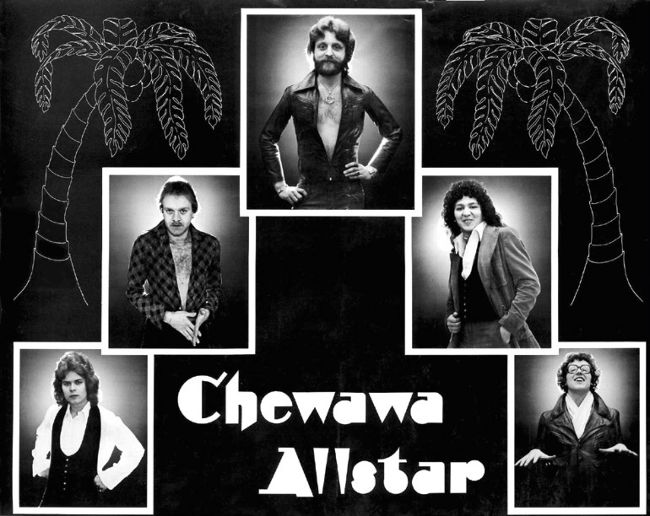
David (bottom right) played keyboards in Chewawa Allstar before his videogame career began. You’ll find them on YouTube in their mid-Seventies pomp.
Gottlieb was only just setting up a videogames division when you joined in 1982, having been a leader in the pinball industry since the Thirties.
Yeah, but in the early Eighties, because of the rise of coin-op videogames, you couldn’t give a pinball machine away, certainly in America. The management at Columbia, who now owned Gottlieb, said they needed to get into videogames. Gottlieb didn’t want to because they thought it was a passing thing!
How did you end up handling the audio for the company’s new videogames’ division?
I put my hand up! I was creating graphics utilities because otherwise the artists were using grid paper and coloured pencils… and when management realised they needed sound for their first in-house game, Reactor, I just raised my hand and said ‘I can do that! Just give me the hardware’. I became the sound guy… for all the in-house projects.
Reactor was designed and coded by the legendary Tim Skelly, who had made his name at Cinematronics with such games as Rip-Off and Warrior.
Tim was a rock and roll guy and that was my world, too. I thought our audience of 11-year-old boys didn’t want to hear the sounds of Pac-Man, all that 8-bit music. Sure, they learned to love it, but it was kind of like Stockholm syndrome. I wanted to make music and sounds for games that was much more their native language. But you see, there’s virtually no sound hardware on that board – you have to do everything in software. Every sound you hear is an algorithm! I wrote some crazy algorithms and if you listen to Reactor, it’s rocking! There’s a bass drum and bassline and it sounds nasty.