THE MAKING AND REMAKING OF MONSTER WORLD
MW IV
AT THE TIME THOUGHT TO BE THE FINAL INSTALMENT IN THE WONDER BOY/MONSTER WORLD FRANCHISE, IT TOOK ROUGHLY 18 YEARS TO SEE AN OFFICIAL LOCALISATION. NOW, WITH THE EXCITEMENT AROUND ITS REMAKE, WE THOUGHT IT THE PERFECT TIME TO EXAMINE BOTH ASHA’S ORIGINAL AND UPDATED ADVENTURE
WORDS BY JOHN SZCZEPANIAK
D
eveloped by Westone and released in April 1994 for Sega’s Mega Drive, Monster World IV (hereafter MWIV) was intended as the final entry in the ridiculously convoluted Wonder Boy saga. Mild spoiler: after the heart-warming ending and credits, your genie companion congratulates you, stating this is the end of the overall series. At the time it was not released outside of Japan. But in 2012, roughly 18 years later, it received an official English localisation for modern platforms. A sequel (Monster Boy And The Cursed Kingdom) came out in 2018 and now we are about to see a remake of MWIV itself. So how did this socalled ‘end of the series’ come about?
Leafing through the sketchbooks of art director Maki Ohzora (see the We Love Maki Ohzora boxout) reveals drawings for both the genie and Queen Prapril characters dated November 1992. Meaning, at least conceptually, it had been forming for over a year. The studio had finished porting The Dragon’s Trap to Game Gear, and entered a phase of making PC Engine CD-ROM titles. Crest Of Wolf/Riot Zone was released February 1993. After a long gap MWIV on Mega Drive came out April 1994, followed by PC Engine titles Dynastic Hero in May 1994 and Blood Gear in October that year. Looking through Westone’s portfolio dates, provided by company head Ryuichi Nishizawa, shows a tangled web as confusing as the Wonder Boy series itself.
It’s difficult even to say which number in the series MWIV actually is, what with it being the sixth mainline entry, plus multiple ports and rebrandings of its predecessors, not to mention the whole Adventure Island spin-off line (see our Definitive Wonder Boy article in issue 37). For the sake of consistency and easier understanding, we’re changing all names to the English localised equivalent, even when examining them in the context of their Japanese release.
It’s fascinating to see how every consecutive game – from Wonder Boy for arcades in April 1986, through to MWIV exactly eight years later – was an evolution or departure from what came before, reinventing itself while still remaining recognisable. Most often the level complexity and RPG mechanics expanded, apart from that one instance, Monster Lair, where it turned into a platforming shmup. Even so, despite change being inherent in the series, MWIV was an unexpected departure – to the extent it could easily have stood on its own as a unique unconnected title.
As in English, the Japanese have a series of shorthand words for describing far-reaching and deep concepts in game development. Two important terms which are at the heart of MWIV are ‘jiyuudo’ and ‘sekaikan’.
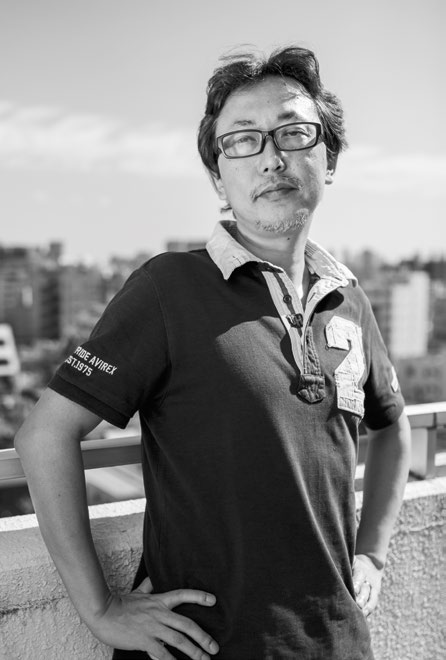
» Ryuichi Nishizawa in Tokyo. Photographer: Nico Datiche
THE DYNAMIC DUO
GET THE MOST OUT OF ASHA AND PEPELOGOO
WE MAKI OHZORA
GIVING CREDIT TO THE ARTISTRY BEHIND ASHA
Born on 4 July 1968 in Saitama, Japan, Maki Ohzora initially wanted to be an artist for TV anime. Discovering it was tough to make a living at this she quit and, thanks to a friend working there, eventually ended up at Westone creating graphics. Her pixel artist predecessor was one of the company cofounders, Hiromi Suzuko, who later married to become Hiromi Kurihara and left sometime in the early Nineties. Maki Ohzora would then work alongside Ryuichi Nishizawa, producing graphics for many of the company’s subsequent games.
Her first project was the arcade game Aurail (1990). Even though the artwork for Monster World IV is some of the cutest we’ve ever seen, Ms Ohzora is multi-talented with a wide range of styles, having also drawn the gritty backgrounds in Riot City and the impressive mecha cutscenes in Blood Gear.