THIEF
THE DARK PROJECT AN ENDURING LEGACY
TWENT Y-FIVE YEARS AGO, A GROUP OF MISFITS AND MIT GRADUATES LOCKED THEMSELVES IN A DARK ROOM… AND CREATED ONE OF THE MOST INFLUENTIAL VIDEOGAMES OF ALL TIME. WHAT FOLLOWS IS A DEEP DIVE INTO THE MINDS OF ITS CREATORS – AND ITS ENDURING LEGACY
WORDS BY LEE SEYMOUR
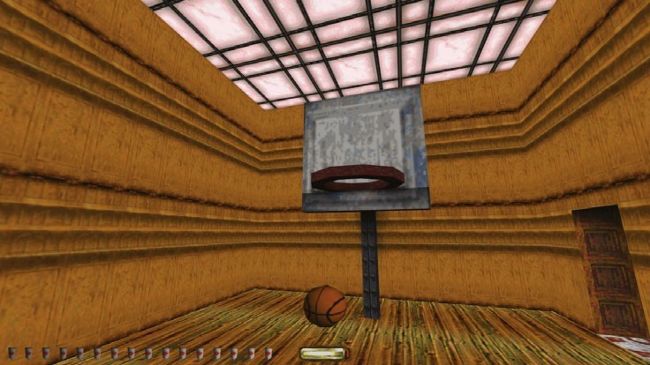
[PC] The Looking Glass team wasn’t above a few cheeky Easter eggs, like this hidden basketball court.
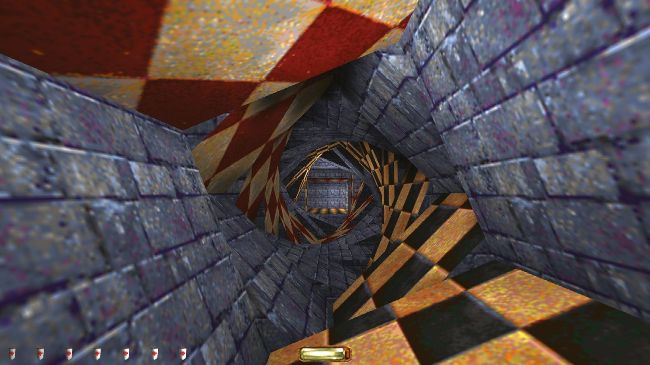
[PC] Thanks to strong art direction, Thief’s iconic, sometimes surreal maps remain striking in 2024.
One night in 1999, while working late at Looking Glass Studios in Cambridge, level designer Terri Brosius received a call. Not from a colleague… but a colleague’s wife.
“She called us because her spouse was staying at work so late that she was convinced there was an affair going on,” Terri recalls with a laugh. “And we had to talk her down.
‘No, there’s no affair. Some of us are just… sleeping here. At the office.’”
The anecdote captures an inflection point at the storied studio. It had just shipped Thief: The Dark Project, the seminal stealth- ’em-up, which received rapturous reviews and sold well enough. But the team knew no rest, and immediately began work on both an enhanced version called Thief Gold, and a direct sequel, The Metal Age.
“I called it the Dark Pit,” jokes Emil Pagliarulo, who joined as a level designer for the sequel, describing an open floor plan with blackout curtains over the windows. “It was the most intense two years of my life. And I was having a fucking blast.”
Stephen Russell, who voiced Thief’s protagonist Garrett, recalls his first visit to the studio. “It was remarkable. I couldn’t even tell what most of the people were doing there, but I could see they were really, really busy. And sleep-deprived.”
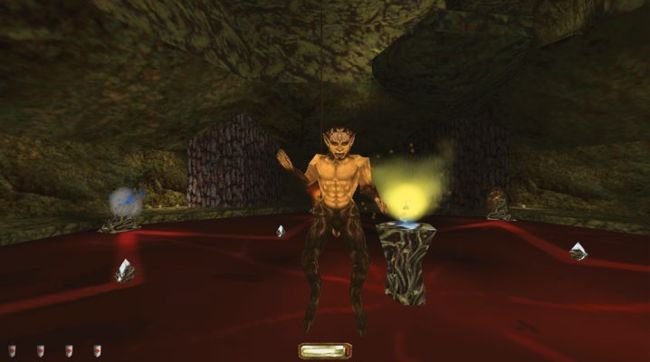
[PC] Thief’s story had players tangling with demigods and dictators alike – though rarely face to face.
In 1999, Looking Glass was renowned as a hive of creativity, where MIT programmers and cinema junkies from Southie dreamt up paradigm-busting games together. It was also known as a place where the work was so intense that it threatened to derail marriages. But while Terri’s anecdote might raise an eyebrow, even more notable is the fondness with which she recalls it. “It was a joy,” she says of her time working on Thief, late nights and all. “I couldn’t get enough of it.”
Twenty-five years on, the studio holds an almost mythic place in the history of game development: a singular environment and cohorts driven by passion, not profit margins. And while the studio itself closed in 2000, its output has influenced interactive media ever since. Thief is frequently cited as a favourite of other gamemakers, including Half-Life architect Marc Laidlaw, and it’s no coincidence that Looking Glass alumni went on to lead the teams behind landmark games like BioShock, Deus Ex, Guitar Hero and Skyrim.
But what’s remarkable is how many of them share Terri’s sentiment, speaking wistfully of their time crunching in the Dark Pit. Not to mention how they link that crucible directly to innovation, and creating an entire new genre. “Everyone was very connected to each other,” says Eric Brosius, who designed Thief’s revolutionary audio engine (and is married to Terri). “That doesn’t mean everyone got along. But we had good managers who realised that magic happens if you let things play out.”