MAGAZINE CRAFT
JUSTIN LEEPER
American gaming publications don’t get any bigger than Game Informer, and Justin Leeper was there at the turn of the millennium as its online ambitions grew and print circulation soared. Together, we look back at his career in games media, and how it led to a development career that has seen him work with wrestling stars, Hideo Kojima and even Transformers
Words by Nick Thorpe
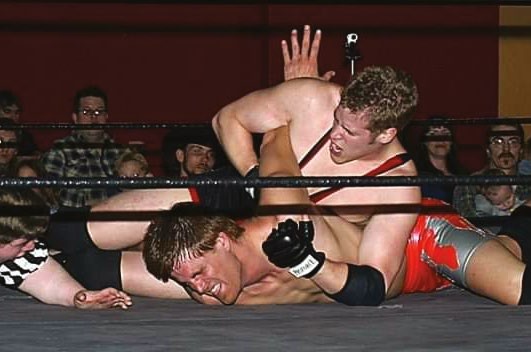
Justin worked as a wrestler while on Game Informer, preparing him well for his game development career.
THEN
Justin joined Game Informer as a web editor in 1999, and spent four years there while also working as a wrestler for independent promotions. After that, he contributed freelance articles for a variety of publications, and appeared on the screen for the videogaming channel G4TV.
NOW
After exploring other passions including acting, writing novels and even donning the Gor-Gor costume on stage with shock rockers GWAR, Justin returned to games development and is currently working as a narrative design lead at Cloud Imperium Games.
So where did your career start from, coming out of school, Justin?
I knew I didn’t want to go to university – I didn’t want to spend that time and money when I didn’t have a clear-cut path, so I knew I needed to get a job. I figured, why don’t I try and make money at something I enjoy? So I applied at this store called FuncoLand, which was a used game store franchise. It was a fun retail job – there was some commission involved, and part of that was selling a discount card that came with a Game Informer magazine subscription, and I got to really like that magazine. I ended up moving down to Chicago after about a year-and-a-half, and then moving further down the US and kept my Game Informer subscription. Then when I found out that they were looking for some editors for their website, because the website was run by the magazine editors in their spare time, I applied for that and somehow ended up getting that gig. So I moved back up to Minneapolis and started working for them.
Game Informer
was going through a period of rapid growth then, right?
Yeah. I started on the website, and me and this other guy, Matthew Kato, came in and we had our own little, tiny office. The FuncoLand headquarters was in Eden Prairie, Minnesota, and we were kind of like the funky kids living in the basement of this headquarters. Me and Kato, there was a hole in the wall that said ‘hole’ on top of it, and that’s where they put our little office. But I got to do some really fun stuff for a while there. I don’t know how I swung this, but every day I would play aWWEgame. It was beforeNo MercyandSmackDown! 2came out, and we had playable builds, and I would just switch off every day like, “I’m gonna go through a little bit of the story with my created wrestler.” That’s Helmut von Strauss, because I was learning wrestling at the same time, and then I would take some Q&A. It was such a hobby for me, but it ended up drawing giant traffic so they just let me do that basically every day, which was a lot more fun than scouring Japanese developer websites for news.
As much as I liked the website and joking around, and seeing the more ‘after dark’ versions of the editors, the magazine was what drew me to it
JUSTIN LEEPER
But then it came down that we were closing the website, and luckily they moved me over to the magazine so I started, I think, on issue 96 or something. But at some point, of course, GameStop bought up FuncoLand and then decided to take Game Informer and push it in all their stores, and that’s really when our circulation jumped huge. It was just getting bigger and bigger, and I was hearing that we were in the three millions or so when I was there. You know, for as big of a magazine and as many pages as we had, there were only six or seven of us at the time. Even when I left, I think there were only maybe eight editors total, and that’s really pretty small when you think that we’re doing hundreds of pages and lots of reviews, and sending people out to do features and cover stories.