PROFILE
A Study In Resilience
Refugee finds salvation through Para rowing
Words: Tom Ransley
TRANSLATION DR ORIE MIYAZAWA
Who is Kenji Karaki? Born Roeum Reth, Kenji Karaki endured an unending sense of not belonging, of otherness, isolation and social exclusion; and then he discovered rowing.
The former Para rower now coaches at Lake Sagami in Tokyo, Japan, 70 kilometres west of the Sea Forest Waterway where the Paralympic rowing regatta took place. It was with pride that he watched his former athlete, with whom he had entrusted his Paralympic dream, Ryouhei Ariyasu, stroke Japan’s mixed coxed four.
But Kenji’s path to Paralympic pride and a sense of identity was a hard one.
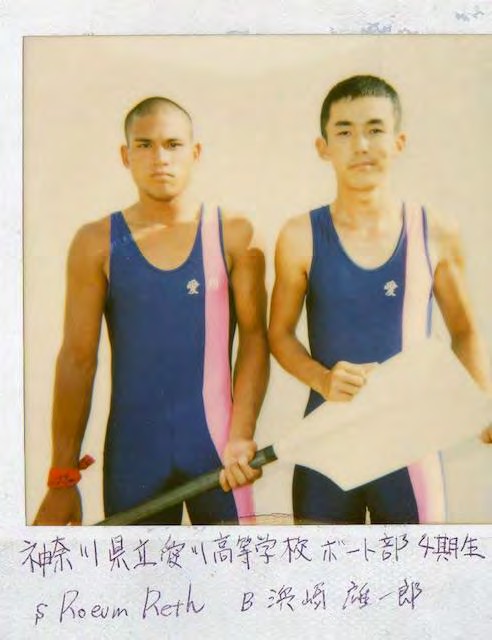
Kenji Kuraki (left) as a youngster at that time known as Roeum Reth.
Kenji grew up in Japan as an outsider. A stateless citizen born in a Thai refugee camp to Cambodian parents fleeing the Khmer Rouge, Kenji arrived in Japan aged four, and was given a “foreigner’s card” to denote his lack of nationality.
His dislocated sense of identity has its root in the fractured history of Cambodia. The Khmer Rouge forcibly relocated his parents to rural Cambodia. Before Pol Pot took power in 1975, Kenji’s father, Roeum Roeun, had been a university student with aspirations of becoming a schoolteacher, and his mother, Kim Ly worked as a beautician.
His parents had not yet met but both soon found their situation to be fast-changing and increasingly dangerous.