BEACHCOMBING
LOST & FOUND
Shells, a Lego octopus, a bottle of Victorian cough medicine, a barnacle-covered flip-flop… you never know what you’ll unearth along the shoreline or riverbank. We meet four fanatical beachcombers and mudlarks – and their intriguing finds
by ANNA MOORE
Piecing it together
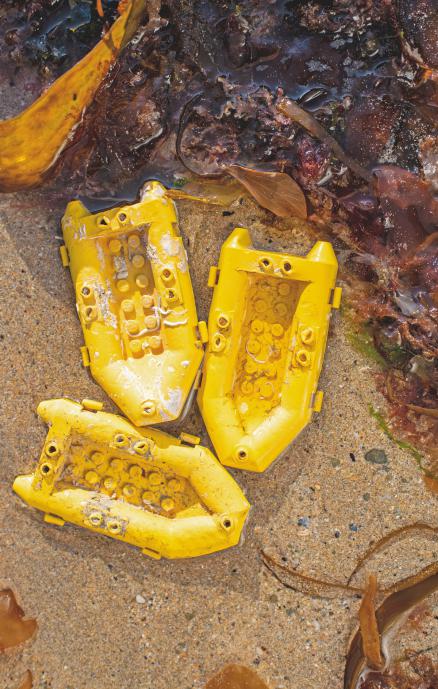
some of the many bits of Lego discovered by Tracey Williams as,
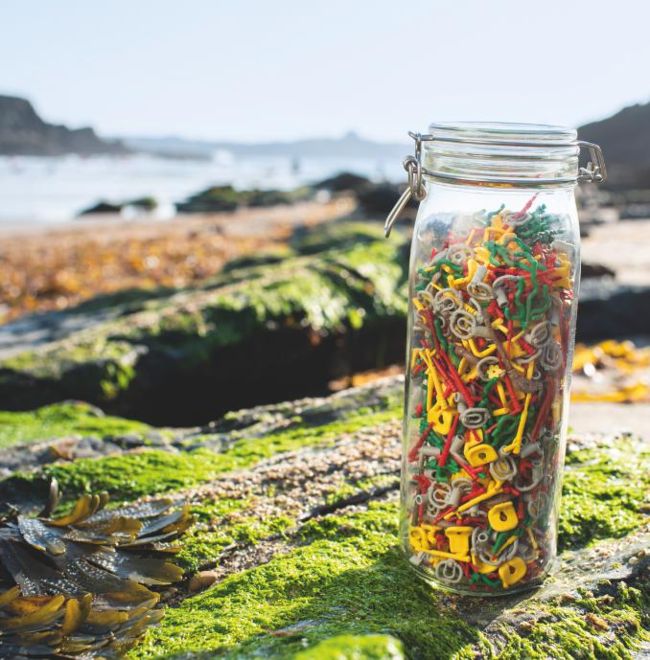
she continues her search for more treasures
Ten years ago, when her teenage son was seriously ill, Tracey Williams began to beachcomb. At 5am, she’d leave the house with a canvas bag over her shoulder and for the next hour or two, with just her dog and the seagulls for company, she’d scour the beach for anything of interest. At sunset, she’d be back there again.
‘My son spent a lot of time in hospital with ulcerative colitis and beachcombing became my way of dealing with it,’ says Tracey, now 65, who lives in North Cornwall. ‘It’s very mindful, out there alone. When you’re in the zone, it stops you worrying or overthinking. All you’re focused on is the next thing you might find.’
And that could be anything: violet sea snails; sea beans; seashells; or ‘by-the-wind sailor’, a strange and beautiful colony of jellyfish-like creatures that travel by catching the wind with a small sail. Tracey was also interested in man-made items – acrisp packet from the 1970s, a cereal box toy from the 1950s.
One mystery came in the form of a grey, rubber-like block engraved with TJIPETIR she found in 2012 on the Newquay shoreline. Weeks later, she discovered another. With no idea what they could be, she set up a Facebook page and connected with people who had found the same blocks on beaches in France, Spain, Germany, Sweden and Norway.