How we made Viticulture
Jamey Stegmaier and Alan Stone pop the cork on how their winemaking hit went from grapes to greatness
Words by Owen Duffy
In 2013, co-designers Jamey Stegmaier and Alan Stone released Viticulture – a game of Tuscan vineyard owners competing to be recognised as the most prestigious winemakers in their region. It combined an idyllic theme, deep and thoughtful gameplay, and sun-soaked illustrations by artist Beth Sobel, and it wasn’t long before it garnered critical acclaim along with a sizeable community of players.
Six years later, it’s still going strong. In a tabletop hobby where even beloved games can often be cast aside in favour of hot new releases, Viticulture has proven to have some serious staying power. Long-time players still enjoy its brain-teasing challenge, while new fans continue to discover its appeal.
TIME TO FERMENT
Like many game designers, Jamey Stegmaier traces his roots in the hobby back to his childhood.
“I’ve been playing tabletop games as long as I can remember,” he says. “I grew up in Virginia, and in elementary school my family and friends would play games like chess, Mille Bornes, Labyrinth, Monopoly and Scotland Yard.
“My desire to design games ran parallel to my first experiences playing games. It was just one of those things where I wanted to create just as much as I wanted to play.”
That desire came to fruition in 2012, when Stegmaier took to the crowdfunding site Kickstarter with an idea for a game of his own. Inspired by the European school of game design, which emphasised mechanical elegance and clever strategy over luck and direct competition between players, Viticulture cast players as rival winemakers attempting to turn small vineyards into thriving businesses in the Italian region of Tuscany.
“I wanted to design a game that would appeal both mechanically to gamers and thematically to non-gamers,” he explains. “The idea of running a vineyard is romanticised in movies, so I thought that would be a good place to start. I think there’s just something about wine that is easy to romanticise, as opposed to farming, which works well as a theme for gaming, but is more utilitarian than running a vineyard.”
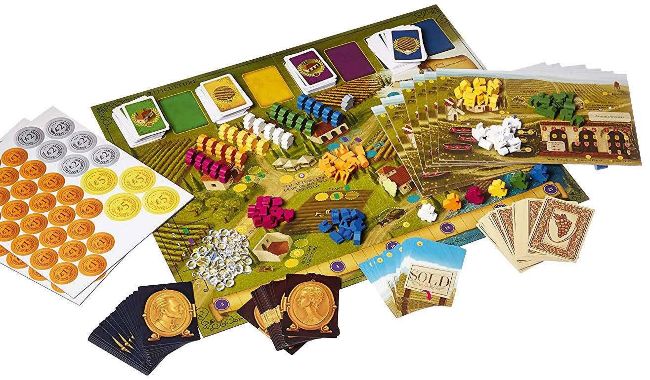
Viticulture’s popularity led to the release of 2015’s Essential Edition, including some of the gameplay modules from expansion Tuscany and a solo variant