GB
  
You are currently viewing the United Kingdom version of the site.
Would you like to switch to your local site?
15 MIN READ TIME

SERGE KOUSSEVITZKY

AN ENDURING LEGACY

July 2024 marks the 150th anniversary of the birth of Serge Koussevitzky – the Russian-born double bass virtuoso turned music director, educator and mentor. Fellow double bassist and conductor Leon Bosch examines his hugely influential life
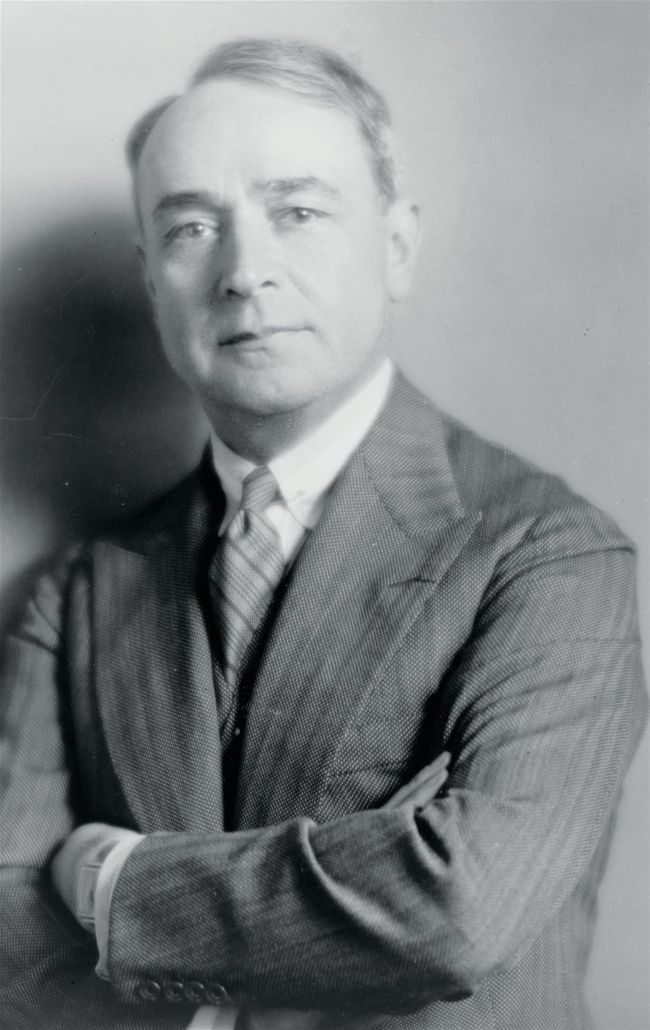
Serge Koussevitzky pictured around 1930
STUDENT PHOTO COURTESY OF THE BOSTON SYMPHONY ORCHESTRA

Serge Koussevitzky was an enigma. His status as a double bass soloist equalled that of his illustrious predecessors Domenico Dragonetti (1763–1846) and Giovanni Bottesini (1821–89). He was also a conductor who commanded the same reverence accorded to Toscanini and Stokowski, a passionate advocate for new music, an esteemed publisher, and a dedicated educator of and mentor to a generation of musicians.

But he also had his detractors. Orchestral musicians, especially those of the Boston Symphony Orchestra, feared and resented his autocratic hiring and firing of musicians; some doubted the integrity of his musical education and his suitability therefore as music director; and he was notoriously also often at loggerheads with music critics.

The occasion of the 150th anniversary of his birth provides a convenient opportunity for evaluating his legacy and perhaps coming to a greater understanding of the man himself.

EARLY YEARS

Koussevitzky was born into a musical family in the small town of Vishny-Volochok, approximately 180 miles north-west of Moscow, on 26 July 1874. His father, Alexander Koussevitzky, was a violinist and his mother, Anna Barabeitchik, a pianist. The young Sergey Alexandrovich was a musical child, and learnt to play a number of instruments, including the violin, trumpet and tuba, but with the cello as his primary focus at that time.

At the age of 17, Koussevitzky set off for Moscow to further his musical education. He failed to secure a place at the Moscow Imperial Conservatory, on account of presenting himself too late after the start of term, but he cajoled his way into the school of the Moscow Philharmonic Society, where the only available scholarships were for trombonist, piccolo player and double bassist. He chose the double bass and made rapid progress under the guidance of his teacher Josef Ramboušek, principal double bassist of the Bolshoi Theatre and professor of double bass at the school of the Moscow Philharmonic Society from 1882 until his death in 1901.
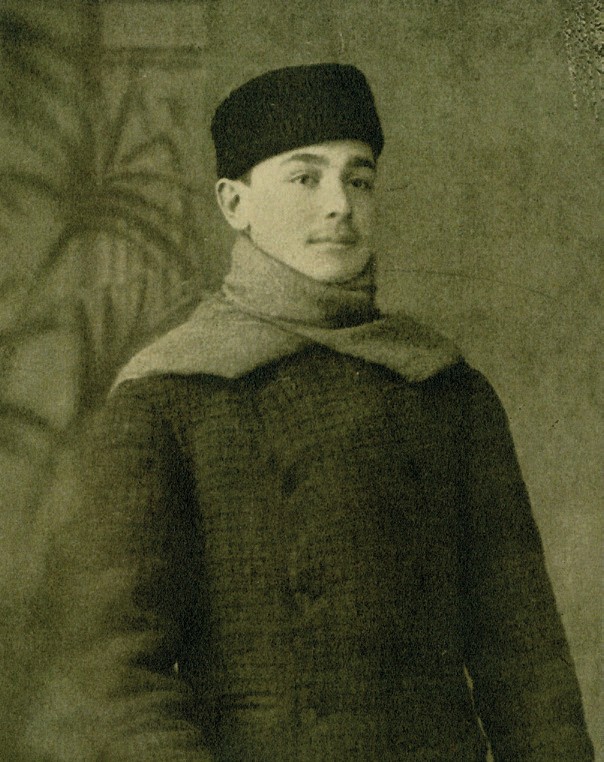
As a 15-year-old student

Koussevitzky practised demonically, much to the annoyance of his roommates, who found him a barnlike loft space where he could practise endlessly without disturbing anyone. His efforts were richly rewarded, however. In 1892, one year after entering the Philharmonic Society school, he was presented to Tchaikovsky as a double bass virtuoso, performing Ramboušek’s arrangement of the Andante cantabile from Tchaikovsky’s First String Quartet with the composer himself at the piano. And in October 1894, Koussevitzky became a member of the Bolshoi Theatre orchestra in Moscow.

Read the complete article and many more in this issue of The Strad
Purchase options below
If you own the issue, Login to read the full article now.
Single Digital Issue July 2024
 
£4.99 / issue
This issue and other back issues are not included in a new subscription. Subscriptions include the latest regular issue and new issues released during your subscription. The Strad
Annual Digital Subscription £54.99 billed annually
Save
23%
£4.58 / issue

This article is from...


View Issues
The Strad
July 2024
VIEW IN STORE

Other Articles in this Issue


The Strad
Contributors
JOSEPH CURTIN (Bass-bar acoustics, page 46) is a
SOUNDPOST
Letters, emails, online comments
Editorial
Editor’s letter
American music as we know it owes so
FRONT
Hot tickets
News and events from around the world this month
NEWS IN BRIEF
JULIA WESELY Cellist Sol Gabetta wins the Swiss
OBITUARIES
NORMAN CAROL Norman Carol, concertmaster of the Philadelphia
Sounds of Peru
PREMIERE of the MONTH
COMPETITIONS
Tae-Yeon Kim Azura Trio Poiesis Quartet KIM PHOTO
NEW PRODUCTS
DOUBLE BASS ROSIN Stuck in time A new
Life lessons
Sarah Chang
THROWAWAY CULTURE
Cellist Andrew Janss was shocked to discover the phenomenon of the cheap, single-use bow: one that costs more to rehair than replace. He calls for a change in manufacturers’ attitudes to such waste
The winner takes it all
Charlotte Gardner reports from the first in-person Windsor Festival International String Competition to take place since 2019, and discovers that the talented competitors still have everything to play for
FEATURES
RESPLENDENT HARMONY
The 1733 ‘Salabue, Martzy’ is one of the finest instruments by Carlo Bergonzi in existence. Jason Price examines the violin and looks at its travels over the past 300 years
A CLOSER LOOK
The Strad’s lutherie consultant Philip Ihle put together this month’s poster of the ‘Salabue, Martzy’. Here he points out several extra details to help luthiers make an exact copy of the instrument
REFLECTING ON SUCCESS
Dutch–British violinist Daniel Rowland has had multiple strands to his career – among them soloist, concertmaster, festival director and quartet leader. He speaks with David Kettle about trusting himself to make meaningful connections and go with the flow
TRIUMPH AND TRAGEDY
British violin virtuoso Samuel Grimson had his playing career cut short by a wartime accident in 1918, but he went on to co-author a groundbreaking book that paved the way for modern violin teaching. Clifford Hall explores his life
A RETURN TO HEAVEN
For the Takács Quartet, re-recording two of Schubert’s string quartets, albeit with a new line-up, has been an eye-opening experience, as first violinist Edward Dusinberre and violist Richard O’Neill tell Charlotte Gardner
RAISING THE BAR
Joseph Curtin reports on a series of experiments at the 2023 Oberlin Acoustics Workshop, which attempted to ascertain the acoustic effects of altering the height and scoop of the violin’s bass-bar
REGULARS
GIO BATTA MORASSI
IN FOCUS
Bow tip replacement – part one
TRADE SECRETS
MY SPACE
A peek into lutherie workshops around the world
Taking the first step
Making and applying the ground coat is a crucial stage of the varnishing process. James Ropp reveals his own method for a preparation containing no oil
SCHUBERT FANTASY FOR VIOLIN AND PIANO – PART ONE
Violinist Alena Baeva stresses the importance of slow and attentive practice when embarking on the opening sections of this monumental work, in the first of a two-part article
All together now
Continuity and intention in the bowing arm
CONCERTS
Your monthly critical round-up of performances, recordings and publications
RECORDINGS
OTTO VAN DEN TOOM TRAUM UND TRAUMA ANTHEIL
BOOKS
Up Bow, Down Bow: A Child with Down
From the ARCHIVE
FROM THE STRAD JULY 1894 VOL.5 NO.51
IN THE NEXT ISSUE
Rachel Podger The Baroque violinist talks about her
ADRIAN CHANDLER
Vivaldi’s op.8 set of violin concertos – including the Four Seasons – was an early inspiration for the British Baroque violinist and founder of the orchestra La Serenissima
Chat
X
Pocketmags Support