Lutherie
Taking the first step
Making and applying the ground coat is a crucial stage of the varnishing process. James Ropp reveals his own method for a preparation containing no oil
MAKING MATTERS
Points of interest to violin and bow makers
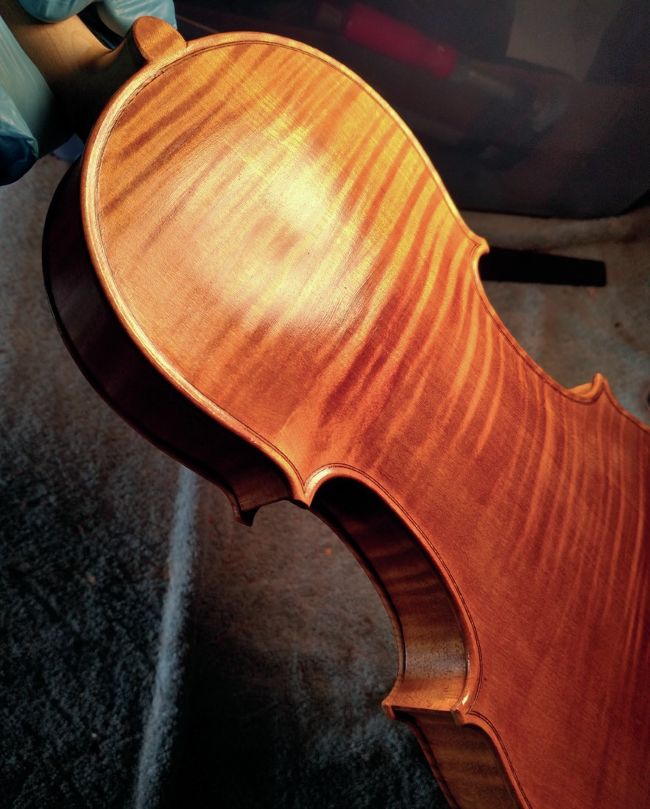
Violin with a completed ground coat
The methods described in this article are the methods I use based on extensive research and experimentation. First, let’s discuss the purpose of the ground on the tonewood of an oil-varnished stringed instrument. Since I primarily make violins, I will use the violin as the example for this article.
The ground coat serves two basic purposes. First and foremost, it is a sealant forming a barrier between the cells of the tonewood and oils in the varnish. A violin’s tonewood produces its beautiful sound, with the tone being generated from the resonant vibrations of the tonewood’s cell structure. Any mass added to this cell structure, such as oil, will inhibit the way the tonewood resonates. A good analogy is the effect of a mute on the violin bridge on its tone and projection.