TECHNIQUE
Taking flight
Playing in the high register of the cello
GUY JOHNSTON Solo cellist and professor of cello (previously at Eastman School of Music, NY, US; from 2025 onwards Royal Academy of Music, London, UK)
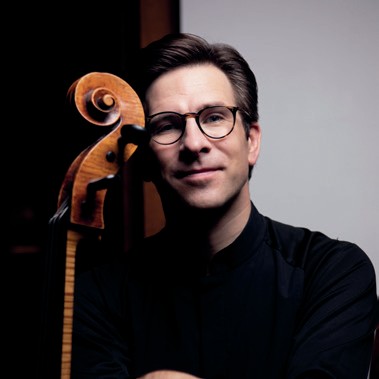
FRANCES MARSHALL
BORN London, UK
STUDIED WITH Steven Doane, Steven Isserlis, David Waterman, Ralph Kirshbaum, Bernard Greenhouse, Anner Bylsma
TEACHES 18 years old onwards
High-register playing on the cello is often thought of as difficult and uncomfortable, presenting an obstacle for young cellists in the learning journey. Against this backdrop it isn’t surprising perhaps that some students find it rather daunting to play in the higher positions. This perceived truth has a tendency to linger even once students are much more experienced. It doesn’t help the situation that as cellists move into the higher register their hand is compelled to move further away from the body, unlike on the violin, where the hand closes in for the higher-register feel and look reassuringly nurturing.
I regularly play and teach the studies of Popper, Duport, Piatti and others. I also read and re-read manuals written by great pedagogues of the past such as Diran Alexanian, Maurice Eisenberg and more recently Christopher Bunting, all of whom studied with Pablo Casals. Absorbing the information from different standpoints helps me to review and refresh the way that I approach the cello, including playing in higher positions. After all, previous generations of cellists have had to engage with the evolution of cello repertoire (and often, as composers themselves, create it). This evolution has come a long way – from the humble bass-line to soloistic music using the entire range of the instrument plus other extended techniques.