TRADE SECRETS
Varnish retouch
Makers reveal their special techniques
A method for layering pigments and shellac to reproduce the exact colour and thickness of an instrument’s varnish
BY GARY VESSEL Luthier based in Modesto, CA, US
In truth, there are no ‘secrets’ to my process for varnish retouching. The technique that I was taught was consistent with that of my main three teachers: Dennis McGaige, Rafael Carrabba and Marcel Richters. It is a simple process of layering pigments and shellac until the correct colour and varnish thickness match the original. I’m sure there are new and different approaches to this very common task; however, this is the process that I’ve employed for 40 years, and I’ve seen no reason to relearn a drastically different technique.
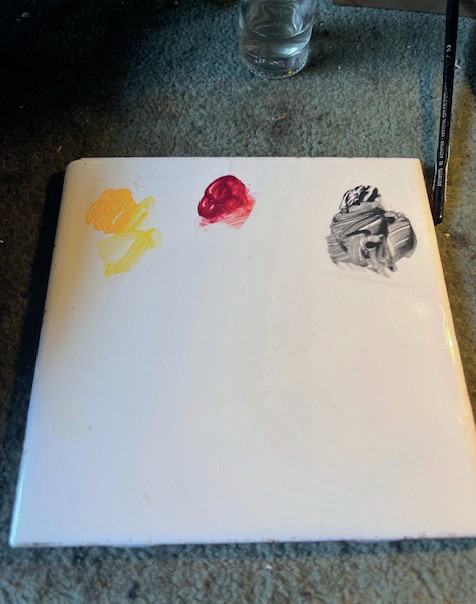
1a Mixing the colours on the palette
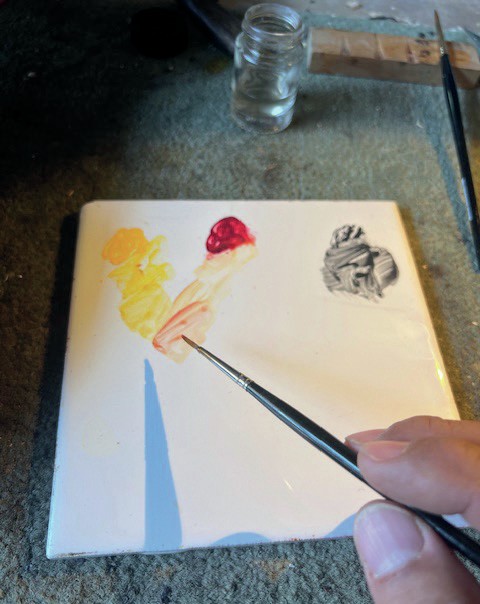
1b
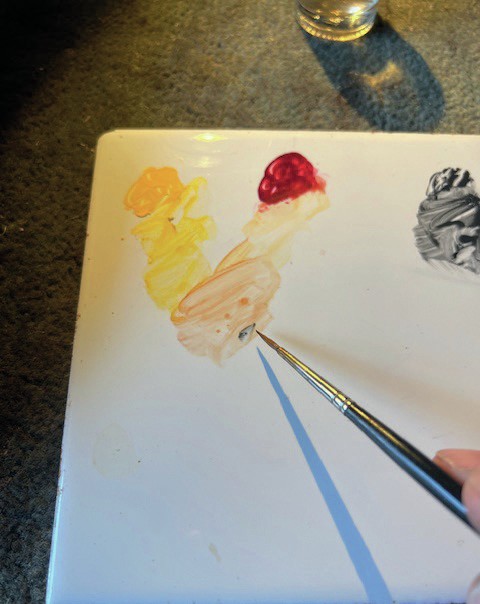
1c
ALL PHOTOS GARY VESSEL
1 Prior to colour application, I clean the project area of any surface dirt, and coat any bare wood with two or three layers of thin, clear shellac. I start with my three main pigments: Indian yellow, alizarine crimson and lamp black. Prussian blue can also be used in place of black, or in addition to black. Some varnishes can have a purple tone; Prussian blue can help with matching this colour and it may match the other pigments’ colour stability better than lamp black.