Reviews
BOOKS
Chaconne Handbook I–II: A Theoretical and Practical Guide to the Chaconne from the Partita in D minor BWV1004 by Johann Sebastian Bach Márta Ábrahám
VOL.1: 48PP ISMN 9790801682383
VOL.2: 15PP ISMN 9790801682376
BIOBACH MUSIC PUBLISHER €70
The first volume of Márta Ábrahám’s handbook to Bach’s Chaconne appears to share much common ground with her Excerpts from Eternity, co-authored with Barnabás Dukay and reviewed by Tully Potter in the March 2019 issue. Ábrahám outlines the Chaconne’s manuscript and publication history and explains some of the principal compositional procedures employed. Her subsequent thorough analysis focuses especially on how the 64 four-bar variations are apportioned throughout the movement’s tripartite (minor–major–minor) structure and how they align approximately with the golden ratio (33–19–12). She discusses the Chaconne’s theme and its variants, and concludes that 50 of the variations can be considered as 25 pairs, 9 as three trios and 5 as stand-alones. She also flags up a musical and mathematical relationship between three of the stand-alone variations, specifically nos.19, 27 and 31 and their arithmetical ‘doubles’, nos.38, 54 and 62.
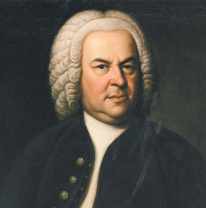
A 1748 portrait of Johann Sebastian Bach
My alarm bells started ringing, however, when Ábrahám began to explore the Chaconne’s ‘possibilities for deeper interpretation’ and enter the realms of speculation regarding its symbolic content. Basing her thoughts initially on the fashionable, yet unsubstantiated theory that Bach composed the movement as an epitaph for his first wife, Maria Barbara, Ábrahám’s thought-provoking scenario seems idealistic and overly ambitious; and her recently discovered ‘time code’, in which she attempts to relate the proportions of the movement’s variations (52 [= 33 + 19] + 12) to the 52 weeks and 12 months of 1720 and associate certain variations with specific events in Bach’s personal life that year, including his wife’s death, smack of an advocate for using pictures or fanciful storylines to spark interpretative creativity. ‘The thick fog’ that covers Variations 23–30, representing the period of Bach’s sojourn in Carlsbad and Maria’s death, does little to change that view; nor does Ábrahám’s assertion that the sudden change from three to four voices in Variation 27 (the variation that, so she claims, coincides with the week of Maria’s burial) indicates ‘shock and pain… similar to a heartbeat’. Other questionable conclusions include: Ábrahám’s contentions that the 25 identified pairs of variations represent the Bachs’ marital relationship and that Bach makes a self-reference in Variation 41 (the number 41 being a gematria chart equivalent of his name), symbolising ‘outburst and creative force’; the meanings that she assigns to the twelve final variations; and the links that she makes between Bach’s ‘four motherless children’ and the four bass variants that represent the ‘hidden Chaconne theme’. Her attempts to apply that 4:1 ratio to the Second Partita as a whole and her claim that ‘the time it takes to play the four dance movements… is the same as…it takes to play the… Ciaccona’ will only rarely (if ever) stand up to performance scrutiny. Some factual inaccuracies have slipped into the text – Bach’s C major fugue, for example, was first published in Cartier’s L’art du violon (Paris, 1798), which is not a ‘collection of etudes’ – along with occasional typographical or grammatical errors and awkward English phraseology.