GB
  
You are currently viewing the United Kingdom version of the site.
Would you like to switch to your local site?
14 MIN READ TIME

CONSERVATOIRE MENTAL HEALTH SUPPORT

BRIGHT YOUNG MINDS

Good mental health is crucial to a young musician’s development. Rita Fernandes hears from administrators, counsellors and teachers from leading music schools about what defines a successful conservatoire mental health support system
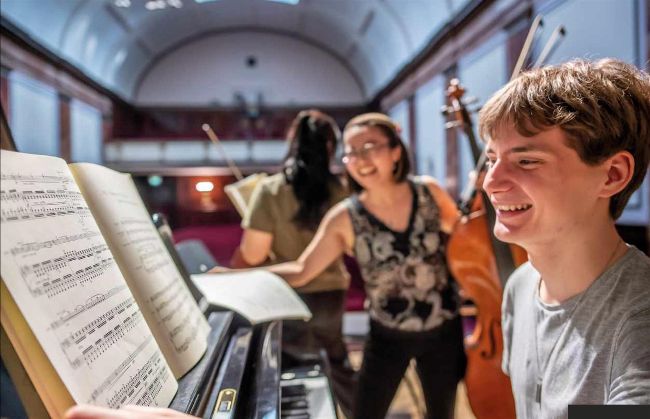
Royal College of Music students rehearsing at London’s Wigmore Hall
HIL ROWLEY

While undertaking research for this article I was hit with a caveat at every turn. ‘You can’t talk about mental health without talking about general health’; ‘It’s impossible to separate a young musician’s mental health from their musical performances’; ‘To understand a conservatoire’s mental health service, you must understand the educational structure in which it exists.’ What came from this endless zooming out was the realisation that when talking about mental health services in conservatoires, we are in fact talking about what responsibility institutions have in forming the best, and by extension healthiest, musicians possible.

From the bright-eyed fresher to the gigged-out fifth year, young musicians are at a vulnerable point in their lives when attending conservatoire. Establishing networks can be difficult and navigating new structures and cultures can trigger anxiety. These musicians can experience debilitating perfectionism and will have their mental resilience tested constantly. The latter is especially true since, owing to the rapidly changing music profession, students will most likely become freelance performers and be forced to handle uncertainty.

On top of that, the institutions at which these young people study are structured in a way that does not always make it easy to concentrate on self-care: friendships intersect with professional relationships, hierarchical structures can make it difficult to question authority, and heavy performance schedules can obscure the need for rest and recuperation. It is vital, therefore, that the institutions guiding these people through their developmental years are equipped with the resources to deal with the mental health struggles that may come with being not only a musician but also a human.

Although this article focuses mainly on mental health services within conservatoires, these are only one part of what makes an institution effective in supporting its students’ well-being. I therefore use phrases such as ‘mental health support’ when referring to institutional support (whether through teachers or curricula), whereas mental health ‘service(s)’ refers specifically to the institution’s counselling services.

According to administrators, counsellors and teachers from several leading music conservatoires, there is a general sense of optimism about the state of mental health support in their institutions. Services may not be perfect, but they are run and surrounded by people who genuinely care about offering effective help and are continually working to improve their services in a holistic way.

Read the complete article and many more in this issue of The Strad
Purchase options below
If you own the issue, Login to read the full article now.
Single Digital Issue September 2023
 
£4.99 / issue
This issue and other back issues are not included in a new subscription. Subscriptions include the latest regular issue and new issues released during your subscription. The Strad
Annual Digital Subscription £54.99 billed annually
Save
23%
£4.58 / issue

This article is from...


View Issues
The Strad
September 2023
VIEW IN STORE

Other Articles in this Issue


The Strad
Contributors
RAINER MICHAEL COCRON (In Focus, page 85) studied
SOUNDPOST
Letters, emails, online comments
PODCAST OF THE MONTH
www.thestrad.com TOP 3 ONLINE POSTS 1 TwoSet
Editorial
Editor’s letter
September may herald the end of summer, but
FRONT
On the beat
News and events from around the world this month
NEWS IN BRIEF
Julia Fischer receives Bavarian arts award bit.ly/44D2Gc2
OBITUARIES
IRENE SHARP US cellist and pedagogue Irene Sharp
PREMIERE of the MONTH
KING’S COLLEGE: The dark form of Edward King,
COMPETITIONS
Affinity Quartet Mio Imai Christian McBride AFFINITY QUARTET
NEW PRODUCTS
BASS FINGERBOARD First of its kind A new,
Life lessons
The Juilliard Quartet second violinist on the joy and value of collaboration in chamber music
SOFTLY DOES IT
As string players, we are often encouraged to make a big sound, but cellist Davina Shum believes that the art of playing quietly is an underrated one
Spirit of camaraderie
The tenth Osaka International Chamber Music Competition and Festa featured not only a dizzying array of high-level music making, but also a sense of mutual support between the competitors, reports Robert Markow
The heights of viola heaven
Carlos María Solare reports from the 48th International Viola Congress, which took place in the tropical surroundings of Salaya, at the western borders of Thailand’s capital city
FEATURES
‘ALL IT TAKES IS ONE’
American violin virtuoso Randall Goosby may only be in his twenties, but he is already deeply committed to passing on his passion for music to the younger generation, as he tells Amanda Holloway
THE DEEP END
Billy Tobenkin, who began playing the cello aged 25, explores his own experience of learning Bach’s Prelude in G major after only a few months, and why he believes it is beneficial for adult learners to dive straight into ‘grown-up’ repertoire – offering tips on how to proceed
FIRST PRINCIPLES
When a professional luthier takes on someone new, the amount of learning needed to become a trusted employee can be overwhelming. Sarah Kluge explains her method of training an apprentice from scratch, including an essential list of dos and don’ts
FAMILY FORTUNES
Zosimo Bergonzi, son of Carlo, was for a time the only luthier active in Cremona – but until recently the string world knew of only one instrument by him. Michel Samson tracks his career through his known works, which now number more than thirty
MARKING A MILESTONE
When Hilary Hahn decided to record Ysaÿe’s Six Solo Violin Sonatas for their centenary year, all the stars seemed to align in terms of both timing and fresh musical insights, as she tells Charlotte Gardner
WHAT’S THE BUZZ?
Finding why an instrument buzzes while playing is a task that bedevils luthiers. Dmitry Tarakanov presents a checklist for the most likely causes
REGULARS
FERDINANDO GARIMBERTI
IN FOCUS
Making an ebony crown
Makers reveal their special techniques
LUTHIER FLORIAN BARTSCH
LOCATION Essen, Germany
With 20 per cent extra
Points of interest to violin and bow makers
SCHUBERT STRING QUARTET IN G MAJOR, FIRST MOVEMENT
MASTERCLASS
Arriving in style
Teaching bow landings with special reference to Mozart
CONCERTS
Your monthly critical round-up of performances, recordings and publications
RECORDINGS
FONDATION GAUTIER CAPUÇON PRESENTS… CHAMINADE Piano Trio no.1
BOOKS
Chaconne Handbook I–II: A Theoretical and Practical Guide
petermach
www.petermach.com
From the ARCHIVE
In his early life, Franz Joseph Haydn supported himself as a violinist. T. Lamb Phipson gives an account of the composer’s formative years
ELDBJØRG HEMSING
The Norwegian violinist has fond memories of hearing Bruch’s First Violin Concerto for the first time – and advice for anyone looking to play it themselves in the future
Chat
X
Pocketmags Support