BOOKS
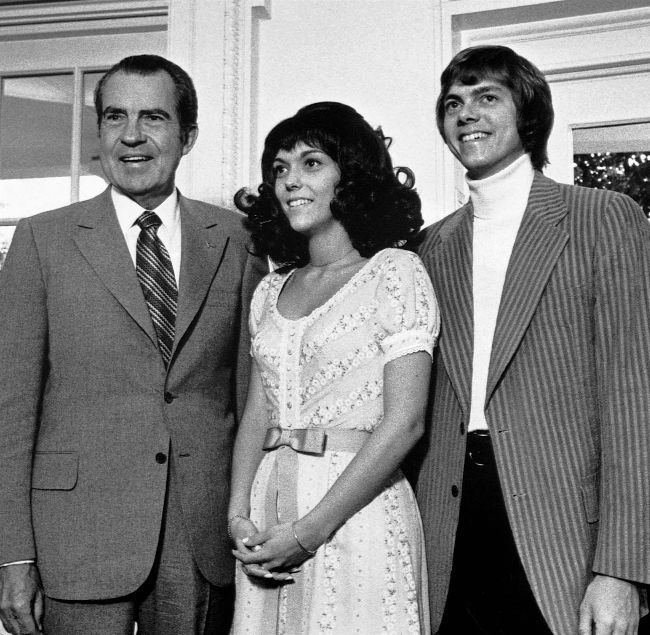
Darkness visible: The Carpenters with Richard Nixon at the White House, 1972
THE travails of Karen Carpenter have overshadowed a talent that critics were reluctant to acknowledge while she was alive. The toxic cocktail of fame, insecurity and music that sounded easygoing to the point of blandness prompted filmmaker Todd Haynes to reimagine Carpenter as a stop-motion Barbie in his film Superstar. Yet Kim Gordon, who championed the singer on Sonic Youth’s “Tunic (Song For Karen)”, believes Carpenter’s troubles were an extreme version of a struggle endured by many women: “A lack of control over things other than their bodies.”
Lucy O’Brien’s empathetic biography Lead Sister offers a detailed account of how the singer (and drummer) of The Carpenters was sacrificed to mental illness, rooting her anorexia deep in childhood. Brother Richard – viewed as the genius of the family by their mother Agnes – called Karen “Fatso” as Agnes forced her onto a fad diet. “Maybe the ‘chubby’ epithets were a subconscious strategy to rein in tomboy Karen,” O’Brien suggests. According to songwriter Nicky Chinn, Karen was “led to believe that Richard was better than her and was loaded with self-doubt.” It’s a dark story all round, with Richard becoming addicted to Quaaludes just as Karen’s anorexia prompts a kind of arrested development, delaying her emotional maturity.