GB
  
You are currently viewing the United Kingdom version of the site.
Would you like to switch to your local site?
14 MIN READ TIME

Album by album

FAUST

Tracing the complex musical history of the German experimentalists
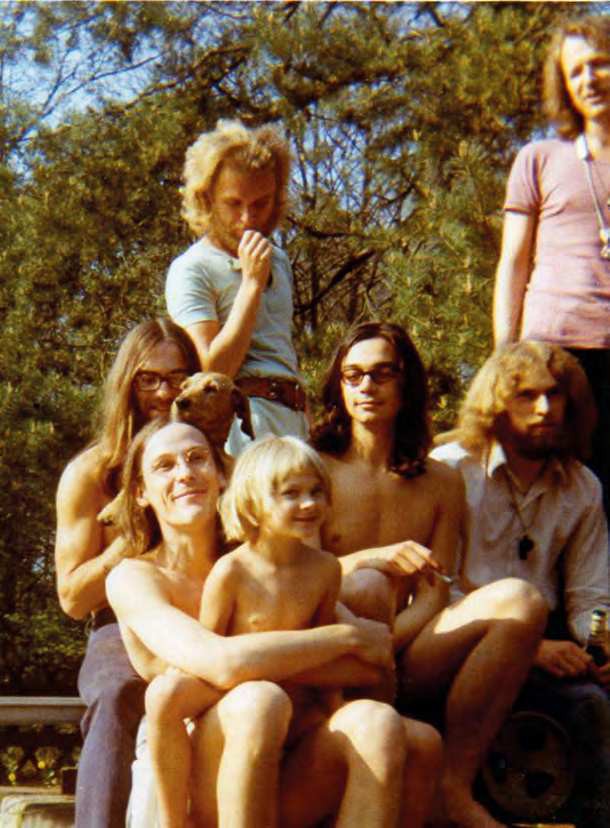
“A utopian situation!”: Faust in 1971
BUREAU B

“TWO short years in Wümme,” is how Faust’s bassist and vocalist Jean-Hervé Péron summarises this fabled kraut rock group’s early years, living in an abandoned schoolhouse, south-west of Hamburg, Germany.

“Inten se and creative.” The story of Faust is one of

Faust

POLYDOR,1971

A wild confluence – one music journalist, the Wümme schoolhouse, and six young, creative musicians – leads to a thrilling debut, packaged in an X-ray sleeve

JEAN-HERVÉ PÉRON: I was 20 and had just left home [in Normandy, France] after a year’s stay in the USA as a foreign exchange student. I had no previous experience about communal living. You can imagine how exciting it was to live in a large house, a former school, with all recording facilities including a sound engineer day and night and not having to worry about affording the rent or the food. A utopian situation!

WERNER “ZAPPI” DIERMAIER: We lived together, and we also lived the music together. But we were not a commune.

PÉRON: One day, one of us got syphilis and then we were invaded by a “health and safety” squad spraying all kinds of stuff in our rooms. Another day we had heavily armed policemen raiding the studio because they thought we were part of the Red Army Faction…

surprising coincidence, methodical planning and a good, strong dose of experimentation. Formed in 1969, taken under the wing of music journalist Uwe Nettelbeck, their first run of albums, recorded across the first half of the ’70s, plotted a new and distinctly German form for rock music.

Since then, Faust have fallen apart and come back together many times: across the late ’90s and into the 2010s there were two coexistent Fausts: one headed by Péron and drummer Werner “Zappi” Diermaier, another by organist Hans-Joachim Irmler. Another recent split has led to parallel groups headed by Diermaier and Péron. A recent retrospective boxset compiled their music from 1971 and 1974, with three extra discs of previously unavailable material: now two of those, Momentaufnahme I and II, are due for wider release. It’s a rich, complex history, the unifying force, perhaps, a constant desire to test and challenge the limits of rock music, to stretch its possibilities and tangle its many branches.

JON DALE

Faust was a product resulting from a whole year of experimenting, composing, practising, learning from one another. We chose one interesting improvisation for the B-side. No overdub, no editing, full “studio live session”. I was very impressed by Günther Wüsthoff’s capacity of combining music and maths and his patience when it came to splicing tapes, by Rudolf Sosna’s virtuosity on piano and by the drawings and paintings he created, by Diermaier and his weird, unusual drum patterns.

[Uwe Nettelbeck] was the one who fully supported our concept of breaking through and finding new ways. He was the one who managed to convince the record industry, promising them the “new Beatles” and tons of money, whereas he always knew we were on a totally different wavelength.

SOFAR

POLYDOR,1972

Here, Faust broke their music down to digestible parts. Includes one of their most lasting songs, the monolithic “It’s A Rainy Day (Sunshine Girl)” DIERMAIER:

So Far was partly composed and partly improvised. Rudolf, Günther and Jean-Hervé were the constructivists. The drums and percussion on So Far were in my hands alone for the first time.

PÉRON: The first album was just so ahead of its time and no audience was ready for this. So Polydor did put a certain pressure on us and wanted to have a production that would be more accessible to a broader audience. We started to do more “songs” rather than “compositions” or “pieces”. “It’s A Rainy Day” is the first track on the album, but it was the last one we recorded.

DIERMAIER: I was already asleep, it was two o’clock in the morning, there was a knock on my door. It was Rudolf Sosna. He said, “I have a great idea, can you come to the studio and play drums?” It was a very simple piece.

PÉRON: I remember it was great fun to record all those songs, to compose them. “On The Way To Abamäe” results from learning how to do guitar picking. “I’ve Got My Car And My TV” results from Wüsthoff playing a series of jazz chords and me jamming with my trumpet and adding some Dada lyrics. “Me Lack Space…” is a cadavre exquis, a perfect example of communal composition.

We worked a lot in the Wümme studio, and we made good use of it; we produced two albums, we collaborated with Slapp Happy and produced two records with them, and of course a unique collaboration with Tony Conrad.

TONY CONRAD WITH FAUST OUTSIDE THE DREAM SYNDICATE

CAROLINE,1973

A roving violinist and filmmaker, fresh from collaborating with pre-Velvets quartet Theatre Of Eternal Music, lands in Wümme to record one of the most hypnotic albums in minimalist rock

PÉRON: My first encounter with Tony dates back to 1972. Our producer, Uwe Nettelbeck, had sent Tony our Faust album and met him in Berlin at a film festival. Uwe asked him if he would like to do a three-day session with the rhythm section of Faust, Diermaier and me, in the Wümme studio. Tony arrived in Wümme and we almost immediately started to record. Tony’s plan was very clear, very simple: “One tone, one beat, one hour”… and also very strict! After half an hour of doing the one tone, one beat thing, I just had to introduce another note… Tony stopped. He was not pleased. So, we started again and again, and again. Soon the feeling of time and space disappeared: a very strong experience which influenced my further approach to music.

DIERMAIER: In the beginning, I played too much drums, but Tony wanted it reduced. So, we ended up with two beats. The recording dragged on for three days, because Tony had played himself out more often.

PÉRON: During these three days, we reached a certain friendship in music so that ultimately Tony accepted to do a free version of his drone with us. Of course, I remained minimal but still it was really good to let the steam off and liberate all that I had experienced in my head while doing the previous recordings. I learned something that may be obvious but which I had never put in praxis before: if you repeat the same thing many times over and over, you start discovering all the hidden aspects and reach the essence of this particular thing; so much the better if you reduce your project to the smallest form possible – one tone, one beat. I am grateful towards Tony that he gave me the opportunity to do so.

Faust in 1973: (l–r) Werner Diermaier, Günther Wüsthoff, Jean-Hervé Péron, Rudolf Sosna and Hans Joachim Irmler

THE FAUST TAPES

VIRGIN,1973

A move sideways to Virgin, then an independent label helmed by entrepreneur Richard Branson, led to Faust’s most wildly inventive album: a psychedelic cut-up sold for 49p

UNCUT CLASSIC

PÉRON: I didn’t speak much German at the time, so I didn’t completely understand what was happening… Nevertheless, I got it together that we had to leave Polydor and also I understood that Nettelbeck had contact with Richard Branson. So there was something in the air. I remember Rudolf Sosna was then working very hard, all day and most of the night, recording new things like “Dr Schwitters” or “Hollow Men” or “Stretch Out Time”… playing a lot of piano and a lot of cembalo, even playing drums, recording those sketches and putting them together.

GUNTHER WÜSTHOFF: One night, Sosna recorded a miniature with guitar at half tape speed. At normal playback speed, the Mickey Mouse effect, which Rudolf loved, was then created. He called the piece “Finnish Autumn”.

DIERMAIER: We [also] went through the archives and cut out the best tracks and put them together.

WÜSTHOFF: We spent two years in our studio in Wümme, among other things, exploring the studio equipment together with our sound engineer Kurt Graupner. Most of what came out of that was glued together one day – or was it one night? – and called The Faust Tapes.

PÉRON: I suppose this product was intended to introduce us to Virgin, to offer Virgin a finished product, sort of a gift of something revolutionary. Why did we choose this way of producing a record? [It was] possibly inspired by the cut-and-paste techniques used in writing books and in creating paintings, so we used them on an audio level.

“Flashback Caruso” was created and recorded in Wümme, inspired by psychedelic experiences we went through. We did some “pop songs” – in the sense of popular, more accessible to normal ears – and we did “experimental” stuff because we were such different characters within Faust, and we all had completely [different] cultural, political, social backgrounds. Some of us were 100 per cent for improvisation and experimental stuff, even though each one had their own idea about improvisation, whereas other members of Faust did like songs, proper songs with melodies, harmonies, lyrics, with a clear beginning and a clear end.

I never cared neither about money nor about the business side of Faust. I understand the “buy an LP for the price of a single” move was clever as it made the LP and thus our name popular in the UK. I think we even reached the charts…

UNIVERSALMUSIC

FAUST IV

VIRGIN,1974

Perhaps the most coherent statement by ’70s Faust, IV features some of their most lushly poetic songs, and in its opener “Krautrock”, a monstrous, fuzzed-out rock raga

PÉRON: Faust IV was partly recorded at the Manor. The funny thing about this was that we shared studio time with Mike Oldfield: we recorded Faust IV during daytime and Oldfield recorded Tubular Bells during nighttime. I also remember there was no particular sympathy between the English crew of Manor employees, technicians and artists and us. Our sound engin eer, Kurt Graupner, had a hard time with the mixing desk and recording gear being frequently disconnected. The best things for me about the Manor were the huge and friendly dog Bootleg and the marvellous poached eggs Maggie would present us with her charming smile

Péron and Diermaier join friends in the US for Fresh Air, 2017

. “Jennifer” was inspired by a young woman with ginger hair. Rudolf composed that song, Hans Joachim Irmler laid a beautiful organ on it, great! “Krautrock” happened as Wüsthoff, alone in the Manor Studio, was twisting knobs on his synth and had made this fantastic locomotive-like loop. We arrived one by one in the studio and were turned on by the loop and started jamming with it… Eventually Diermaier came into the studio and, boom, “Krautrock” was born! “The Sad Skinhead” is a song with simple lyrics and simple music, with a clear message about violence and loneliness: well, at least that is what I intended it to be.

Sadly, things turned out bad at the end: conflicts grew worse between Branson and the band, between certain members of the band and Uwe Nettelbeck, so it was the beginning of the end of Faust… We still managed to do a UK tour, but some members had already left the group and returned to their respective homes.

RIEN

TABLE OF THE ELEMENTS, 1994

After more than a decade out of action, renewed interest in krautrock led to this marvellous return to form, an album pieced together by Jim O’Rourke

PÉRON: Rien is the result of our first USA tour, 1994, where Jeff Hunt of Table Of The Elements invited Diermaier and me to be part of his [label] showcase. We invited

Steven Lobdell to join us on guitar. We performed in interesting places: in the Death Valley desert (very hot), at the Great American Music Hall in San Francisco (beautiful), on a stage with no roof on a very rainy day in Hartford (dangerous but fun), outdoor on the floor beside a hospital in Atlanta (the electric power broke down when we turned our power tools on)…

DIERMAIER: We drove in a van to Death Valley; it was 50 degrees. My only instrument was a steel pipe. I was on a hill together with Keiji Haino, who used only his voice. So, we communicated with each other over a long distance

PÉRON: At the end of the tour, we went into a San Francisco studio and had a recording session there with Jim O’Rourke, Keiji Haino, Michael Morley [of The Dead C], Barbara Manning, and Steven Lobdell.

DIERMAIER: We had a big oil tank that we found in a junkyard. I used it as a percussion instrument. The door to the studio was too narrow, so it couldn’t fit through. I ended up playing it on the street on the sidewalk between passers-by. Jean-Hervé had set up a tent in the studio in which he was sitting, and he played the trumpet. This is how “Listen To The Fish” came into being.

PÉRON: O’Rourke magnificently constructed the Rien album. According to an interview he gave in the magazine Frequency, O’Rourke had a one-year-long traumatic experience because of the producing of Rien. Sorry about that, Jim. Rien is definitely a turning point in the Faust saga. Rien is radical, it sounds powerful, no compromise.

YOU KNOW FAUST

KLANGBAD, 1996

A shift in focus, here, back to a core Faust trio of Diermaier, Irmler, and Péron, for one of the renewed lineup’s most consistent sets

PÉRON: When Diermaier and me returned from the 1994 USA tour, we were highly motivated to reunite with the Faust members who had disappeared since May 1974. Very sadly, Sosna had dramatic physical and mental health issues. Wüsthoff showed no interest whatsoever to communicate with us. So, it was Irmler, Diermaier and me meeting in Schiphorst at my wife Carina’s farm, site of the Avantgarde Festival Schiphorst. She and Irmler’s wife Cornelia founded the label Klangbad and financed the tour which followed the record.

DIERMAIER: Thomas Martin had the idea for the title… “you know us”.

PÉRON: The album was recorded by a friend of mine, Lutz Vogelsang with very limited equipment, but Lutz knew how to make absolute best use of it and a lways reacted spontaneously to all our crazy ideas. Due to this informal recording technique and also due to our communal living, even if we lived and worked together for only a few weeks, the record has a very “warm” feeling.

What were we aiming at? Nothing consciously. It was just pure joy of playing together, of being together again. Our wives saw that positive energy and supported us. You Know FaUSt is a fantastic and inspiring album for me. The tour was successful and led to more successful and spectacular tours. Unfortunately, it also led to a crucial conflict within the band members and ultimately another split in Faust.

FRESH AIR

BUREAU B, 2017

The Diermaier/Péron axis of Faust come together, with travelling friends, for a USA tour. The resultant album is a spiky, creative triumph

PÉRON: The 2016 USA tour: what a grand experience! This time the basic lineup was Diermaier and me, supported by comrade Maxime Manac’h on hurdy-gurdy and electronics. The beautiful aspect of this tour is that we met and played with so many good musicians, such great persons:

Barbara Manning once again after our first meeting in 1994, Ysanne Spevack, Robert Pepper, Braden Diotte, Michael Day, Bobby Conn, and Julie Pommerleau! Eric Débris, Jürgen Engler, Ben Tinker, Dixon Wragg, Tim Barnes, Ulrich Krieger… I am sure I forget to mention many others. We played 18 gigs in 23 days from East Coast to West Coast, sometimes playing two gigs per day! DIERMAIER: The tour through the USA was richly layered: we played with Keiji Haino, and with Laurie Anderson as a substitute for Tony Conrad. Fresh Air originally referred to the fresh air machines in Tokyo. We played the track “Fish” mostly at the end of each show. The long fade-out leaves a strong mood at the end of each concert.

PUNKT

BUREAU B, 2022 (REC. 1974)

The mythical, lost fifth Faust album, featuring the classic five-piece lineup, is finally unearthed!

JANLANKISCH

PÉRON: Punkt was recorded May 1974 at Giorgio Moroder’s Musicland Studio in Munich in the basement of the Arabella Hotel. We had persuaded Kurt Graupner to join us and help us record a few sessions during the downtimes of the Musicland Studio.

DIERMAIER: We rented a room in the studio and recorded at night because it was cheaper then. It was very interesting and direct; we simply started to play and didn’t fiddle around for long.

PÉRON: So, why was it not released at the time? Very simple: because Virgin was so pissed at us that they didn’t want to do anything with us any more. It was not recorded according to the contract. All three records were to be recorded at the Manor Studios. Since we did not record Punkt at the Manor, it was rejected by Richard Branson. We had no money to finance a release, and we had to flee from the hotel to rescue our gear and our tapes before they would be confiscated.

None of these recordings were used until 2021 when Gunther Buskies of Bureau B decided to digitalise all the tapes that we still had and produced a beautiful vinyl boxset of all the material that we did between 1971 to 1974. It is for me extremely exciting to listen to what we were playing 50 years ago. I often wonder, “How the hell did we think of all this?”

Momentaufnahme I And Momentaufnahme II is released by Bureau B on March 10

Unlock more great articles with
You can enjoy:
Enjoy this edition in full
Instant access to 750+ titles
Thousands of back issues
No contract or commitment
Try for 99p
SUBSCRIBE NOW
30 day trial, then just £9.99 / month. Cancel anytime. New subscribers only.


Learn more
Pocketmags Plus
Pocketmags Plus

This article is from...


View Issues
Uncut
April 2023
VIEW IN STORE

Other Articles in this Issue


Uncut
“He was in some other dimension”
JEFF BECK | 1944–2023
Masthead
Uncut
“They’re wearingsteelthat’sbrightandtrue/They carrynewsthatmustgetthrough” SPEAKING to David Crosby in
Instant Karma
BECK-OLA!
Jeff’s 12 greatest moments on record
Early Bird TOP TOPHAM | 1947–2023
Saluting The Yardbirds’ original lead guitarist
Full Nelson
A new five-part documentary, Willie Nelson & Family, digs into every chapter of his long and colourful life
A QUICK ONE
Inflatethedragons and get your skates on! As Rick
Earthly delights
At 82, Dorothy Moskowitz returns to the haunting electronics of The United States Of America
This is hardback!
As Pulp return for live shows this summer, a lavish new photobook captures them at their artistic peak
Andrew Wasylyk
Former indie-popster crafts lush ambient jazz inspired by the North Sea coast
UNCUT PLAYLIST
On the stereo this month...
Dancing Days
15 tracks of the month’s best new music
AN AUDIENCE WITH... Mark Eitzel
The former American Music Club mainman talks musicals, mushrooms, Lou Reed and why he’d tell his younger self “to get my fucking head out of my own fucking ass”
New Albums
LONNIE HOLLEY Oh Me Oh My JAGJAGUWAR
ALBUM OF THE MONTH 8/10
MITHS AND LEGENDS
Lonnie Holley’s path to Oh Me Oh My
Q&A
Lonnie Holley: “Everything on the planet is going to have to be reshaped”
THE LONG RYDERS
September November CHERRYRED
Q&A
Sid Griffin on fallen comrades and Twitter spats: “There’s always a war somewhere”
AtoZ
This month…
SHANA CLEV ELAND
Manzanita HARDLY ART
Q&A
Shana Cleveland “It’s kind of creepy”
EDDIE CHACON
LA soul survivor on his unlikely return from the wilderness
VAN MORRISON
Moving On Skiffle VIRGIN
Q&A
Seth Lakeman inside the Moving On Skiffle sessions: “We didn’t play any song twice”
CHIP TAYLOR
The Cradle Of All Living Things TRAINWRECK
AMERICANA ROUND-UP
FRESH from producing wife Connie Smith’s comeback The
ELIJAH McLAUGHLIN
From American Primitive guitar to resonant synth
LONDON BREW London Brew
DOWNTOWNMUSIC/CONCORDJAZZ
Q&A
Tuba player Theon Cross: “A lot of the time it’s about close listening”
UNKNOWN MORTAL ORCHESTRA
V JAGJAGUWAR
Q&A
Ruban Nielson: “I definitely prioritised feeling above meaning”
SLEAFORD MODS
Jason Williamson carries on raging: “I don’t think we’ll ever stop, to be honest”
GINA BIRCH
I Play My Bass Loud THIRD MAN
Q&A
Gina Birch: “I think I might’ve been an alternative comedian”
Archive
VARIOUS ARTISTS
Soul’d Out: The Complete Wattstax Collection CRAFT RECORDINGS/CONCORD
RIGHT ON!
The best Stax live albums
SLEEVE NOTES
DISC 1 1 Dale Warren & The Wattstax
Q&A
Carla Thomas and David Porter recall Wattstax: “It was a very meaningful thing”
ELVIS COSTELLO & BURT BACHARACH
The Songs Of Bacharach & Costello UME
Q&A
Elvis Costello on the “extremism” of Burt Bacharach
AtoZ
This month…
THE STROKES
The Singles -Volume 1 RCA/LEGACY RECORDINGS
EMMETT FINLEY
Emmett Finley (reissue, 1971) BIG POTATO RECORDS
DAVE BRUBECK
Debut In The Netherlands 1958 THE LOST RECORDINGS
COMING NEXT MONTH...
AS release schedule really starts to heat up,
In This Issue
Music is Love
With the passing of DAVID CROSBY, we’ve lost one of the talismanic figures from music’s fecund 1960s and ’70s. Blessed with an unmistakable voice and bewitching harmonic gifts – not to mention a fiercely opinionated temperament – Crosby was a fearless, forward-thinking songwriter who survived bust-ups, freakouts, addiction and prison to enjoy a miraculous final act. In tribute, we revisit Uncut’s candid interviews with the mercurial, musical outlaw, drawing on his own words to tell his incredible story. Here, then, is David Crosby… by David Crosby
SONGS OF DEVOTION
An enigmatic Texan songwriter raised on “Bible drills” and guided by the apocalypse? JANA HORN’s hushed, beguiling folk songs come from an unlikely place, as she explains to Lisa-Marie Ferla
SNAP!
PAUL WELLER reflects on his remarkable life in music in a new book, Magic: A Journal Of Song. In this exclusive extract, Weller revisits the inspiring early days of his ascent to mod magnificence with The Jam: “Folk music in its truest sense...”
GODDAM!
From jazz superstar to civil rights activist and beyond, NINA SIMONE’s 1960s were a dazzling, defiant decade of profound transition and accomplishment. On the eve of what would have been Simone’s 90th birthday, we chart her journey from Greenwich Village folk clubs to her ascension as the High Priestess of Soul. “She was able to pull down a kind of psychic energy,” hears Stephen Deusner
HOW TO BUY NINA SIMONE LIVE
The early and mid-’60s for Nina Simone were defined by remarkable live albums that show off her improvisational skills and diverse setlists
“SPARKLES AND FIREWORKS”
Produ cer André Fischer recalls working with Nina Simone on her 1993 swansong, A Single Woman
NO QUARTER
Heavy band, heavy year. By 1973, LED ZEPPELIN were on their way to becoming the biggest rock’n’roll band in the world. Embarking on an American tour to promote their new album Houses Of The Holy, they shattered box office records, rewriting the blueprint for rock’n’roll tours as they went. Peter Watts climbs aboard the Starship to hear tales of glorious, transcendent music – but also unsolved robberies, giant mirrorballs, cake fights during John Bonham’s 25th birthday party and motorbike rides down hotel corridors. “As the venues got bigger, they got better,” recalls one confidant. “They blasted you into the middle of next week.”
SUMMIT MEETING
ENDLESS BOOGIE’s Paul Major breaks down Houses Of The Holy
“IT WAS PRETTY FANCY”
Photographer BOB GRUEN on that famous photograph of the Starship
“THE DOUBLE ACT WAS AMAZING”
ROBERT PLANT on the band’s long relationship with Hipgnosis
FROM THE MAKERS OF UNCUT
UNCUT.CO.UK/SINGLE
FILMS
A heartwarming tale of lonesome misfits in Korea, the brutality of a military career, and a mountain dreamer
REVIEWED THIS MONTH
BROKER Directed by Hirokazu Kore-eda Starring Song
ALSO OUT...
Cocaine Bear ANT-MAN AND THE WASP: QUANTUMANIA RELEASED
BOOKS
Darkness visible: The Carpenters with Richard Nixon at
FEED BACK
When you’re in:TimHale and (right) his mate Charlie
Nuggets
Almost Famous
Over 50 years on from its release, NUGGETS remains one of the most influential and beloved compilation albums of all time. But what of the bands who appeared on Lenny Kaye’s original anthology? Nick Hasted tracks down 10 of the Original Artyfacts to discover what happened next. Stand by for stories of Beatles tour supports, getting high with Gram Parsons, exploding stages and JFK conspiracies told to us by… a messianic rabbi, a car dealer and a building contractor among others. “We played hard, people danced hard and everybody drank beer,” remembers one former bowl-haired mysterioso. “We rock’n’rolled ’til the crack of dawn.”
The Making Of
Hammond Song
Mushrooms, kung fu temples... and an extraordinary blend of voices! Three singing sisters (and Robert Fripp) weave folk-pop gold
Live
THE DELGADOS
Concorde 2, Brighton, January 20
LUCINDA WILLIAMS
Barbican, London, January 21
Sound & Vision
FIGHT THE POWER: HOW HIP HOP CHANGED THE WORLD IPLAYER
9/10
Obituaries
Not Fade Away
Fondly remembered this month…
My Life in Music
Chuck D
The Public Enemy commander on the records that inspired him to bring the noise: “It was scientific alchemy! I was blown to pieces”
Chat
X
Pocketmags Support